
Operating a security guard business in Minnesota demands more than just trained personnel and reliable equipment. The nature of protection services exposes your company to unique risks that require specialized insurance coverage. Whether you're running a small operation in St. Cloud or managing a large security team across the Twin Cities, understanding and securing the right security guard insurance is critical to your business survival. One lawsuit, one workplace injury, or one vehicle accident can financially devastate an uninsured or underinsured security company. The right coverage protects your business assets, ensures contract compliance, and provides the financial safety net your growing operation needs in 2026.
Why Security Guard Insurance Is Non-Negotiable
Security professionals face daily exposure to situations most businesses never encounter. Your guards work late hours, patrol high-risk properties, and interact with potentially dangerous individuals. These circumstances create liability exposures that standard commercial policies don't adequately address.
Minnesota security companies must meet specific state requirements and client contract stipulations. Most commercial property owners and facility managers in Minneapolis, Rochester, and Duluth won't even consider your bid without proof of comprehensive coverage. This isn't just about protecting your business-it's about qualifying for lucrative contracts that fuel your growth.
The financial stakes are staggering. A single slip-and-fall claim at a client's property could cost $50,000 or more. An assault allegation against one of your guards could result in legal defense costs exceeding $100,000, even if the claim is baseless. Without proper security guard insurance, these incidents could force you to close your doors permanently.
Core Coverage Components Every Minnesota Security Business Needs
Understanding workers’ compensation insurance requirements is your first step. Minnesota law mandates workers' comp for most businesses with employees, and security companies are no exception. This coverage handles medical expenses and lost wages when your guards suffer work-related injuries.
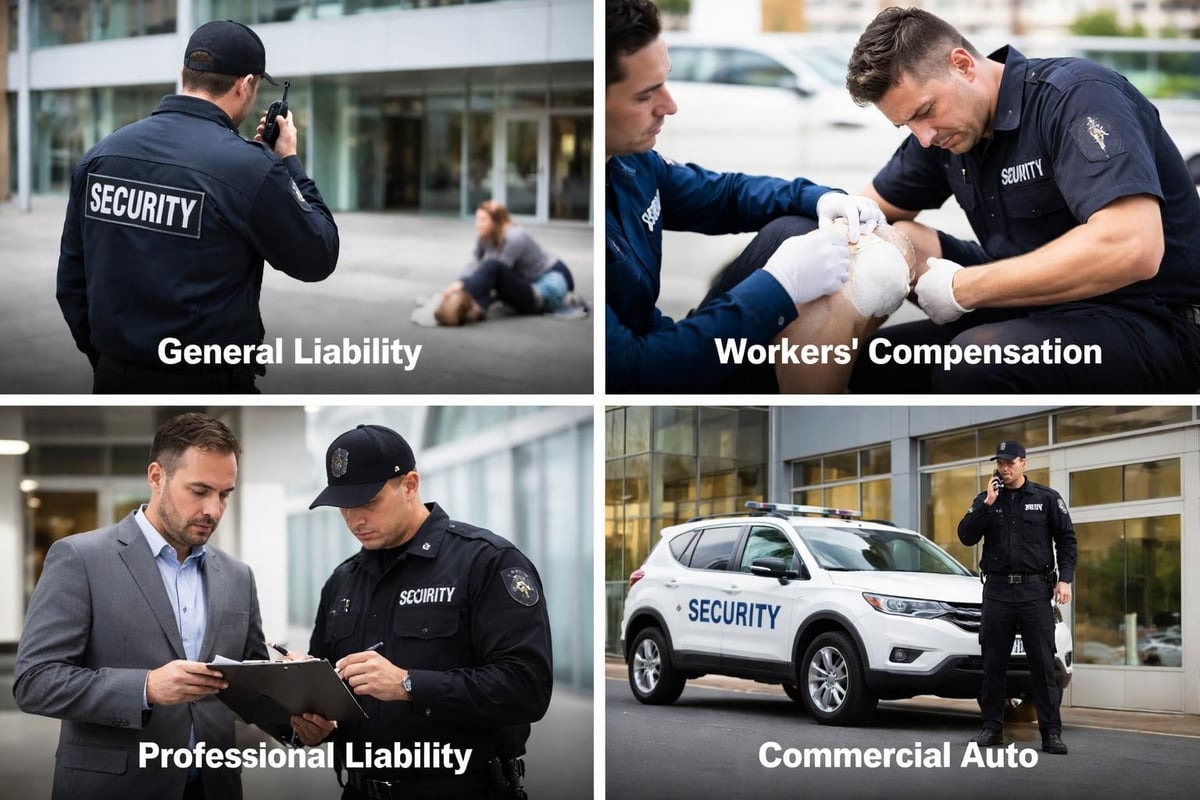
General liability insurance forms the foundation of your security guard insurance package. This essential coverage protects against third-party bodily injury and property damage claims. When your guard accidentally damages a client's equipment during a patrol or a visitor trips over your guard station, general liability responds.
Professional liability insurance, also called errors and omissions coverage, addresses claims arising from your services. If a client alleges your guards failed to prevent a theft or didn't respond appropriately to an incident, this coverage protects you from the resulting lawsuit.
Breaking Down Security Guard Insurance Costs
Price matters, especially for smaller operations in communities like Brainerd or Mankato. Security guard insurance costs vary significantly based on multiple factors that underwriters carefully evaluate.
Key pricing factors include:
- Number of employees and guards deployed
- Armed versus unarmed guard services
- Geographic service area within Minnesota
- Annual revenue and payroll amounts
- Claims history and loss experience
- Types of properties and clients served
Armed security services command substantially higher premiums. Insurers recognize that armed guards carry weapons increase both liability severity and frequency. If you're providing armed protection for Minneapolis businesses or government facilities, expect premiums 40-60% higher than unarmed services.
| Coverage Type | Typical Annual Cost | Coverage Limits |
|---|---|---|
| General Liability | $1,500 – $4,000 | $1M/$2M |
| Workers' Compensation | $2,000 – $8,000 | Statutory |
| Professional Liability | $1,200 – $3,500 | $1M/$2M |
| Commercial Auto | $1,500 – $5,000 | $1M combined |
How Minnesota Location Affects Your Premiums
Operating in different Minnesota markets impacts your insurance costs. Security companies serving downtown Minneapolis face different risk profiles than those protecting suburban shopping centers in Bloomington or industrial facilities in Duluth. Urban deployments typically increase premiums due to higher crime rates and greater lawsuit frequency.
Your service specialization matters tremendously. Companies providing concert security at venues like Target Field face different risks than those offering overnight warehouse protection. Event security involves crowd control challenges, while retail loss prevention creates shoplifting confrontation scenarios.
Understanding these commercial insurance nuances helps you budget accurately and negotiate better rates with carriers.
Essential Policy Features for Armed Security Operations
Armed security guard insurance requires enhanced coverage specifications. Standard policies often exclude weapons-related incidents, leaving dangerous gaps in protection. You need explicit firearms coverage that addresses shooting incidents, accidental discharges, and weapons handling errors.
Minnesota security companies offering armed services must navigate strict state licensing requirements. Your insurance policy should align with these regulations while meeting client contract requirements. Major corporate clients and government contracts typically mandate higher liability limits-often $2 million or more-for armed guard services.
Critical armed security endorsements:
- Assault and battery coverage
- Defense costs for criminal allegations
- Firearms liability extensions
- Use of force protection
- Accidental discharge coverage
The specialized coverage requirements for armed guards reflect the increased severity of potential claims. A firearms-related incident carries exponentially higher settlement values than typical slip-and-fall claims.

Commercial Auto Coverage for Security Patrol Vehicles
Your security guard insurance package must address vehicle exposures. Guards driving company vehicles for patrol duties, client site visits, or emergency responses create significant auto liability risks. Standard business auto policies may not adequately protect security-specific driving patterns.
Minnesota's harsh winter conditions add another layer of risk. Ice, snow, and reduced visibility increase accident frequency from November through March. Your commercial auto policy should account for these seasonal challenges, especially if your guards patrol parking lots or respond to after-hours alarms across the Twin Cities metro area.
Companies offering mobile patrol services need higher auto liability limits. When your guard vehicles spend hours daily on Minnesota roads, accident probability increases substantially. Many savvy security operators carry $1 million or more in auto liability limits to protect against catastrophic accident claims.
Contract Requirements and Certificate Management
Landing security contracts with Minnesota commercial properties requires providing evidence of insurance. Clients demand certificates of insurance proving you maintain adequate coverage before you start work. This administrative requirement becomes more complex as your client roster grows.
Different clients impose varying insurance requirements. A small retail shop in Rochester might accept $500,000 in general liability coverage, while a major corporate campus in Edina demands $2 million. Your security guard insurance program must be flexible enough to accommodate these different requirement levels.
Common certificate of insurance challenges:
- Last-minute client requests for coverage verification
- Additional insured endorsements for property owners
- Waiver of subrogation requirements
- Primary and non-contributory language
- 30-day cancellation notice provisions
Working with knowledgeable insurance brokers streamlines certificate management. They understand security industry requirements and can quickly produce properly formatted certificates that satisfy client demands.
Cyber Liability for Modern Security Operations
Today's security companies rely heavily on technology. Electronic access control systems, surveillance camera networks, and digital reporting platforms create cyber exposures that didn't exist a decade ago. When your systems store client data or monitor facilities electronically, you face potential data breach liability.
The importance of cyber insurance continues growing for security guard businesses. A ransomware attack that compromises your scheduling system or client database could halt operations and trigger notification requirements under Minnesota data breach laws. Cyber liability coverage addresses these modern exposures that traditional policies exclude.
Minnesota security companies handling sensitive information need robust cyber protection. Consider this coverage essential if you maintain electronic access logs, store client security codes, or operate cloud-based reporting systems.
Tailoring Coverage to Your Service Mix
Not all security guard operations are identical. Your insurance program should reflect your specific service offerings and risk profile. A company providing unarmed retail loss prevention faces vastly different exposures than one offering armed executive protection or event security.
Specialized services demand customized coverage approaches. If you provide security for special events at Minnesota venues like the State Fair or local festivals, you need event-specific endorsements. Concert security, sporting event protection, and festival coverage all create unique crowd control exposures.
| Service Type | Unique Coverage Needs | Risk Considerations |
|---|---|---|
| Retail Loss Prevention | Assault/battery, false arrest | Shoplifter confrontations |
| Corporate Campus | Professional liability, tech E&O | Access control, surveillance |
| Event Security | Crowd injury, liquor liability | Large gatherings, alcohol |
| Construction Site | Property damage, theft claims | Equipment exposure, after-hours |
| Executive Protection | Kidnap/ransom, travel coverage | High-value individuals |
Understanding how different liability insurance types address these varied exposures helps you build comprehensive protection. Your insurance program should evolve as you add new service lines or expand into different market segments.
Workers' Compensation Strategies for Security Companies
Workers' compensation represents one of your largest insurance expenses. Security work involves physical demands, irregular hours, and potential confrontations that increase injury frequency. Smart companies implement safety programs that reduce both injuries and premium costs.
Minnesota security guard businesses can control workers' comp costs through several strategies. Comprehensive pre-employment screening reduces problematic hires. Regular training on de-escalation techniques minimizes violent confrontations. Proper equipment-from comfortable footwear to reliable communication devices-prevents many common injuries.
Your workers' compensation classification codes dramatically impact premiums. Ensure your insurer correctly classifies office staff, unarmed guards, and armed personnel. Misclassification often results in overpayment that compounds over years.

Navigating Minnesota Regulatory Requirements
Minnesota imposes specific requirements on private security companies. The state's Private Detective and Protective Agent Services Board regulates security businesses, and compliance often intersects with insurance requirements. Your coverage must satisfy both regulatory mandates and practical business needs.
State licensing requirements vary based on service type. Armed guards need additional certifications beyond unarmed personnel. Your insurance carrier should understand these distinctions and provide coverage that aligns with Minnesota's regulatory framework.
Minnesota compliance considerations:
- State-mandated minimum coverage amounts
- Proof of insurance for license applications
- Coverage maintenance requirements
- Reporting obligations for claims or incidents
- Licensing renewal insurance verification
Maintaining compliant coverage protects your operating license. A lapse in required insurance can trigger license suspension, halting your business operations until you restore coverage and satisfy regulatory requirements.
Building Strong Insurer Relationships
The security guard insurance market includes carriers that specialize in protective services and those that avoid it entirely. Finding insurers who understand your business and commit to your industry makes enormous difference in pricing, coverage breadth, and claims handling.
Specialty carriers often provide superior coverage for security operations. They understand industry nuances, offer appropriate endorsements, and price risk more accurately than general market insurers. Programs specifically designed for security guard companies typically deliver better value than pieced-together standard policies.
Working with independent insurance brokers expands your carrier options. Unlike captive agents representing single insurers, independent brokers access multiple carriers and programs. This comparison shopping capability becomes invaluable when you're seeking competitive pricing or placing difficult risks.
Risk Management Beyond Insurance
Smart security companies recognize that insurance is just one component of comprehensive risk management. Proactive loss prevention reduces claims, improves insurer relationships, and ultimately lowers premiums. Your risk management program should address the most common security industry exposures.
Employment practices create substantial liability. Thorough background checks, documented training, and clear policies reduce wrongful termination and discrimination claims. When hiring guards for Minnesota locations, ensure compliance with state employment laws and maintain detailed personnel files.
Effective risk management practices:
- Comprehensive employee screening and background checks
- Regular training on use of force and de-escalation
- Detailed incident reporting and documentation systems
- Client site safety inspections and hazard identification
- Equipment maintenance programs for vehicles and gear
- Contract review to identify and address liability transfers
Understanding your general liability insurance coverage limitations motivates stronger risk control. Know what your policy excludes, then implement procedures that minimize exposure to those uncovered risks.
Claims Handling and Loss Prevention
How you handle incidents directly impacts future insurance costs. Every claim affects your loss history, which insurers scrutinize when underwriting renewals. Develop protocols that minimize frivolous claims while ensuring legitimate incidents receive appropriate attention.
Detailed incident documentation proves invaluable during claims investigation. Train guards to thoroughly document confrontations, accidents, and unusual occurrences. Photographs, witness statements, and contemporaneous notes strengthen your position when defending against questionable claims.
Minnesota security companies should implement formal incident review processes. Analyze each claim or near-miss to identify prevention opportunities. This continuous improvement approach demonstrates risk management sophistication that insurers reward with better pricing and terms.
Choosing the Right Insurance Partner
Selecting an insurance provider involves more than comparing premium quotes. The cheapest option often delivers inadequate coverage or problematic claims service. Evaluate potential partners based on their security industry expertise, financial strength, and service commitment.
Look for insurers with proven track records in security guard insurance. Carriers that actively write protective services understand your exposures and structure policies accordingly. They're less likely to dispute claims or cancel coverage after experiencing losses.
Financial stability matters enormously. An insolvent insurer can't pay claims, leaving you personally liable for judgments. Review carrier ratings from agencies like A.M. Best before purchasing coverage. Stick with carriers rated A- or better to ensure financial reliability.
| Evaluation Criteria | Why It Matters | Red Flags |
|---|---|---|
| Industry Experience | Proper coverage design | No security clients |
| Financial Rating | Claims payment ability | Below B+ rating |
| Claims Service | Settlement efficiency | Slow response times |
| Coverage Breadth | Complete protection | Standard exclusions |
| Premium Competitiveness | Cost effectiveness | Too cheap pricing |
Your insurance partner should provide proactive service beyond annual policy renewal. Quarterly reviews, contract requirement consultations, and risk management resources add substantial value that justifies moderately higher premiums.
Protecting your security guard business requires comprehensive insurance coverage tailored to your specific operations and Minnesota market realities. The right combination of general liability, workers' compensation, professional liability, and specialized endorsements safeguards your business assets while satisfying client contract requirements. Whether you're launching a new security company in the Twin Cities or expanding an established operation throughout Minnesota, Guardian Insurance Services MN provides the expertise and carrier access you need to secure optimal coverage at competitive rates. Contact their Albany or Freeport offices today to discuss your security guard insurance requirements and discover how their independent broker approach delivers superior protection for your growing business.