
When you're running your own business in Minnesota, you're responsible for every aspect of your operations, including your healthcare coverage. Unlike traditional employees who receive benefits packages, self-employed professionals must navigate the insurance marketplace independently. The good news is that dental insurance for self employed individuals has become more accessible and affordable than ever before, with options tailored specifically to meet the needs of entrepreneurs, freelancers, and independent contractors across the state. Whether you operate a consulting business in St. Paul, run a creative agency in Minneapolis, or manage a farm operation in rural Minnesota, protecting your oral health shouldn't fall to the bottom of your priority list.
Why Self-Employed Professionals Need Dedicated Dental Coverage
Operating without dental coverage creates significant financial vulnerability. A single root canal can cost $1,500 or more out of pocket, while dental emergencies can drain thousands from your business reserves without warning.
Self-employed individuals face unique challenges that make dental insurance even more critical. You don't have paid sick leave, so dental problems that keep you away from work directly impact your income. You can't afford extended recovery periods from preventable conditions that could have been addressed during routine checkups.
The financial protection extends beyond emergency situations:
- Preventive care catches problems early, saving thousands in advanced treatments
- Regular cleanings prevent gum disease, which affects nearly half of adults over 30
- Covered checkups identify oral cancer and other serious conditions
- Predictable premium costs help with business budgeting and cash flow

For Minnesota residents, access to quality health insurance options often starts with understanding what coverage you actually need. The same strategic approach applies to dental benefits.
Understanding Your Dental Insurance Options as an Independent Worker
The marketplace offers several distinct paths for securing dental insurance for self employed professionals, each with different cost structures and coverage levels.
Individual Dental Insurance Plans
These standalone policies provide comprehensive coverage without requiring group participation. You purchase directly from insurance carriers or through independent brokers who represent multiple companies.
Key advantages include:
- Immediate coverage availability without waiting periods
- Freedom to choose your dentist network
- Predictable monthly premiums for budget planning
- Portable coverage that moves with you regardless of business changes
Individual plans typically follow a standard coverage structure: 100% preventive care, 80% basic procedures like fillings, and 50% major work including crowns and bridges. Understanding how dental plans work for self-employed individuals helps you select the right coverage tier.
Dental Savings Plans (Discount Programs)
These aren't insurance policies but membership programs offering discounted rates at participating dentists. You pay an annual fee (typically $100-200) and receive 10-60% discounts on all dental procedures.
| Feature | Insurance Plans | Savings Plans |
|---|---|---|
| Annual Cost | $300-600 | $100-200 |
| Coverage Structure | Percentage-based | Discount-based |
| Waiting Periods | Yes (0-12 months) | No |
| Network Restrictions | Usually yes | Yes |
| Claims Process | File and reimburse | Direct discount |
Savings plans work best for self-employed individuals with excellent oral health who primarily need preventive care. They eliminate paperwork but require upfront payment at full discounted rates.
Marketplace Plans Through MNsure
Minnesota's health insurance exchange, MNsure, offers dental coverage either bundled with medical plans or as standalone policies. These Qualified Health Plans (QHPs) meet Affordable Care Act standards and may qualify for premium tax credits based on income.
Self-employed professionals in Minneapolis, Duluth, Rochester, and throughout Minnesota can compare standardized plans during open enrollment or special enrollment periods. The options available through MNsure provide comprehensive benefits with consumer protections.
Professional Association Plans
Many industry organizations offer group dental insurance to members, providing the pricing advantages of group coverage without traditional employment. Freelancers Union, NFIB, and Minnesota-specific business associations frequently negotiate favorable rates.
These plans typically cost 15-30% less than individual policies while offering identical coverage. Membership dues add to total costs but often include additional business benefits beyond insurance access.
Evaluating Coverage Levels and Cost Structures
Smart selection of dental insurance for self employed professionals requires understanding how plans structure benefits and what you'll actually pay when receiving care.
The 100-80-50 Coverage Model
Most comprehensive dental plans follow this industry-standard formula:
- 100% coverage for preventive services – Two annual cleanings, routine exams, X-rays, and fluoride treatments cost nothing beyond your premium
- 80% coverage for basic procedures – Fillings, simple extractions, and periodontal treatments require 20% copayment
- 50% coverage for major services – Crowns, bridges, dentures, and root canals split costs evenly between you and the insurer
This structure encourages preventive care while still protecting against catastrophic dental expenses. A $1,500 crown costs $750 with coverage versus the full amount without insurance.
Annual Maximum Benefit Limits
Nearly all dental plans cap total annual payouts, typically between $1,000 and $2,000. Once the insurer pays this amount, you're responsible for 100% of additional costs until the next policy year.
Critical factors to evaluate:
- Higher annual maximums cost more in premiums but provide better protection
- Unused maximums don't roll over to future years
- Major dental work may require multi-year planning to maximize benefits
- Family plans typically apply separate maximums per covered person
For business owners who need extensive work, strategically timing procedures across policy years optimizes insurance value. Working with an experienced insurance broker helps you understand these strategic considerations.
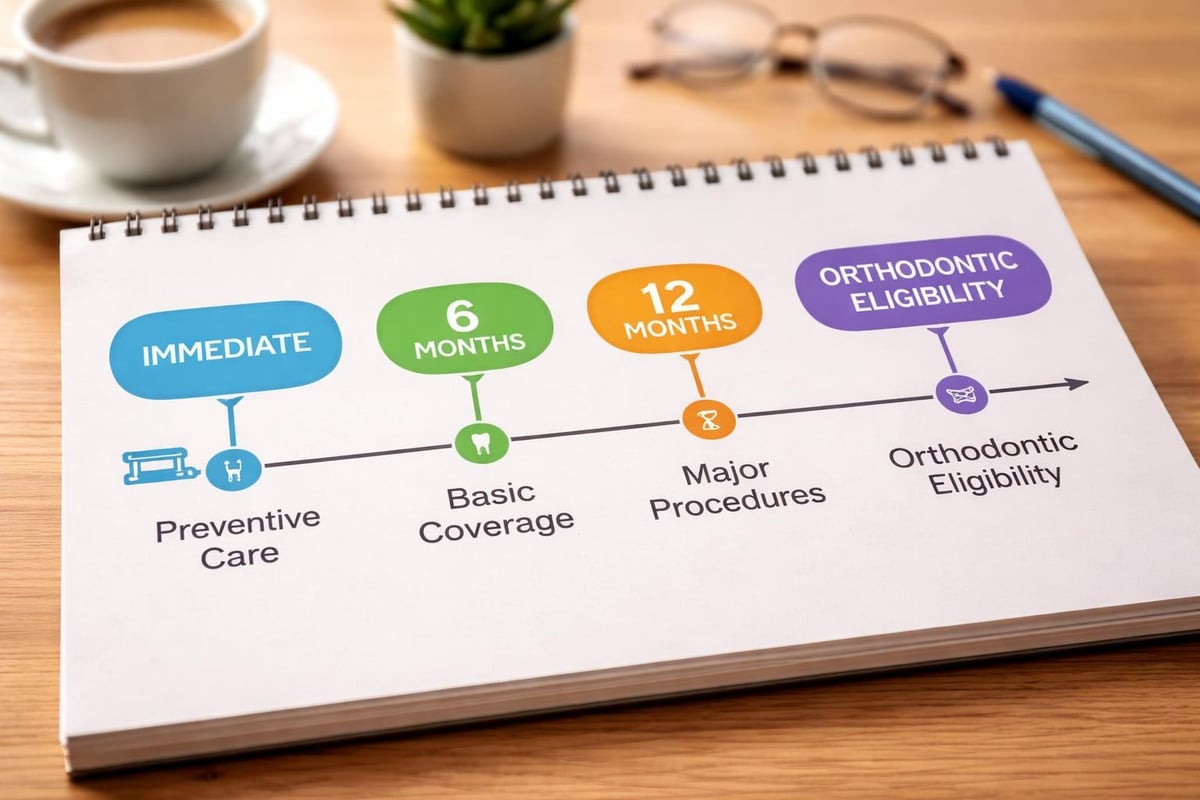
Waiting Periods and Limitations
Insurance carriers protect against adverse selection by imposing waiting periods before covering expensive procedures. Understanding these restrictions prevents unpleasant surprises.
| Service Type | Typical Waiting Period | Purpose |
|---|---|---|
| Preventive | None | Encourage immediate care |
| Basic | 6 months | Moderate risk protection |
| Major | 12 months | Prevent claim-and-cancel |
| Orthodontics | 12-24 months | Long-term commitment |
Some carriers waive waiting periods if you demonstrate continuous prior coverage. Maintaining dental insurance becomes more valuable over time as you build coverage history.
Tax Advantages for Self-Employed Dental Insurance
One significant benefit often overlooked by independent professionals is the tax deductibility of dental insurance premiums. The IRS treats health and dental insurance as legitimate business expenses for self-employed individuals.
Self-Employed Health Insurance Deduction
If you show a net profit on Schedule C and aren't eligible for employer-sponsored coverage through a spouse, you can deduct 100% of dental insurance premiums. This deduction appears on Form 1040 as an adjustment to income, not an itemized deduction.
The advantages are substantial:
- Reduces adjusted gross income, potentially qualifying you for other tax benefits
- Available even if you take the standard deduction
- Covers premiums for yourself, spouse, and dependents under 27
- Applies to dental, medical, and qualified long-term care insurance
For Minnesota residents, understanding tax deductibility helps you calculate the true after-tax cost of coverage. A $400 monthly premium effectively costs $280 if you're in the 30% combined federal and state tax bracket.
Documentation Requirements
The IRS requires proper documentation to claim these deductions. Maintain records showing:
- Premium payment receipts or bank statements
- Policy documents proving coverage periods
- Business income exceeding premium costs
- Verification that you weren't eligible for employer coverage
Your tax preparer can help optimize this deduction alongside other self-employment expenses. The savings often make comprehensive dental insurance for self employed professionals more affordable than many realize.
Comparing Providers and Finding the Right Fit
With dozens of carriers offering dental coverage in Minnesota, systematic comparison ensures you select the optimal plan for your situation.
Network Considerations for Minnesota Residents
Provider networks significantly impact your out-of-pocket costs and access to care. Plans typically offer PPO networks with broader choice or HMO networks with lower premiums but restricted provider selection.
Minneapolis and St. Paul metro residents enjoy extensive network options with virtually every carrier offering hundreds of in-network providers. Rochester, Duluth, and Mankato have solid networks but fewer choices. Rural Minnesota communities including Albany, Freeport, and smaller towns may find limited in-network options, making out-of-network benefits important.
Verify your preferred dentist participates in the plan's network before purchasing. Dental and vision insurance options often bundle coverage, potentially saving money if you need both.
Premium Versus Coverage Trade-offs
Monthly premiums vary widely based on coverage comprehensiveness, deductibles, and annual maximums. The cheapest plan isn't always the best value.
| Plan Type | Monthly Premium | Annual Maximum | Best For |
|---|---|---|---|
| Basic | $25-35 | $1,000 | Excellent oral health |
| Standard | $40-55 | $1,500 | Average dental needs |
| Premium | $60-80 | $2,000+ | Anticipated major work |
Calculate expected annual costs by adding premiums to anticipated out-of-pocket expenses. Someone needing a crown saves money with a premium plan despite higher monthly costs, while healthy individuals maximize value with basic coverage.
Reading the Fine Print
Policy documents contain critical details that impact your coverage experience. Before committing, review:
- Specific procedure codes covered – Plans may exclude certain treatments or limit frequency
- Exclusions and limitations – Cosmetic work, implants, and pre-existing conditions often receive no coverage
- Age restrictions – Some plans limit dependent coverage or charge more for older enrollees
- Renewal terms – Understand whether premiums can increase and under what circumstances
The Freelancers Union provides comprehensive guidance on contract terms and what to look for when comparing policies.
Alternatives and Supplementary Strategies
Dental insurance for self employed professionals isn't the only approach to managing oral healthcare costs. Several complementary strategies enhance coverage or provide alternatives.
Health Savings Accounts (HSAs)
If you carry a high-deductible health plan, HSAs offer triple tax advantages for medical and dental expenses. Contributions reduce taxable income, growth is tax-free, and withdrawals for qualified medical expenses (including dental) are never taxed.
For 2026, self-employed individuals can contribute $4,300 (individual) or $8,550 (family) annually. These funds roll over indefinitely and can cover dental procedures not included in your insurance plan.
Flexible Spending Accounts (FSAs)
Self-employed individuals typically can't access traditional FSAs unless they have employees and establish a plan. However, the tax savings potential makes this worth investigating if you have a spouse employed elsewhere who can access an FSA through their employer.
Direct Payment Plans with Dentists
Many dental practices now offer in-house membership plans, especially in competitive markets like Minneapolis and Rochester. You pay an annual fee (typically $300-500) and receive:
- Free preventive care (exams, cleanings, X-rays)
- Significant discounts on all procedures
- No insurance paperwork or claim denials
- No annual maximums or waiting periods
These plans work particularly well when combined with catastrophic dental coverage that only activates for major procedures.

Combining Strategies for Optimal Coverage
The most sophisticated approach layers multiple strategies. Consider this combination popular among Minnesota self-employed professionals:
- Basic dental insurance covering preventive care and catastrophic protection ($35/month)
- HSA contributions building reserves for anticipated major work ($200/month)
- Dental savings plan providing additional discounts ($15/month)
This hybrid approach costs $250 monthly but provides comprehensive protection, tax advantages, and maximum flexibility. Evaluating whether dental insurance is worthwhile depends on your specific health status and financial situation.
Special Considerations for Minnesota Business Owners
Self-employed professionals in Minnesota face unique considerations that affect dental insurance decisions and availability.
Seasonal Business Fluctuations
Many Minnesota businesses experience seasonal revenue variations. Agricultural operations around Albany and Freeport see income concentrated in harvest seasons, while tourism-dependent businesses in Brainerd and Duluth peak in summer.
Dental insurance for self employed individuals with variable income requires careful timing. Purchase coverage during profitable periods and maintain it through slower months. The predictable premium costs provide stability when business revenue fluctuates.
Family Coverage Decisions
Adding dependents to dental coverage significantly increases costs but often provides better value than separate individual plans. A self-only plan might cost $45 monthly, while family coverage runs $150, averaging just $37.50 per person.
Evaluate family coverage if:
- Your spouse is also self-employed without access to group benefits
- You have children requiring orthodontic work
- Multiple family members need regular dental care
- The per-person cost drops below individual plan pricing
Many Minnesota families find that comprehensive employee benefits packages become worthwhile once they hire their first employee, as business owners can participate in employee plans.
Transitioning from Employer Coverage
When leaving traditional employment to start your Minnesota business, you face a coverage gap. COBRA continuation coverage extends your employer plan for 18 months but typically costs the full premium plus administration fees.
Strategic transition options include:
- Enrolling in individual coverage during COBRA period to avoid waiting periods
- Using MNsure special enrollment if you lose employer coverage
- Investigating spouse's employer coverage options
- Timing your transition around open enrollment periods
Planning this transition carefully prevents coverage gaps that leave you exposed to full dental costs. Understanding how to evaluate ACA dental options helps ensure continuous coverage.
Making Your Final Decision
Selecting dental insurance for self employed professionals requires balancing immediate costs against long-term value and protection. Your decision should reflect your current oral health status, anticipated needs, and financial capacity.
Assessment Questions to Guide Your Choice
Answer these questions honestly to identify the right coverage level:
- When did you last visit a dentist? If more than two years ago, you likely need comprehensive coverage
- Do you have known dental issues? Existing problems require higher coverage levels and may face waiting periods
- What's your oral health history? Frequent cavities or gum disease indicate need for robust coverage
- Can you afford a $2,000 unexpected expense? If no, prioritize lower deductibles and comprehensive coverage
- How many dental visits did you need last year? Past utilization predicts future needs
Your answers reveal whether you need basic preventive coverage or comprehensive protection against major procedures.
Working with Independent Insurance Brokers
Independent brokers access multiple carriers simultaneously, comparing dozens of plans to find optimal matches. Unlike captive agents representing single companies, independent brokers advocate for your interests.
Benefits of working with brokers include:
- Comparing plans from 35+ insurance companies at once
- Identifying discount opportunities and special programs
- Explaining complex policy terms in plain language
- Assisting with claims and coverage questions
- Providing ongoing service as your needs evolve
For Minnesota business owners juggling multiple responsibilities, working with experienced brokers saves time while ensuring comprehensive coverage analysis.
Annual Review and Adjustment
Your insurance needs evolve as your business and health change. Schedule annual reviews to reassess coverage, comparing:
- Premium increases versus plan switching
- Network changes affecting your dentist access
- New plan offerings in the marketplace
- Changes in your oral health or anticipated procedures
- Tax situation affecting deduction values
Life changes like marriage, children, or business growth trigger coverage reassessment. Determining if dental insurance meets your needs becomes easier with year-over-year comparison data.
Enrollment Periods and Application Process
Understanding when and how to enroll ensures you don't miss coverage opportunities or face unnecessary delays.
Open Enrollment Through MNsure
Minnesota's health insurance marketplace conducts annual open enrollment, typically November through January. During this period, anyone can purchase or change dental coverage without medical underwriting.
Missing open enrollment limits options to special enrollment periods triggered by qualifying life events: losing other coverage, marriage, birth of a child, or moving to Minnesota from another state.
Year-Round Individual Plan Availability
Unlike medical insurance, many dental carriers offer individual plans throughout the year without enrollment restrictions. You can purchase coverage any month and begin receiving benefits according to the plan's waiting period schedule.
This flexibility benefits Minnesota entrepreneurs who start businesses mid-year or realize coverage gaps outside open enrollment. Affordable dental insurance options remain accessible regardless of enrollment timing.
Application Requirements and Underwriting
Dental insurance applications request basic information:
- Personal identification and contact details
- Social Security number for tax reporting
- Payment method for premium billing
- Beneficiary information for family coverage
- Current dentist if requesting network verification
Most carriers don't require dental examinations or medical history for individual plans. Pre-existing conditions receive coverage subject to waiting periods rather than exclusions.
Processing typically completes within 48 hours for individual applications, with coverage effective the first day of the following month.
Navigating dental insurance for self employed professionals in Minnesota doesn't have to be overwhelming when you understand the available options, tax advantages, and coverage structures that match your specific needs. From basic preventive plans to comprehensive coverage that protects against major procedures, the right dental insurance safeguards both your oral health and your business finances. Guardian Insurance Services MN helps self-employed professionals throughout Albany, Freeport, and across Minnesota compare options from over 35 insurance companies to find the perfect balance of coverage and affordability. Contact Guardian Insurance Services MN today to discuss your dental insurance needs and discover how independent broker expertise can save you time, money, and uncertainty.