
Operating heavy vehicles in Minnesota presents unique challenges and risks that demand specialized insurance protection. Whether you're hauling agricultural products from farms near Saint Cloud, transporting construction materials through Minneapolis, or delivering goods across the state, understanding heavy vehicle insurance isn't just smart-it's essential for protecting your business investment and ensuring compliance with state and federal regulations. The right coverage safeguards your financial stability, protects your drivers, and keeps your operations running smoothly even when unexpected incidents occur.
Understanding Heavy Vehicle Insurance Requirements
Heavy vehicle insurance covers trucks and commercial vehicles that exceed standard passenger vehicle weight limits, typically those over 10,000 pounds gross vehicle weight. In Minnesota, these vehicles face stringent insurance requirements that go far beyond basic auto coverage.
Federal and state regulations mandate specific minimum coverage levels for heavy vehicles operating commercially. The Federal Motor Carrier Safety Administration (FMCSA) requires minimum liability coverage ranging from $750,000 to $5 million, depending on the cargo type and vehicle weight. Minnesota businesses must also comply with Form 2290 requirements for heavy highway vehicle use tax, which directly ties to your vehicle's taxable gross weight.
Primary Coverage Types You Cannot Ignore
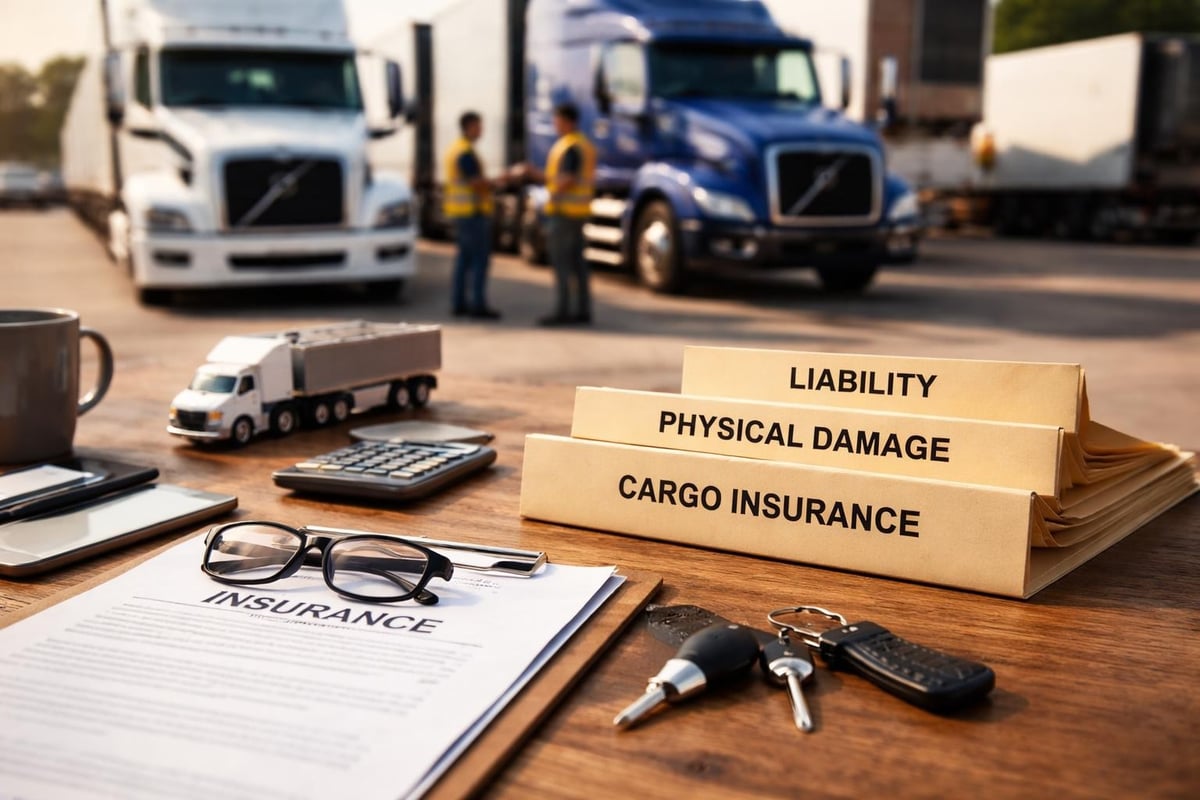
Smart business owners recognize that adequate insurance liability insurance forms the foundation of heavy vehicle protection. Here's what you absolutely need:
- Primary Liability Coverage: Protects against bodily injury and property damage claims when your vehicle causes an accident
- Physical Damage Coverage: Covers repairs or replacement of your own vehicles after collisions, theft, or vandalism
- Cargo Insurance: Protects the goods you're transporting from damage or loss
- Motor Truck Cargo Legal Liability: Covers cargo damage when you're legally responsible
- General Liability: Protects against non-vehicle-related claims at loading docks or business premises
- Uninsured/Underinsured Motorist Coverage: Essential protection when other drivers lack adequate insurance
The consequences of operating without proper coverage extend beyond financial risk. Minnesota law enforcement and DOT officers can ground your vehicles immediately if you cannot prove adequate insurance, bringing your entire operation to a standstill.
Factors That Determine Your Heavy Vehicle Insurance Costs
Your premium isn't pulled from thin air-insurers evaluate multiple risk factors specific to heavy vehicle operations. Understanding these elements empowers you to take strategic actions that reduce your costs while maintaining robust protection.
Driver safety records carry enormous weight in determining premiums. Research consistently shows that driver distraction remains a leading cause of heavy vehicle crashes, making your hiring and training practices critical to controlling insurance expenses.
| Risk Factor | Impact on Premium | Control Strategies |
|---|---|---|
| Driver Experience | High | Hire experienced drivers, implement training programs |
| Safety Record | Very High | Maintain clean driving records, use telematics |
| Vehicle Age/Condition | Moderate | Regular maintenance, upgrade older units |
| Cargo Type | High | Diversify hauling, avoid hazardous materials when possible |
| Geographic Range | Moderate | Optimize routes, limit high-risk areas |
| Annual Mileage | Moderate | Accurate reporting, efficient routing |
Minnesota-Specific Considerations
Operating in Minnesota brings unique challenges that affect your heavy vehicle insurance costs. Winter weather conditions increase accident risks significantly, particularly along Interstate 94 between Saint Cloud and Freeport or when navigating snow-covered roads near Albany. Insurers factor in these seasonal hazards when calculating premiums.
Your vehicle's home base matters tremendously. Trucks garaged in rural areas like Stearns County typically enjoy lower premiums than those based in Minneapolis or Saint Paul, where traffic density and accident frequency increase risk exposure. This geographic advantage makes Minnesota's smaller communities attractive for trucking operations.
Building the Right Heavy Vehicle Insurance Strategy
Generic insurance packages rarely serve heavy vehicle operators well. Your business demands customized coverage that addresses your specific operational risks, cargo types, and growth plans. Working with an experienced insurance broker who understands commercial transportation ensures you're neither over-insured nor dangerously under-protected.
Essential Coverage Customization
Start by conducting a thorough risk assessment of your operations. Document every aspect:
- Vehicle inventory with detailed specifications (make, model, year, GVW)
- Driver roster including experience levels and safety records
- Typical cargo types and values you transport
- Geographic operating range and frequency
- Loading/unloading procedures and equipment used
- Annual revenue and growth projections
This information becomes invaluable when comparing quotes and coverage options. Many Minnesota businesses discover that bundling heavy vehicle insurance with other commercial policies creates significant savings while simplifying policy management.
Consider specialized endorsements that address unique exposures. Refrigerated cargo requires temperature-related spoilage coverage. Livestock haulers need animal mortality protection. Construction material haulers benefit from rigger's liability. Each endorsement adds cost but eliminates potentially catastrophic gaps in protection.

Claims Management and Loss Prevention
Even the best drivers face accidents eventually-what matters is how quickly and effectively you respond. Understanding the claims process before incidents occur dramatically improves outcomes and minimizes operational disruption.
Immediate response procedures protect both safety and claims outcomes. Train every driver on these critical steps:
- Ensure safety first-move vehicles if possible, activate hazards, deploy warning triangles
- Call 911 for injuries or significant property damage
- Document everything with photos from multiple angles
- Collect witness information and opposing driver details
- Report to your insurance company immediately, never delay
- Avoid admitting fault or making statements beyond factual information
Minnesota's comparative fault system means that even partial responsibility can reduce your claim payment. Thorough documentation proving you maintained proper following distance, observed speed limits, and operated safely becomes your strongest defense.
Proactive Loss Prevention Reduces Claims
The most cost-effective insurance strategy focuses on preventing claims before they happen. Minnesota businesses that implement comprehensive safety programs see measurably lower premiums and fewer operational disruptions.
| Safety Initiative | Implementation Cost | Typical Premium Reduction |
|---|---|---|
| Electronic Logging Devices | Moderate | 5-10% |
| Dash Cameras (Forward/Cabin) | Low-Moderate | 10-15% |
| Quarterly Safety Training | Low | 8-12% |
| Pre-Trip Inspection Programs | Low | 5-8% |
| Telematics/GPS Monitoring | Moderate | 12-18% |
Investing in equipment insurance and regular maintenance prevents mechanical failures that cause accidents. A well-maintained fleet demonstrates commitment to safety that insurers reward with better rates.
Navigating Regulatory Compliance and Documentation
Heavy vehicle insurance intersects with complex federal and state regulations that demand meticulous record-keeping. Non-compliance triggers penalties that pale in comparison to the potential consequences of inadequate coverage during a serious incident.
Federal and State Filing Requirements
MCS-90 endorsements are mandatory for interstate commerce, certifying your insurance meets federal minimum requirements. Your insurance company files this with the FMCSA, but you must verify filing completion and maintain proof. Minnesota businesses operating solely within state borders still face substantial state-level insurance requirements.
Certificate of insurance requests from shippers and brokers require quick response. Maintain digital copies accessible 24/7, and establish a system ensuring your agent can issue certificates immediately when opportunities arise. Lost contracts due to delayed insurance verification represent unnecessary revenue loss.
Documentation extends beyond insurance certificates:
- Maintain copies of all policy declarations and endorsements
- Keep records of premium payments and policy renewals
- Document all vehicle additions or deletions from coverage
- Retain accident reports and claim correspondence for minimum seven years
- Archive driver qualification files including insurance acknowledgments
The safety benefits of proper heavy vehicle insurance extend beyond financial protection to include regulatory compliance that keeps your business operating legally.

Specialized Coverage for Unique Heavy Vehicle Operations
Minnesota's diverse economy creates demand for specialized heavy vehicle operations, each requiring tailored insurance approaches. Understanding coverage nuances for your specific niche prevents devastating gaps that standard policies might overlook.
Agricultural and Farm Equipment Hauling
Minnesota's agricultural heritage means many heavy vehicles transport farm equipment, livestock, or agricultural products. These operations face seasonal fluctuations requiring flexible coverage options. Farm insurance specialists understand that harvest season dramatically increases both mileage and risk exposure.
Seasonal adjustment endorsements allow coverage modifications without policy cancellation and rewriting. Reduce coverage during winter months when agricultural hauling slows, then increase limits when spring planting and fall harvest demand peak capacity. This flexibility optimizes premium spending while maintaining adequate protection year-round.
Construction and Material Transport
Heavy vehicles hauling construction materials face unique risks including loading/unloading injuries, cargo shifting, and job site liability. Your insurance must address these exposures through appropriate endorsements and limits.
Work with carriers that understand construction transportation. They'll recommend proper coverage for specialized equipment like dump trucks, concrete mixers, and flatbed haulers. Many construction-focused insurers offer contractors insurance packages bundling vehicle coverage with general liability and workers' compensation for comprehensive protection.
Working with Independent Insurance Brokers
The complexity of heavy vehicle insurance makes working with knowledgeable professionals invaluable. Independent brokers access multiple carriers, comparing coverage options and pricing to secure optimal protection for your specific situation.
Independent brokers serve your interests, not insurance company quotas. This alignment ensures recommendations prioritize your needs over commission structures. When claims arise, your broker advocates on your behalf, expediting resolution and maximizing settlements.
Questions to Ask Potential Insurance Partners
Evaluate insurance brokers carefully before committing your heavy vehicle coverage:
- How many heavy vehicle accounts do you currently manage?
- Which carriers in your network specialize in commercial trucking?
- Can you provide references from similar Minnesota operations?
- What's your typical response time for certificate requests?
- Do you offer risk management consulting beyond policy placement?
- How do you handle claims support and advocacy?
Minnesota businesses benefit from working with local brokers who understand regional challenges. Brokers based in Albany, Freeport, or nearby communities grasp the specific weather, route, and operational factors affecting your risk profile.
Technology and Innovation in Heavy Vehicle Insurance
Modern insurance increasingly leverages technology to assess risk more accurately and reward safe operations. Forward-thinking Minnesota businesses embrace these tools to reduce premiums while improving safety and operational efficiency.
Telematics systems provide insurers real-time data on driving behaviors, vehicle locations, and maintenance needs. Harsh braking, rapid acceleration, speeding, and idle time all factor into risk assessments. Drivers who consistently demonstrate safe habits earn premium discounts that compound over time.
Usage-Based Insurance Programs
Traditional heavy vehicle insurance bases premiums on estimated annual mileage and broad risk categories. Usage-based programs flip this model, charging based on actual miles driven and real-time risk behaviors.
Benefits extend beyond potential savings:
- Accurate mileage tracking eliminates overpayment for unused coverage
- Immediate feedback helps drivers correct unsafe behaviors
- Route optimization tools reduce fuel costs and accident exposure
- Maintenance alerts prevent breakdowns and improve reliability
- Theft recovery features protect vehicle investments
Minnesota businesses implementing comprehensive telematics report 15-25% premium reductions within the first policy year, with additional savings as safety cultures strengthen and claims frequency drops.
Insurance Considerations for Fleet Growth
Successfully scaling heavy vehicle operations requires strategic insurance planning that supports expansion without creating coverage gaps or unnecessary expenses. Your insurance strategy must evolve alongside your business growth.
Adding Vehicles to Existing Policies
Notify your insurance company before putting new vehicles in service, not after. Most policies include automatic coverage for newly acquired vehicles, but time limits apply-typically 30 days. Missing this window could leave you uninsured during the critical break-in period when accident risk runs highest.
Establish a streamlined process for vehicle additions:
- Contact your broker immediately when purchasing decisions are made
- Provide complete vehicle specifications and intended use details
- Obtain written confirmation of coverage before first dispatch
- Update certificates of insurance to reflect new units
- Brief drivers on coverage details and claims procedures
Better coverage planning accommodates growth without scrambling for last-minute insurance arrangements that might compromise protection or miss competitive pricing opportunities.
Making Smart Heavy Vehicle Insurance Decisions
Protecting your heavy vehicle investment requires balancing adequate coverage against budget constraints. Under-insurance exposes your business to potentially catastrophic financial losses, while over-insurance wastes money that could fuel growth.
Start by determining your actual exposure. Calculate worst-case scenarios for various incident types-total vehicle loss, major cargo damage, multi-vehicle accidents with injuries. Your coverage limits must comfortably exceed these potential losses to protect business assets and personal wealth.
Consider deductible strategies carefully. Higher deductibles significantly reduce premiums but require adequate cash reserves to cover out-of-pocket expenses when claims occur. Minnesota businesses with strong safety records often benefit from higher deductibles, accumulating premium savings that offset occasional claim costs.
Review policies annually, not just at renewal. Business changes, vehicle additions, route modifications, and cargo type variations all affect appropriate coverage. Schedule mid-term reviews with your broker to ensure your insurance keeps pace with operational evolution.
Protecting your heavy vehicle operation through comprehensive insurance coverage shields your business investment while ensuring regulatory compliance and operational continuity. Understanding coverage types, managing risks proactively, and working with experienced professionals creates the foundation for sustainable success in Minnesota's competitive transportation industry. Guardian Insurance Services MN brings deep expertise in commercial vehicle insurance, accessing over 35 top carriers to find optimal coverage solutions for your unique heavy vehicle operation-contact their Albany or Freeport office today to discover how personalized service and competitive options can strengthen your business protection.