
Every Minnesota business owner faces a critical question: what happens if an employee gets injured on the job? The answer lies in understanding workers compensation insurance coverage, a mandatory protection system that safeguards both employers and employees when workplace accidents occur. This coverage isn't just a legal requirement in most cases-it's a financial shield that prevents devastating lawsuits while ensuring injured workers receive proper medical care and income replacement. Whether you operate a manufacturing facility in St. Cloud, a retail store in Duluth, or a farm near Rochester, understanding the nuances of this coverage determines whether your business survives a workplace injury claim or faces financial catastrophe.
Understanding Workers Compensation Insurance Coverage Fundamentals
Workers compensation insurance coverage operates on a no-fault basis, meaning employees receive benefits regardless of who caused the injury. This fundamental principle protects businesses from costly litigation while guaranteeing employees get medical treatment and lost wage payments.
The coverage typically includes four essential components: medical expenses, disability benefits, rehabilitation costs, and death benefits for dependents. Medical expenses cover everything from emergency room visits to ongoing physical therapy, while disability benefits replace a portion of lost wages during recovery periods.
According to the National Association of Insurance Commissioners, this system evolved as a trade-off between employer and employee interests, creating a more predictable framework than traditional tort litigation.
Minnesota's Mandatory Coverage Requirements
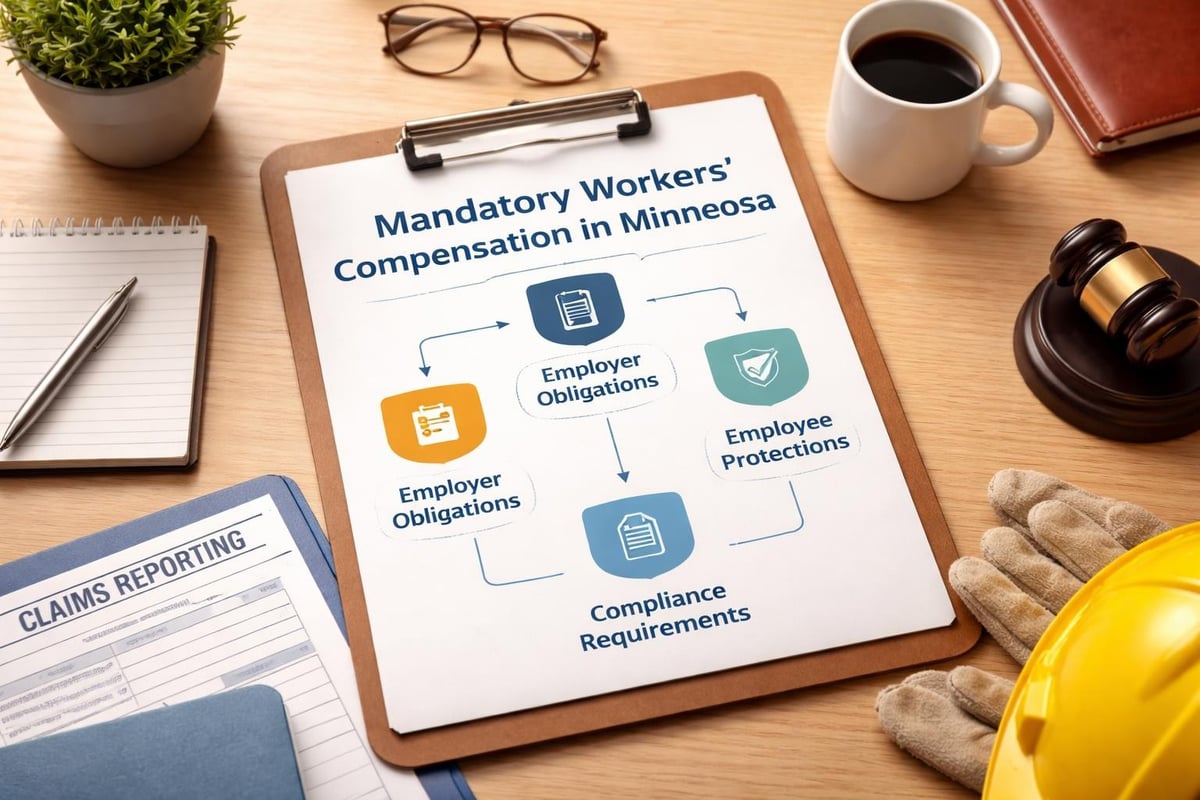
In Minnesota, workers’ compensation coverage is mandatory for nearly all employers, with very limited exceptions. The Minnesota Department of Labor and Industry enforces strict compliance, and failing to maintain coverage can result in severe penalties.
Key employer obligations include:
- Carrying coverage from the first day of hiring any employee
- Posting workplace notices about workers compensation rights
- Reporting injuries to insurers within specific timeframes
- Maintaining accurate payroll records for premium calculations
- Providing coverage for part-time and full-time workers alike
Unlike some states, Minnesota doesn't offer employers the option to opt out of the workers compensation system. This mandatory approach ensures consistent protection across industries, from agriculture operations in Willmar to tech startups in Minneapolis.
What Workers Compensation Insurance Coverage Actually Pays For
Understanding exactly what your workers compensation insurance coverage pays for eliminates confusion when claims arise. The benefits structure follows standardized categories, but payment amounts vary based on injury severity and wage levels.
Medical Benefits and Treatment Coverage
Medical benefits represent the most straightforward component of workers compensation insurance coverage. These benefits cover all reasonable and necessary medical treatment related to work injuries, with no deductibles or copayments required from employees.
Covered medical expenses include:
- Emergency room treatment and hospitalization
- Physician consultations and specialist referrals
- Prescription medications and medical equipment
- Physical therapy and rehabilitation services
- Diagnostic testing including X-rays and MRIs
- Surgical procedures when medically necessary
The comprehensive framework ensures injured workers receive appropriate care without financial barriers. Minnesota employers should note that medical providers must be certified within the state's workers compensation network, and choosing in-network providers streamlines the claims process significantly.
Wage Replacement and Disability Benefits
When injuries prevent employees from working, workers compensation insurance coverage provides wage replacement through disability benefits. Minnesota calculates these benefits as a percentage of the employee's average weekly wage, subject to state-mandated maximums.
| Disability Type | Benefit Amount | Duration |
|---|---|---|
| Temporary Total | 66.67% of average wage | Until recovery or maximum medical improvement |
| Permanent Total | 66.67% of average wage | Lifetime for qualifying disabilities |
| Temporary Partial | 66.67% of wage difference | Until return to full capacity |
| Permanent Partial | Scheduled amount by body part | Fixed period based on injury severity |
These structured benefits protect both parties. Employees receive predictable income during recovery, while employers avoid the uncertainty of unlimited liability. Businesses in St. Paul and Bloomington should understand that maintaining comprehensive commercial insurance coverage beyond workers compensation creates additional protection layers.
Industry-Specific Coverage Considerations for Minnesota Businesses
Different industries face unique workers compensation insurance coverage challenges based on their risk profiles. Premium calculations reflect these variations, with high-risk sectors paying substantially more than office-based businesses.
High-Risk Industries and Premium Factors
Construction, manufacturing, and agriculture dominate Minnesota's high-risk industry categories. A construction company in Mankato faces dramatically different coverage needs than a consulting firm in Eden Prairie.
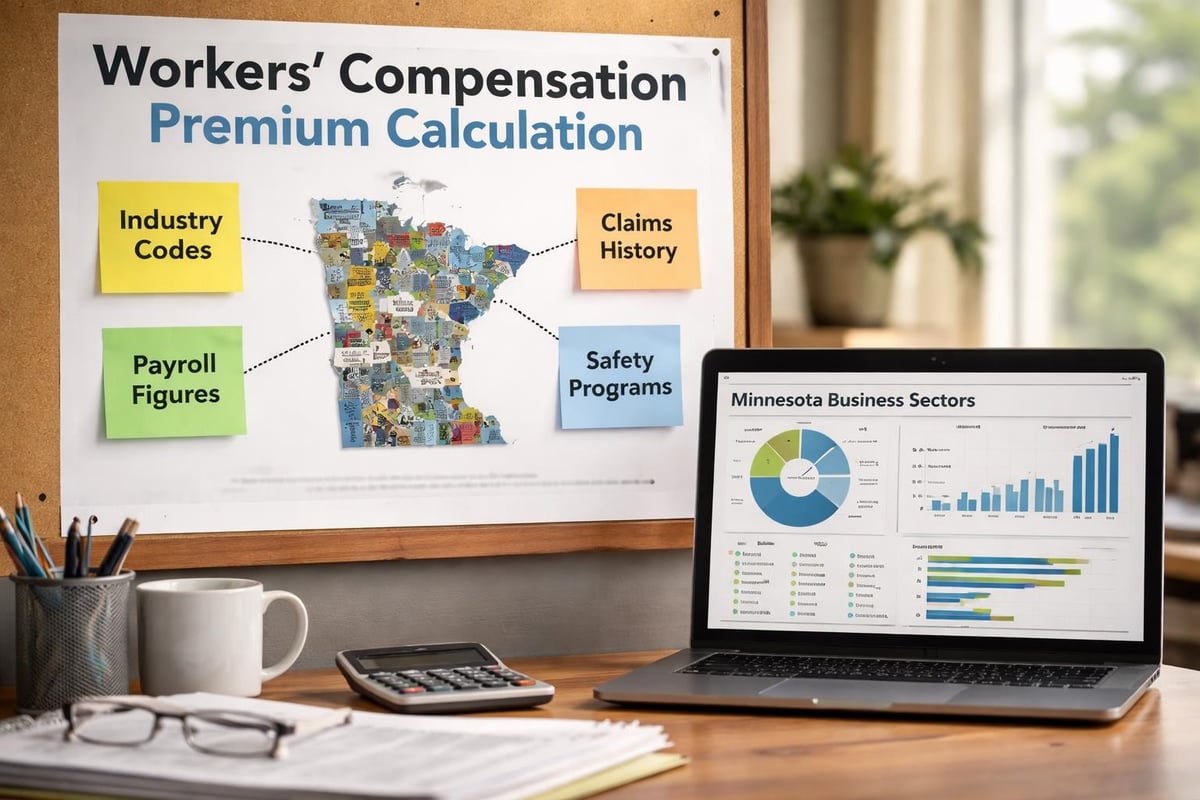
Premium-influencing factors include:
- Industry classification codes that categorize business activities
- Payroll amounts serving as the premium calculation base
- Claims history through experience modification rates
- Safety programs that demonstrate risk reduction efforts
- Employee classifications separating office staff from field workers
Minnesota's robust agricultural sector presents unique considerations. Farms throughout Stearns County and surrounding areas need specialized coverage addressing seasonal workers, machinery operations, and livestock handling. As a farm insurance leader, understanding these nuances proves essential for adequate protection.
Office and Professional Service Businesses
Even low-risk businesses need workers compensation insurance coverage in Minnesota. While premium costs remain modest for office environments, coverage remains mandatory with few exceptions.
Professional service firms face different claim patterns than industrial operations. Repetitive strain injuries, slip-and-fall accidents, and ergonomic issues constitute the majority of claims. A marketing agency in Rochester experiences vastly different risks than a welding shop in Brainerd, yet both require appropriate coverage.
Navigating Claims, Exclusions, and Coverage Limits
Even comprehensive workers compensation insurance coverage includes specific exclusions and limitations. Understanding these boundaries prevents surprises when claims arise and helps businesses implement appropriate supplemental protections.
Common Coverage Exclusions
Workers compensation operates within defined parameters. Certain situations fall outside standard coverage, creating potential gaps employers should address through alternative insurance products.
Standard exclusions typically include:
- Injuries occurring outside work duties or premises
- Self-inflicted injuries or those resulting from intoxication
- Injuries sustained during commuting (with limited exceptions)
- Punitive damages and pain and suffering compensation
- Independent contractors (unless specifically added)
The examination of coverage criteria reveals that proper employee classification significantly impacts coverage application. Minnesota businesses must correctly distinguish between employees and independent contractors, as misclassification creates both coverage gaps and potential legal liability.
Claims Process and Employer Responsibilities
When workplace injuries occur, employers must act swiftly to initiate the claims process. Minnesota law mandates specific reporting timeframes, and delays can jeopardize coverage or increase costs.
Critical steps in the claims process:
- Provide immediate first aid and arrange necessary medical treatment
- Report the injury to your insurance carrier within 48 hours
- Complete required state forms documenting the incident
- Cooperate fully with insurance investigators and medical evaluators
- Maintain communication with injured employees throughout recovery
- Document return-to-work programs and modified duty arrangements
Smart employers in Moorhead and Bemidji recognize that efficient claims management reduces overall costs. Quick reporting, thorough documentation, and proactive return-to-work programs demonstrate to insurers that you're a responsible risk, potentially lowering future premiums.
Strategic Considerations for Coverage Optimization
Purchasing workers compensation insurance coverage represents more than checking a compliance box. Strategic businesses optimize coverage while managing costs through careful planning and risk management initiatives.
Working with Independent Insurance Brokers
Independent brokers access multiple insurance carriers, creating competitive pricing opportunities unavailable when dealing directly with single insurers. This approach proves particularly valuable in Minnesota's diverse business landscape.
Advantages of independent broker relationships:
- Access to 35+ insurance companies for competitive quotes
- Expert guidance on coverage adequacy for specific industries
- Assistance navigating Minnesota's regulatory requirements
- Claims advocacy when disputes arise
- Ongoing policy reviews ensuring coverage keeps pace with business growth
Local expertise matters significantly when selecting workers compensation insurance coverage. Brokers familiar with Minnesota regulations, such as those serving Albany and Freeport communities, understand regional risk factors and carrier preferences that impact pricing and service quality.
Cost Management and Safety Program Implementation
Reducing workers compensation costs requires proactive risk management rather than simply shopping for cheaper coverage. Implemented properly, safety programs deliver measurable premium reductions while protecting employees.
| Safety Initiative | Implementation Cost | Typical Premium Reduction |
|---|---|---|
| Formal safety training program | Low to moderate | 5-15% |
| Ergonomic assessments | Moderate | 3-10% |
| Return-to-work programs | Low | 10-20% |
| Safety equipment upgrades | Moderate to high | 5-12% |
| Drug-free workplace program | Low | 2-8% |
These initiatives compound over time. A manufacturing facility in Sauk Rapids implementing comprehensive safety measures might achieve 25-40% premium reductions over three to five years while simultaneously reducing human suffering and productivity losses.

Integrating Workers Compensation with Broader Business Insurance
Workers compensation insurance coverage functions as one component within a comprehensive business insurance portfolio. Smart Minnesota business owners recognize how different coverage types interact and complement each other.
Coordinating Multiple Coverage Types
Certain workplace situations involve multiple insurance policies. A delivery driver injured in a vehicle accident might trigger both workers compensation and commercial auto insurance coverage, while property damage during an incident might involve commercial property insurance.
Understanding these intersections prevents coverage gaps. Business owners should regularly review their entire insurance portfolio with qualified professionals who understand how different policies coordinate during claims.
Related coverage considerations include:
- General liability insurance protecting against third-party injury claims
- Cyber insurance addressing modern workplace risks
- Professional liability coverage for service-based businesses
- Employee benefits packages complementing mandatory coverage
For professional service firms, professional liability insurance addresses errors and omissions claims that workers compensation doesn't cover, while general liability insurance handles customer injuries occurring on business premises.
Future Trends Affecting Workers Compensation Coverage
The workers compensation landscape continues evolving in response to workplace changes, technological advancements, and emerging risks. Minnesota businesses should monitor several developing trends.
Remote work arrangements have complicated traditional coverage applications. When employees work from home offices in Duluth or Fergus Falls, determining coverage for injuries becomes more nuanced. Insurers increasingly scrutinize remote work policies and home office setups when evaluating claims.
Mental health claims are rising across industries. While Minnesota workers compensation insurance coverage has historically focused on physical injuries, stress-related claims and psychological injuries receive growing recognition. Businesses should anticipate increasing scrutiny of workplace environments and management practices.
The future trends analysis suggests that artificial intelligence and predictive analytics will increasingly influence premium calculations and risk assessments. Businesses maintaining detailed safety data and demonstrating continuous improvement position themselves advantageously as these technologies mature.
Making Informed Coverage Decisions for Your Minnesota Business
Selecting appropriate workers compensation insurance coverage requires balancing legal compliance, financial protection, and employee welfare. The decision extends beyond choosing the cheapest policy to finding coverage that genuinely protects your business interests.
Evaluating Coverage Adequacy
Many businesses discover coverage inadequacies only after serious incidents occur. Proactive evaluation prevents these unpleasant surprises.
Questions to assess coverage adequacy:
- Does your policy accurately reflect current payroll and employee counts?
- Are all employee classifications correctly coded for premium purposes?
- Do coverage limits align with your business's financial exposure?
- Have you added endorsements for unique operational risks?
- Does your carrier have strong financial ratings and claims service reputation?
Minnesota businesses should specifically verify compliance with state-specific requirements that exceed basic coverage standards. Working with knowledgeable insurance professionals familiar with Minnesota regulations ensures nothing falls through the cracks.
The Value of Expert Guidance
Workers compensation represents one of the most complex insurance products businesses purchase. The interaction between state regulations, federal requirements, industry-specific risks, and individual business circumstances creates a matrix that challenges even experienced business owners.
Independent insurance brokers bring specialized knowledge to these decisions. They understand how Minnesota's workers compensation system differs from other states, how various carriers underwrite different industries, and which coverage enhancements provide genuine value versus unnecessary cost.
This expertise proves particularly valuable when unusual situations arise-seasonal employment fluctuations common in Minnesota tourism and agriculture, employee classifications in hybrid work arrangements, or coverage considerations for businesses operating across state lines.
Workers compensation insurance coverage protects Minnesota businesses and employees when workplace injuries occur, providing medical care, wage replacement, and legal protection through a mandatory no-fault system. Understanding coverage components, managing costs through safety initiatives, and selecting appropriate policies requires careful consideration of your specific business circumstances and industry risks. Guardian Insurance Services MN offers personalized guidance from experienced professionals who understand Minnesota's unique requirements, with access to over 35 top insurance carriers ensuring you find optimal coverage at competitive rates. Contact our Albany or Freeport offices today to review your workers compensation insurance coverage and discover how comprehensive protection strategies can safeguard your business while supporting your employees.