
Finding the right workers compensation coverage for your Minnesota business isn't just about meeting legal requirements. It's about protecting your employees, safeguarding your company's financial future, and ensuring you're getting the best possible value for your insurance investment. That's where workers comp agents become invaluable partners. These specialized professionals navigate the complex landscape of coverage options, carrier relationships, and state regulations to help businesses across Minnesota secure comprehensive protection that fits their unique needs and budget.
What Workers Comp Agents Actually Do for Minnesota Businesses
Workers comp agents serve as intermediaries between businesses and insurance carriers, but their role extends far beyond simple policy placement. These professionals analyze your business operations, assess workplace risks, and match you with carriers who specialize in your industry.
Independent agents bring distinct advantages to the table. They work with multiple insurance companies, giving you access to diverse coverage options and competitive pricing. Rather than being limited to a single carrier's products, independent workers comp agents can shop the market on your behalf.
Key Responsibilities That Set Agents Apart
The daily work of workers comp agents involves several critical functions:
- Risk Assessment: Evaluating your workplace hazards and exposure levels
- Carrier Matching: Identifying insurers with expertise in your industry sector
- Policy Customization: Tailoring coverage to your specific operational needs
- Premium Negotiation: Leveraging carrier relationships to secure competitive rates
- Compliance Guidance: Ensuring your coverage meets Minnesota state requirements
For Minnesota businesses, this local expertise matters tremendously. An experienced agent understands the nuances of state regulations, knows which carriers write coverage in Minneapolis, St. Paul, Rochester, and Duluth, and can navigate the specific requirements that apply to your industry.

How Workers Comp Agents Help Manage Insurance Costs
Premium management represents one of the most valuable services workers comp agents provide. Your insurance costs aren't fixed, and skilled agents know exactly how to help you control these expenses without sacrificing necessary protection.
Strategic Approaches to Premium Reduction
| Cost Management Strategy | How Agents Help | Potential Impact |
|---|---|---|
| Experience Modification | Review loss runs and dispute inaccuracies | 10-30% premium reduction |
| Class Code Optimization | Ensure proper employee classifications | 5-20% savings |
| Safety Program Development | Implement carrier-approved initiatives | 15-25% discount eligibility |
| Deductible Structuring | Balance retention with premium savings | Variable based on risk tolerance |
Independent workers comp agents understand that managing workers’ compensation costs requires a multifaceted approach. They work proactively throughout the policy period, not just at renewal time.
Claims management represents another crucial area where agents add value. When workplace injuries occur, your agent coordinates with the carrier's claims department, helps facilitate medical treatment, and ensures proper documentation. This proactive involvement can significantly impact claim severity and ultimately your future premiums.
Minnesota businesses in high-risk industries like construction, manufacturing, and agriculture benefit especially from this guidance. Workers comp agents familiar with these sectors understand the specific exposures involved and can recommend targeted safety measures that reduce both accidents and insurance costs.
Selecting the Right Workers Comp Agent for Your Business
Not all workers comp agents offer the same level of service or expertise. Finding the right partner requires evaluating several key factors that directly impact your coverage quality and overall experience.
Essential Qualifications to Consider
When evaluating potential agents, prioritize these credentials and characteristics:
- Licensing and Authorization: Verify proper Minnesota insurance licenses and carrier appointments
- Industry Specialization: Look for experience with businesses similar to yours
- Market Access: Confirm relationships with multiple quality carriers
- Service Model: Understand their approach to ongoing client support
- Technology Platform: Assess their capability for efficient policy administration
Independent agents affiliated with established brokerages bring additional resources. For instance, working with a firm that maintains relationships with over 35 insurance companies provides substantially more coverage options than captive agents representing single carriers.
Geographic knowledge matters significantly for Minnesota businesses. An agent with deep roots in communities like Albany, Freeport, St. Cloud, or Brainerd understands local business conditions, seasonal employment patterns, and regional risk factors that affect your coverage needs.
Questions That Reveal Agent Quality
- How many workers comp carriers do you actively work with?
- What percentage of your book of business is in my industry?
- How do you handle mid-policy claim situations?
- What loss control resources can you provide?
- How will you help me prepare for annual audits?
The answers to these questions reveal whether an agent takes a transactional or consultative approach to their work. You want partners who view workers compensation insurance as an ongoing relationship, not a one-time sale.
The Agent's Role in Claims Management and Loss Control
Workers comp agents deliver tremendous value during the claims process, when businesses need guidance most urgently. Their involvement often determines whether a claim remains minor or escalates into a costly, long-term situation.
Immediate response matters. When an employee injury occurs, your agent should provide clear direction on reporting procedures, medical provider networks, and documentation requirements. This guidance helps ensure proper claim handling from the outset.
Comprehensive Claims Support Services
Effective workers comp agents offer these critical claims-related services:
- First Report Coordination: Ensuring timely and accurate claim reporting
- Medical Management: Directing injured workers to approved providers
- Return-to-Work Programs: Facilitating modified duty arrangements
- Reserve Monitoring: Tracking claim reserves and challenging excessive valuations
- Subrogation Opportunities: Identifying potential third-party recovery situations
Minnesota's workers compensation system has specific requirements for claim reporting and medical treatment. Agents familiar with these regulations help businesses avoid penalties while ensuring employees receive appropriate care.
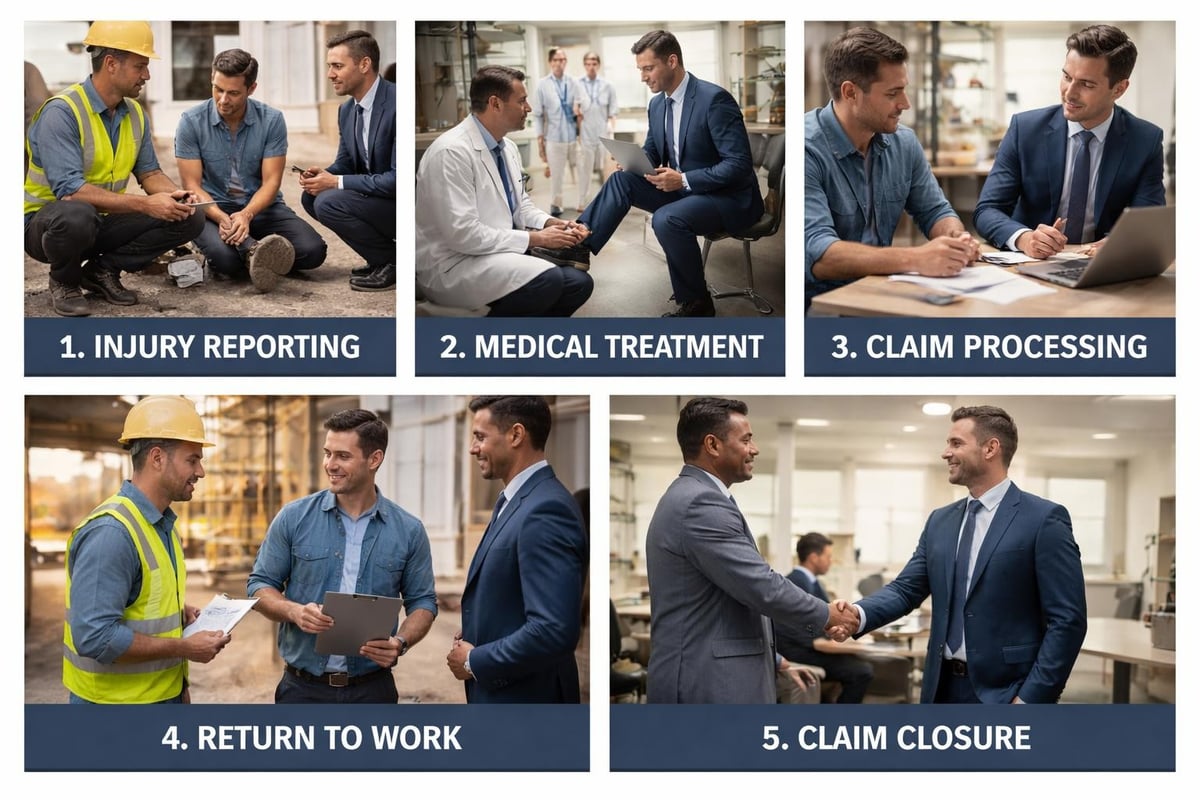
Loss control represents the proactive counterpart to claims management. Forward-thinking workers comp agents don't wait for accidents to happen. They help clients implement safety programs that prevent injuries in the first place.
Understanding the agent’s role in workplace safety includes recognizing that many carriers provide free safety resources to policyholders. Your agent should connect you with these valuable tools, which might include on-site consultations, training materials, and industry-specific guidance.
Navigating Minnesota Workers Compensation Requirements
Minnesota law mandates workers compensation coverage for most employers, but the specific requirements vary based on business structure, employee count, and industry classification. Workers comp agents serve as essential guides through this regulatory landscape.
Coverage Mandate Basics
| Business Type | Coverage Requirement | Key Considerations |
|---|---|---|
| Corporations | Required if any employees | Includes corporate officers |
| LLCs | Required if any employees | Member coverage optional |
| Sole Proprietors | Optional for owner | Required for employees |
| Partnerships | Optional for partners | Required for employees |
| Construction | Required with strict enforcement | Includes subcontractor verification |
Experienced workers comp agents ensure you understand exactly who must be covered under your policy. This prevents costly gaps that could expose you to penalties or uninsured claim liability.
Exemptions exist for certain situations, but they're narrower than many business owners realize. For instance, coverage requirements for insurance agents vary by state and employment structure. Minnesota has its own specific rules that your agent should explain clearly.
Construction businesses face particularly complex requirements. General contractors must verify that all subcontractors maintain proper coverage or risk having those payrolls added to their own policy calculations. Skilled workers comp agents help implement certificate of insurance tracking systems that prevent these expensive surprises.
Industry-Specific Compliance Challenges
Different sectors face unique workers compensation considerations:
- Agriculture: Seasonal workers, family member exemptions, and farm labor classifications
- Manufacturing: High-hazard operations requiring enhanced safety protocols
- Healthcare: Bloodborne pathogen exposure and patient handling risks
- Construction: Multi-state projects and subcontractor coordination
- Retail: Part-time employee coverage and customer injury distinctions
Your agent should understand the particular compliance challenges your industry presents. This specialized knowledge ensures your coverage addresses all statutory requirements while avoiding unnecessary premium expenses for exposures that don't apply.
How Independent Agents Differ From Captive Representatives
The distinction between independent and captive workers comp agents significantly impacts the service you receive and the coverage options available to your business. Understanding these differences helps you make informed decisions about agent selection.
Independent agents represent multiple insurance companies, giving them flexibility to match your specific needs with the most appropriate carrier. When one insurer declines coverage or quotes an uncompetitive premium, independent agents can immediately pivot to alternative markets.
Comparative Advantages of Agent Types
Independent workers comp agents offer several strategic benefits:
- Market Competition: Multiple carriers competing for your business
- Specialized Markets: Access to niche insurers for hard-to-place risks
- Unbiased Advice: Recommendations based on your needs, not carrier quotas
- Long-term Relationships: Agents stay with you even if carriers change
- Negotiating Power: Leverage with multiple insurers improves terms
Captive agents can provide excellent service, but they're limited to their company's products and pricing. For businesses with complex operations, specialized risks, or challenging loss histories, this limitation often proves problematic.
Minnesota businesses benefit particularly from independent agents because the state's diverse economy creates varied insurance needs. A Rochester medical device manufacturer has different requirements than a Duluth shipping operation or a Willmar agricultural business. Independent workers comp agents can access specialized carriers for each scenario.

Partnering With Agents for Proactive Risk Management
The most valuable workers comp agents view their role as strategic advisors rather than policy vendors. This consultative approach transforms insurance from a necessary expense into a risk management tool that protects your business and improves your bottom line.
Building a Risk Management Partnership
Progressive agents help businesses develop comprehensive safety cultures:
- Conducting workplace safety audits to identify hazards
- Creating customized safety manuals for your operations
- Providing employee training programs and materials
- Implementing accident investigation protocols
- Establishing metrics to track safety performance improvements
This proactive approach delivers measurable results. Businesses that work closely with their workers comp agents on safety initiatives typically see claim frequency decrease by 20-40% within two years. These improvements translate directly into premium savings through better experience modification rates.
Minnesota's seasonal employment patterns create unique risk management challenges. Construction companies ramping up spring crews, agricultural operations hiring harvest workers, or tourism businesses staffing summer seasons must maintain consistent safety standards despite workforce fluctuations. Experienced agents help develop systems that accommodate these cyclical patterns.
Resources like those available from specialized workers compensation carriers support these efforts with tools specifically designed for agent-client collaboration on risk improvement initiatives.
Measuring Safety Program Success
| Performance Metric | Measurement Method | Target Improvement |
|---|---|---|
| Incident Rate | OSHA recordable injuries per 100 workers | 25% reduction annually |
| Lost Time Frequency | Days away from work cases per year | 30% reduction in 24 months |
| Claim Severity | Average cost per claim | 15% reduction per policy period |
| Experience Mod | Annual calculation of loss experience | Below 1.0 within three years |
Your agent should help you track these metrics and understand how they influence your insurance costs. This data-driven approach takes workers compensation from a mysterious expense to a manageable business function.
Understanding Agent Compensation and Its Impact on Service
Many business owners don't fully understand how workers comp agents get paid, which can lead to questions about conflicts of interest and service quality. Transparency about compensation structures helps you evaluate the advice you receive.
Commission-based compensation remains the standard model. Agents typically receive a percentage of your premium from the insurance carrier, meaning they're paid by the insurer, not directly by you as the client. This arrangement provides access to professional expertise without out-of-pocket consulting fees.
How Commission Structures Work
Commission percentages vary by carrier, coverage type, and account size, typically ranging from 10-15% for workers compensation policies. Larger accounts often command lower percentage commissions but higher absolute dollars due to premium volume.
Independent agents working through established brokerages may have additional compensation components:
- Base Commission: Standard percentage paid by the carrier
- Contingent Commission: Performance bonuses based on overall book profitability
- Profit Sharing: Year-end bonuses tied to agency success
- Service Fees: Flat fees for specialized consulting services
Understanding these structures doesn't suggest that compensation creates conflicts. Professional workers comp agents recognize that their long-term success depends on client retention, which requires securing appropriate coverage at competitive prices and delivering excellent service.
Fee-based models represent an alternative approach some agencies offer. Under this structure, clients pay consulting fees directly while the agent rebates commissions or negotiates reduced premiums. This model works well for large accounts seeking customized risk management services.
For Minnesota businesses working with independent brokers offering access to diverse carriers, the commission model typically provides the best value. You receive professional expertise without additional costs, while the agent has strong incentives to secure competitive pricing and maintain quality service.
The Technology Advantage Modern Agents Provide
Today's leading workers comp agents leverage technology platforms that streamline policy administration, improve communication, and provide real-time access to coverage information. These digital capabilities represent a significant service differentiator.
Essential Technology Features to Expect
Modern agent technology should include:
- Client Portals: 24/7 access to policy documents, certificates, and claims information
- Mobile Applications: On-the-go certificate requests and policy management
- Automated Renewals: Streamlined renewal processes with digital proposals
- Claims Tracking: Real-time claim status updates and reserve information
- Certificate Management: Instant certificate generation for vendors and contracts
Digital efficiency matters increasingly for businesses managing multiple locations, subcontractors, or complex coverage requirements. The ability to generate certificates of insurance instantly or access policy details from a smartphone saves valuable time and reduces administrative burden.
Integration capabilities represent another critical technological consideration. Your workers comp agent's systems should connect seamlessly with your accounting software, payroll providers, and other business management tools. This integration reduces duplicate data entry and improves accuracy.
Minnesota businesses operating in multiple locations across the state particularly benefit from cloud-based agent platforms. Whether you're managing operations in Minneapolis and Moorhead or coordinating between Twin Cities headquarters and greater Minnesota locations, centralized digital access streamlines insurance administration.
Workers comp agents who invest in technology demonstrate their commitment to efficient service delivery. They understand that your time is valuable and that modern tools can eliminate friction from routine insurance transactions, letting you focus on more strategic risk management conversations.
Building Long-Term Relationships With Your Workers Comp Agent
The most successful business-agent partnerships extend far beyond annual policy renewals. They're built on consistent communication, mutual understanding, and shared commitment to risk management excellence.
Regular touchpoints throughout the policy year keep both parties aligned on evolving business conditions, emerging risks, and coverage needs. Quarterly check-ins allow agents to stay current on business growth, operational changes, or new exposures that might affect your insurance program.
Creating a Collaborative Partnership
Effective working relationships with workers comp agents require effort from both sides:
- Transparent Communication: Share business plans, growth projections, and operational changes
- Timely Reporting: Notify your agent immediately of claims, coverage questions, or policy needs
- Safety Cooperation: Engage actively with recommended risk management initiatives
- Premium Payments: Maintain current payment status to preserve coverage
- Feedback Provision: Let your agent know what's working and what could improve
Minnesota businesses benefit from working with locally based agents who understand regional business conditions. An agent with offices in Albany and Freeport brings insights about central Minnesota business challenges, seasonal considerations, and local market dynamics that distant representatives simply can't match.
Agents affiliated with firms offering comprehensive commercial insurance solutions can coordinate your workers compensation coverage with other business policies. This integrated approach often reveals coverage gaps, eliminates duplications, and creates efficiencies that single-line agents can't provide.
Preparing for Annual Reviews
Make the most of renewal meetings by preparing in advance:
- Gather updated payroll projections by classification
- Document any operational changes or new business activities
- Review your current policy for coverage adequacy
- Compile questions about claims experience or safety recommendations
- Understand how your experience modification changed and why
This preparation transforms renewals from routine transactions into strategic planning sessions that strengthen your overall risk management program.
Working with experienced workers comp agents transforms insurance from a compliance burden into a strategic business asset that protects your employees and your bottom line. The right agent brings market access, specialized expertise, and proactive risk management support that independent business owners simply can't replicate on their own. Guardian Insurance Services MN provides exactly this type of comprehensive support to Minnesota businesses throughout Albany, Freeport, and surrounding communities, combining local expertise with access to over 35 top carriers to deliver personalized workers compensation solutions that fit your unique needs. Contact our team today to discover how the right insurance partnership can strengthen your business protection while controlling your costs.