
Understanding insurance as a business requires looking beyond policies and premiums to examine the fundamental economic model that has sustained this industry for centuries. The insurance sector operates on unique principles of risk pooling, actuarial science, and long-term financial planning that distinguish it from other financial services. For businesses in Minnesota and beyond, grasping these core concepts helps you make smarter decisions about commercial coverage, risk management, and partnership selection. Whether you're operating a farm in Freeport, managing a construction company in Albany, or running a retail operation in Minneapolis, the business mechanics behind insurance directly affect your bottom line.
The Economic Foundation of Insurance as a Business
Insurance as a business thrives on a paradoxical concept: profiting from uncertainty while simultaneously reducing it for clients. Insurance companies collect premiums from thousands or millions of policyholders, pool these funds, and use actuarial calculations to predict how much they'll pay out in claims. The difference between premiums collected and claims paid, minus operational expenses, represents the underwriting profit.
This economic model relies on three fundamental pillars:
- Risk pooling across diverse policyholders to spread potential losses
- Premium pricing based on statistical analysis and historical data
- Investment income from deploying premium reserves in financial markets
The insurance industry’s structure encompasses direct writers, independent agents, brokers, and reinsurers, each playing distinct roles in distributing risk and generating revenue. In 2025, the U.S. insurance market exceeded $1.4 trillion in annual premiums, demonstrating the sector's massive economic footprint.

Revenue Streams Beyond Premiums
Most people understand that insurance as a business earns money from premiums, but the revenue picture extends much further. Investment income represents a substantial portion of profitability for established carriers. Insurance companies receive premiums upfront but may not pay claims for months or years, allowing them to invest these funds in bonds, stocks, real estate, and other assets.
| Revenue Source | Description | Typical Contribution |
|---|---|---|
| Underwriting Income | Premiums minus claims and expenses | 15-25% of total revenue |
| Investment Income | Returns from invested reserves | 25-40% of total revenue |
| Fee-Based Services | Risk management, consultation | 5-10% of total revenue |
| Ancillary Products | Extended warranties, roadside assistance | 3-8% of total revenue |
For independent brokers like those serving the Albany and St. Cloud regions, revenue comes primarily from commissions paid by insurance carriers. This model aligns broker incentives with client needs, as satisfied customers renew policies year after year, generating ongoing commission streams.
Risk Management as a Core Business Strategy
Insurance as a business fundamentally sells risk management solutions, but carriers must also expertly manage their own risk exposure. This dual nature creates complex strategic considerations that separate successful insurers from those that fail during catastrophic events.
Carriers employ sophisticated risk management techniques:
- Diversification across geographic regions, policy types, and customer segments
- Reinsurance purchasing to transfer catastrophic risk to specialized carriers
- Reserve management ensuring adequate funds for future claims
- Underwriting discipline refusing unprofitable business even when competitors accept it
The strategic challenges facing insurers have intensified with climate change, cyber threats, and pandemic risks. Minnesota businesses, particularly those in agriculture and manufacturing, face evolving risk landscapes that require carriers to constantly recalibrate their models.
The Underwriting Process
Underwriting represents the heart of insurance as a business. This process determines which risks to accept, at what price, and under what conditions. For commercial insurance clients, underwriting evaluates everything from property construction quality to employee safety records.
Modern underwriting combines human expertise with advanced analytics. Actuaries analyze historical data to predict future losses, while underwriters assess individual applicants to determine if they represent better or worse risks than the average. When you apply for workers compensation insurance in Minnesota, underwriters examine your industry classification, safety protocols, claims history, and employee count.
The profit margin in insurance underwriting remains relatively thin. Combined ratios (claims plus expenses divided by premiums) above 100% indicate underwriting losses, while ratios below 100% show underwriting profits. Many successful carriers operate with combined ratios of 95-98%, relying on investment income to boost overall profitability.
Distribution Models and Market Competition
Insurance as a business reaches customers through multiple distribution channels, each with distinct advantages and business models. Understanding these differences helps Minnesota businesses select the right insurance partner for their specific needs.
Primary distribution channels include:
- Direct writers who sell exclusively through employed agents or online platforms
- Independent agents representing multiple carriers to offer client choice
- Insurance brokers who work on behalf of clients rather than carriers
- Digital platforms providing instant quotes and coverage through technology
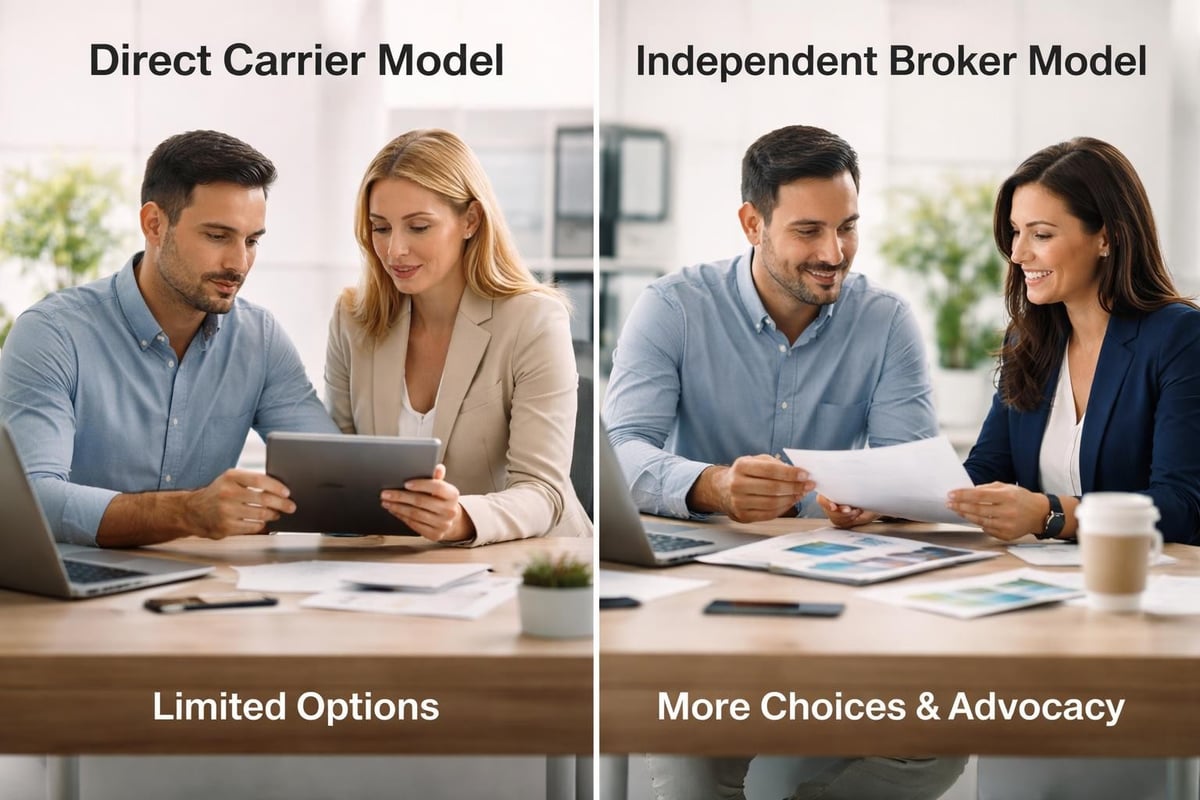
Independent brokers occupy a unique position in this ecosystem. Unlike captive agents who represent single carriers, independent brokers access dozens of insurance companies to find optimal coverage and pricing. This model benefits businesses with complex needs, such as Minnesota farms requiring specialized farm insurance that traditional carriers may not understand.
Competitive Dynamics in Regional Markets
The insurance marketplace operates with intense competition balanced by regulatory oversight. Minnesota's insurance market includes national carriers, regional specialists, and local mutuals, each competing for market share while maintaining solvency requirements set by state regulators.
Market data from industry analysis reveals consolidation trends alongside niche specialization. Large carriers leverage economies of scale for efficiency, while smaller insurers differentiate through exceptional service or specialized expertise in markets like agriculture, manufacturing, or hospitality.
For businesses in Rochester, Duluth, or St. Cloud, this competitive landscape creates opportunities to negotiate better terms, especially when working with brokers who understand leverage points. Insurance as a business becomes more responsive when clients demonstrate risk management commitment, maintain clean loss histories, and approach renewals with competitive alternatives.
Technological Transformation and Business Evolution
Insurance as a business is experiencing radical transformation through technology adoption. Legacy systems built on paper files and manual calculations are giving way to artificial intelligence, blockchain, Internet of Things sensors, and predictive analytics that fundamentally alter how insurers assess risk and process claims.
Key technological innovations reshaping the industry:
- Telematics for usage-based auto insurance pricing
- AI-powered underwriting reducing decision timeframes from weeks to minutes
- Blockchain for transparent, efficient claims processing
- Predictive analytics identifying risks before losses occur
- Digital customer portals enabling 24/7 policy management
The transformation of insurance business models through advanced modeling creates both opportunities and challenges. Smaller carriers and brokers must invest in technology to remain competitive, while clients benefit from faster service, better pricing accuracy, and enhanced risk management tools.
Minnesota businesses now access sophisticated risk management platforms that were previously available only to Fortune 500 companies. Commercial property insurance clients can monitor building systems remotely, receiving alerts about potential water leaks, fire hazards, or security breaches before they escalate into major claims.
Data as a Strategic Asset
Insurance as a business has always relied on data, but the volume, velocity, and variety of available information has exploded. Carriers now analyze social media activity, satellite imagery, weather patterns, economic indicators, and countless other data points to refine risk assessments.
This data revolution creates privacy concerns and regulatory challenges. The National Association of Insurance Commissioners provides oversight to ensure carriers use data ethically while maintaining competitive markets. Minnesota regulators balance innovation with consumer protection, allowing insurers to leverage technology while preventing discriminatory practices.
Financial Strength and Solvency Requirements
Understanding insurance as a business requires appreciating the rigorous financial requirements carriers must meet. Unlike most industries where companies can operate with minimal capital, insurance regulation mandates substantial reserves to protect policyholders.
| Financial Metric | Purpose | Typical Requirement |
|---|---|---|
| Surplus | Cushion beyond expected claims | 15-20% of premiums |
| Risk-Based Capital | Reserves proportional to risk exposure | Varies by line of business |
| Liquid Assets | Immediate claim-paying ability | 90+ days of expected claims |
| Reinsurance | Catastrophic loss protection | 10-30% of total exposure |
State insurance commissioners conduct annual examinations of carriers operating in their jurisdictions. These reviews ensure companies maintain adequate reserves, follow sound investment practices, and can fulfill policyholder obligations even during economic downturns or catastrophic loss events.
For Minnesota businesses selecting insurance companies for business insurance, carrier financial strength ratings from A.M. Best, Moody's, or Standard & Poor's provide critical insights. A financially weak insurer offering low premiums might seem attractive, but claims payment failures during disasters can devastate policyholders.
The Reinsurance Safety Net
Reinsurance represents "insurance for insurance companies" and plays a crucial role in how insurance as a business manages catastrophic risk. When hurricanes, wildfires, or other major events generate billions in claims, reinsurers absorb portions of these losses, preventing individual carrier insolvencies.
The reinsurance market operates globally, with Munich Re, Swiss Re, and other specialized companies spreading risk across continents. This international dimension means that a hailstorm in Minnesota or tornado in St. Cloud might ultimately be partially covered by reinsurers in Europe or Asia, demonstrating the interconnected nature of modern insurance finance.

The Role of Insurance in Economic Growth
Insurance as a business extends beyond individual transactions to serve as an economic enabler. The U.S. Chamber of Commerce highlights how insurance facilitates commerce by reducing uncertainty, enabling investment, and protecting wealth creation.
Insurance drives economic activity through:
- Enabling lending by protecting collateral against loss
- Supporting entrepreneurship by managing business risks
- Facilitating trade through cargo and liability coverage
- Protecting employment via workers compensation and employee benefits
- Encouraging innovation by insuring new technologies and ventures
Minnesota's economy relies heavily on agriculture, manufacturing, healthcare, and technology sectors that couldn't function without comprehensive insurance solutions. A farmer in Freeport can invest in expensive equipment knowing farm insurance protects against hail, fire, or equipment breakdown. Manufacturers in the Twin Cities can hire employees confidently with proper workers compensation coverage.
Social Benefits Beyond Profit
While insurance as a business operates for profit, it simultaneously provides enormous social benefits. Disaster recovery after tornadoes, floods, or fires happens faster and more completely when insurance provides financial resources. Families maintain living standards after breadwinner deaths thanks to life insurance. Medical treatments proceed without financial catastrophe through health insurance.
This dual nature of profit-seeking while serving social needs creates unique responsibilities for insurance companies. Regulatory oversight ensures carriers balance shareholder returns with policyholder protection, maintaining the industry's role as a societal safety net.
Strategic Considerations for Insurance Buyers
Understanding insurance as a business empowers you to make smarter purchasing decisions. When you recognize that carriers profit from accurately pricing risk, you can leverage risk management investments to negotiate better premiums. When you understand broker compensation models, you can assess whether recommendations truly serve your interests.
Apply these strategic insights when purchasing insurance:
- Demonstrate risk management through safety programs, loss control, and documentation
- Compare multiple carriers to ensure competitive pricing and coverage
- Review financial strength of insurers to confirm claims-paying ability
- Work with experienced brokers who understand your industry specifics
- Maintain accurate records to streamline underwriting and claims processes
Minnesota businesses benefit from working with brokers who maintain relationships with multiple carriers specializing in regional risks. A broker familiar with Minnesota's agricultural cycles, weather patterns, and regulatory environment adds value beyond simple price comparison.
The evolution toward ecosystem-based business models in insurance creates new partnership opportunities. Forward-thinking carriers now offer risk management services, employee wellness programs, and business consulting alongside traditional coverage, transforming the insurance relationship from transactional to strategic.
Evaluating Broker Value Propositions
Insurance as a business includes brokers who serve as intermediaries between buyers and carriers. Independent brokers access dozens of insurance companies, providing choice and advocacy that direct-purchase models cannot match.
When evaluating brokers serving Minneapolis, Rochester, or Duluth, consider their market access, industry expertise, service capabilities, and technology platforms. A broker representing 35+ carriers can often find coverage for difficult risks that single-carrier agents must decline. Specialized knowledge in general liability insurance for contractors or commercial auto insurance for fleet operators delivers better outcomes than generic insurance shopping.
Regulatory Environment and Compliance
Insurance as a business operates within one of the most heavily regulated industries in the economy. State-based regulation, federal oversight for certain lines, and industry self-regulation create a complex compliance landscape that affects pricing, product development, and market conduct.
Minnesota's Department of Commerce regulates insurance activities within the state, approving rates, reviewing policy forms, and investigating consumer complaints. This regulatory oversight protects consumers while attempting to maintain competitive markets that encourage innovation and fair pricing.
Key regulatory areas affecting insurance business operations:
- Rate filing requirements ensuring premiums aren't excessive, inadequate, or discriminatory
- Solvency standards protecting policyholders from carrier insolvency
- Market conduct rules governing sales practices and claims handling
- Licensing requirements for agents, brokers, and adjusters
- Consumer protection laws establishing minimum coverage standards
Understanding these regulations helps businesses appreciate why insurance processes sometimes seem bureaucratic. Policy form approvals, rate filings, and licensing requirements exist to protect you from predatory practices and ensure carriers can fulfill their promises.
Insurance as a business operates on complex economic models that balance profit generation with risk protection, creating value for both shareholders and policyholders. The industry's transformation through technology, evolving distribution models, and changing risk landscapes creates both challenges and opportunities for Minnesota businesses seeking optimal coverage. Whether you're protecting a farm in Albany, a retail operation in Freeport, or a manufacturing facility anywhere in Minnesota, Guardian Insurance Services MN leverages relationships with over 35 top carriers to find the right coverage at competitive prices while delivering the personalized service and local expertise that only an independent, locally owned broker can provide.