
In today's digital landscape, Minnesota businesses face unprecedented cyber risks that can devastate operations overnight. From small retail shops in St. Paul to agricultural operations in Stearns County, no business is immune to data breaches, ransomware attacks, or system failures. Breach insurance has emerged as a critical safeguard, protecting companies from the financial fallout of cyber incidents that can cost thousands or even millions of dollars. Understanding this specialized coverage isn't just smart business-it's becoming essential for survival in 2026's threat-filled digital environment.
What Breach Insurance Actually Covers
Breach insurance, often called data breach insurance or cyber liability insurance, provides financial protection when your business experiences a cybersecurity incident. This specialized coverage goes far beyond traditional commercial policies, addressing the unique costs associated with digital threats.
The Federal Trade Commission’s guide on cyber insurance outlines essential coverage components that every Minnesota business should understand. When you invest in breach insurance, you're protecting your company against first-party expenses like business interruption, data recovery, and system restoration. But the coverage extends much further.
First-Party Coverage Components
Direct costs covered under breach insurance typically include:
- Forensic investigations to determine breach scope and origin
- Legal fees for regulatory compliance and breach notifications
- Public relations and crisis management services
- Credit monitoring services for affected customers
- Data restoration and system recovery expenses
- Business income loss during system downtime
Most Minneapolis and Rochester businesses don't realize how quickly these costs accumulate. A single ransomware attack can shut down operations for days or weeks, creating revenue losses that compound hourly. Breach insurance steps in to replace lost income and cover the extraordinary expenses of getting back online.

Third-Party Liability Protection
The liability side of breach insurance becomes critical when customers, vendors, or partners suffer damages from your security failure. Minnesota businesses storing customer data face significant exposure here.
| Coverage Type | What It Protects | Why It Matters |
|---|---|---|
| Legal Defense | Attorney fees and court costs | Lawsuits from breach victims can exceed policy limits |
| Settlements | Negotiated claim resolutions | Most cases settle, avoiding lengthy litigation |
| Regulatory Fines | HIPAA, PCI-DSS penalties | Government fines can bankrupt small businesses |
| Notification Costs | Required customer alerts | Minnesota law requires timely breach notification |
Third-party coverage proves especially valuable for businesses handling sensitive information. Healthcare providers in Duluth, accounting firms in Bloomington, and retail operations throughout the state all face potential lawsuits when customer data gets compromised. According to NerdWallet’s analysis of business data breach insurance, the average cost of notifying affected individuals alone can exceed $50,000 for small businesses.
Why Minnesota Businesses Need Breach Insurance Now
The threat landscape has evolved dramatically over the past few years. Cybercriminals specifically target small and medium-sized businesses, knowing they often lack sophisticated security infrastructure.
Consider this: Minnesota businesses reported over 2,400 data security incidents in 2025 alone. These weren't just large corporations-restaurants, farm equipment dealers, medical practices, and retail shops all fell victim to attacks. The financial impact extends far beyond immediate IT costs.
Regulatory requirements create additional urgency. Minnesota's data breach notification law requires businesses to alert affected individuals when personal information gets compromised. Failing to comply brings steep penalties on top of breach-related expenses. Progressive Commercial’s data breach insurance guide emphasizes that notification costs alone justify coverage for most businesses.
Industry-Specific Vulnerabilities
Different sectors face unique breach insurance needs:
- Healthcare providers must comply with HIPAA regulations, making breach insurance critical for practices throughout Minnesota
- Financial services handle sensitive account data requiring robust protection
- Retail businesses process credit card information daily, creating PCI-DSS compliance obligations
- Professional services store confidential client files that become litigation targets when exposed
- Agricultural operations increasingly use connected technology vulnerable to cyber attacks
For healthcare organizations specifically, Compliancy Group’s HIPAA breach insurance resource explains how standard policies may not cover all regulatory penalties, making specialized coverage essential.
How Much Breach Insurance Costs and What Influences Pricing
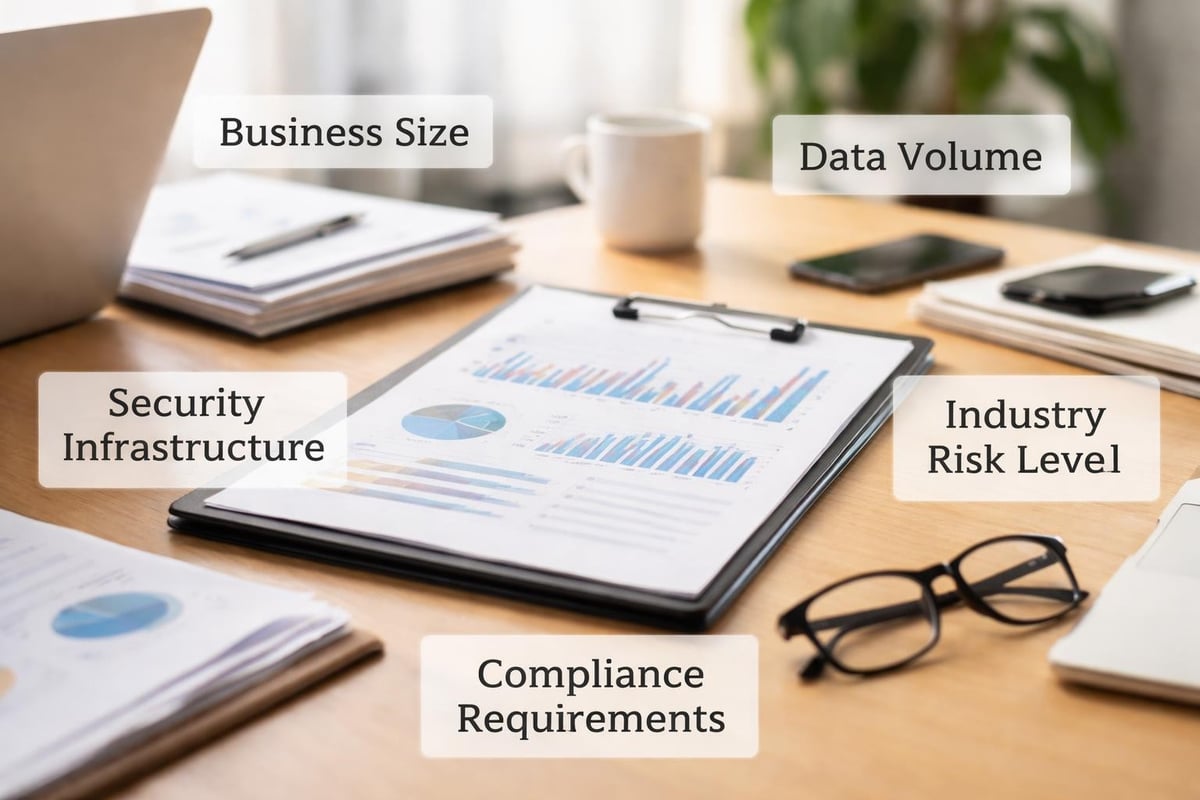
Breach insurance premiums vary significantly based on numerous factors unique to each Minnesota business. Understanding these variables helps you budget appropriately and potentially reduce costs through risk mitigation.
Primary Cost Factors
Annual premiums typically range from $1,000 to $7,500 for small businesses, though larger operations with extensive data holdings pay considerably more. Your specific rate depends on:
- Number of records stored digitally
- Types of data collected (financial, medical, personal)
- Revenue and employee count
- Industry and regulatory requirements
- Existing cybersecurity measures
- Claims history and risk assessment scores
A Minneapolis accounting firm storing 5,000 client tax records faces different pricing than a Mankato restaurant processing credit cards. The accounting firm's data sensitivity creates higher potential liability, typically resulting in elevated premiums.
| Business Type | Typical Annual Premium | Coverage Limit | Key Considerations |
|---|---|---|---|
| Small Retail (< 25 employees) | $1,200 – $2,500 | $500K – $1M | PCI compliance, payment processing |
| Medical Practice | $2,500 – $5,000 | $1M – $2M | HIPAA requirements, PHI protection |
| Professional Services | $1,500 – $3,500 | $1M – $3M | Client data, contract obligations |
| Agriculture/Farm Operations | $1,000 – $2,000 | $500K – $1M | Connected equipment, weather data |
Reducing Your Premium Costs
Smart Minnesota businesses implement security measures that both protect operations and lower insurance costs. Carriers reward proactive risk management with premium discounts ranging from 10% to 30%.
Effective cost reduction strategies include:
- Multi-factor authentication implementation
- Regular employee cybersecurity training
- Data encryption for sensitive information
- Automatic backup systems with off-site storage
- Incident response plan documentation
- Regular security audits and vulnerability testing
Working with cyber insurance companies through an experienced broker helps you identify which security improvements provide the best return on investment through premium savings.
Selecting the Right Coverage Limits and Policy Features
Determining appropriate coverage limits requires careful analysis of your potential exposure. Too little coverage leaves you vulnerable; too much wastes premium dollars that could strengthen other areas of your business.
Calculating Your Exposure
Start by assessing the number of records your Minnesota business maintains. Multiply this by the estimated per-record breach cost, which averaged $154 in 2025 according to industry research. A St. Cloud business storing 10,000 customer records faces potential breach costs exceeding $1.5 million before considering business interruption or regulatory fines.
Beyond record counts, consider:
- Average daily revenue that could be lost during downtime
- Contractual obligations requiring specific coverage limits
- Regulatory penalties in your industry
- Potential litigation costs from class-action lawsuits
- Reputation damage and customer acquisition costs
Many businesses find that $1 million in coverage provides adequate protection, though higher-risk industries or larger operations often require $2 million to $5 million limits.
Essential Policy Features to Demand
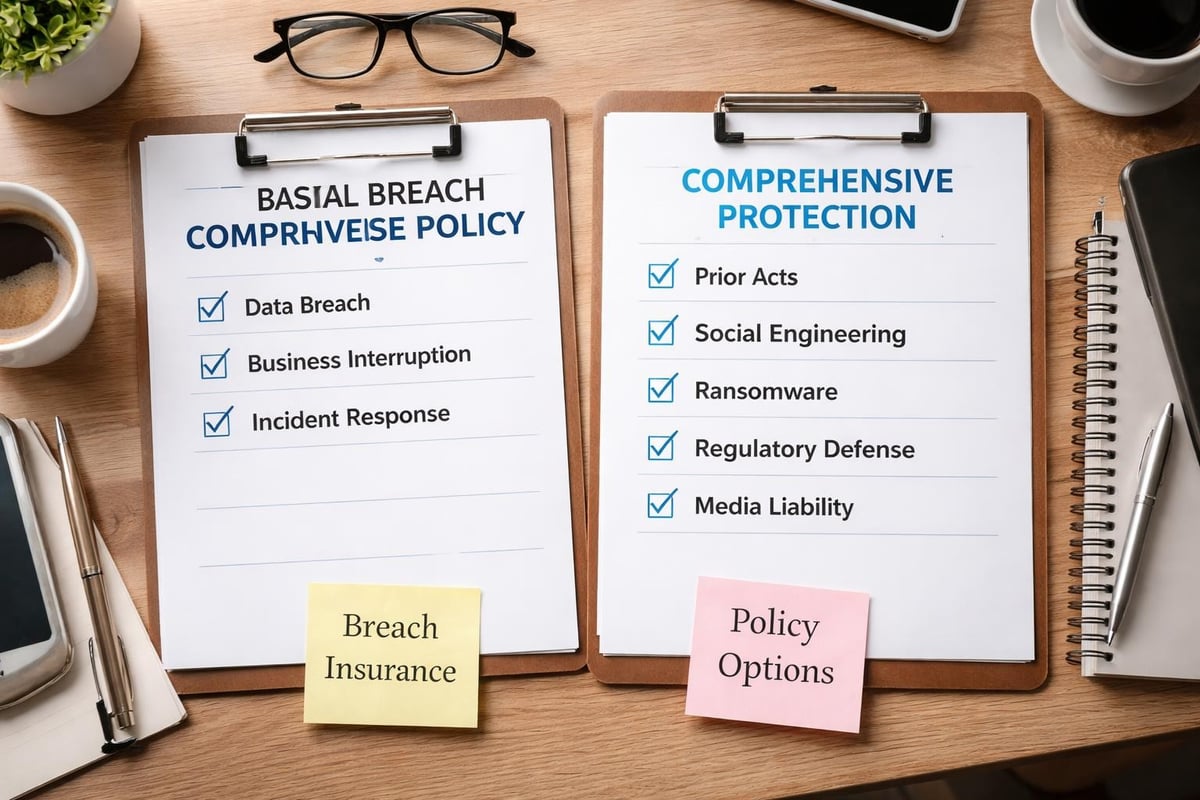
Not all breach insurance policies offer equal protection. When comparing options, prioritize these critical features:
- Prior Acts Coverage: Protects against breaches that occurred before your policy started but weren't discovered until after
- Social Engineering Coverage: Covers losses from business email compromise and fraudulent transfer schemes
- Regulatory Defense: Specifically covers legal defense against government investigations
- Extortion/Ransomware: Pays ransom demands and related negotiation costs
- Media Liability: Protects against claims related to online content and advertising
According to Wikipedia’s comprehensive overview of cyber insurance, policy language variations create significant coverage gaps between carriers. This makes professional policy review essential before purchasing.
Real-World Breach Scenarios Affecting Minnesota Businesses
Understanding how breach insurance responds in actual situations helps you appreciate its value beyond theoretical protection. These examples reflect incidents experienced by Minnesota businesses in recent years.
Scenario One: Medical Practice Ransomware Attack
A Rochester medical clinic with 15 employees discovered their patient management system encrypted by ransomware. Hackers demanded $75,000 in cryptocurrency. The practice couldn't access patient records, forcing them to cancel appointments and turn away patients.
Breach insurance coverage included:
- Ransomware payment and negotiation costs
- Forensic investigation determining attack origin
- Legal counsel for HIPAA compliance review
- Patient notification letters and call center services
- Public relations management for media inquiries
- Business income replacement during 12-day shutdown
- IT consultant fees for system restoration and security enhancement
Total costs exceeded $180,000. The practice's breach insurance policy with a $1 million limit covered everything except a $10,000 deductible.
Scenario Two: Retail Data Theft
A Brainerd sporting goods store experienced a point-of-sale system breach compromising 3,200 customer credit card numbers. The breach went undetected for six weeks before the card processor identified the pattern.
The retailer faced:
- PCI-DSS forensic investigation requirements
- Card brand fines totaling $22,000
- Customer notification costs of $8,500
- Credit monitoring services for affected customers
- Legal fees defending against three customer lawsuits
- Reputation damage requiring marketing campaign
Breach insurance covered the forensic work, notifications, legal defense, and settlements. However, the PCI fines fell under a policy exclusion, costing the business directly. This highlights why reviewing commercial general liability insurance coverage alongside breach insurance creates comprehensive protection.
Scenario Three: Email Compromise Fraud
A Winona construction company's controller received what appeared to be an email from the CEO requesting an urgent wire transfer to a new vendor. The $47,000 transfer went to criminals who had compromised the CEO's email account.
Social engineering coverage within the company's breach insurance policy reimbursed the stolen funds minus the deductible. Without this specific coverage feature, the loss would have been unrecoverable.
Getting Breach Insurance: The Application Process
Securing breach insurance involves more detailed underwriting than traditional commercial policies. Minnesota businesses should prepare for thorough questions about their data security practices and digital operations.
What Insurers Want to Know
The application process typically requires:
- Detailed inventory of data types collected and stored
- Description of cybersecurity tools and protocols
- Employee training programs and frequency
- Incident response plan documentation
- Third-party vendor security assessments
- Previous breach history or security incidents
- Network architecture and access controls
- Backup procedures and disaster recovery plans
Be prepared to demonstrate your commitment to cybersecurity. Carriers increasingly deny coverage or charge premium surcharges to businesses lacking basic protections like multi-factor authentication or regular data backups.
Working With an Independent Broker
Navigating breach insurance options becomes significantly easier with professional guidance. Independent brokers access multiple carriers, comparing coverage features and pricing to find optimal protection for your specific situation.
Guardian Insurance Services MN represents over 35 insurance companies, providing Minnesota businesses in Albany, Freeport, and surrounding communities access to competitive breach insurance options. This multi-carrier approach ensures you're not limited to a single insurer's terms and pricing.
Independent brokers provide:
- Expertise in complex cyber coverage language
- Market access to specialized cyber insurers
- Risk assessment and coverage limit recommendations
- Assistance completing detailed applications
- Ongoing policy reviews as your business evolves
- Claims advocacy when incidents occur
The broker relationship proves especially valuable during claims. Having an advocate who understands your coverage and can negotiate with carriers often means the difference between full payment and disappointing settlements.
Integrating Breach Insurance Into Your Risk Management Strategy
Breach insurance shouldn't stand alone. The most effective protection combines insurance coverage with proactive security measures and comprehensive risk planning.
Building Layered Defense
Think of cybersecurity as a castle with multiple protective barriers. Breach insurance serves as the financial safety net when other defenses fail, but those primary defenses remain critical.
Essential security layers include:
- Perimeter protection: Firewalls, intrusion detection, email filtering
- Access controls: Strong passwords, multi-factor authentication, least-privilege principles
- Data protection: Encryption, secure backups, data classification
- Human firewall: Regular training, phishing simulations, security awareness
- Incident response: Documented procedures, designated response team, vendor relationships
- Financial backup: Breach insurance covering costs other measures can't prevent
According to BreachSense’s detailed guide, businesses with mature security programs experience fewer and less severe incidents, creating a virtuous cycle of lower insurance costs and better protection.
Coordinating With Other Policies
Breach insurance interacts with several other business insurance policies. Understanding these relationships prevents coverage gaps and duplicate spending.
Your commercial property insurance typically excludes cyber-related losses, making breach insurance necessary rather than optional. Similarly, general liability insurance rarely covers data breach claims, even when customer information gets compromised.
Professional liability or errors and omissions insurance may overlap slightly with breach insurance, particularly regarding technology service providers. Careful policy coordination ensures claims go to the appropriate coverage without disputes between carriers.
For businesses offering employee benefits, breach insurance becomes critical when employee personal information gets compromised. ERISA fiduciary liability intersects with data breach exposure, requiring specialized coverage analysis.
Emerging Trends Reshaping Breach Insurance in 2026
The breach insurance market continues evolving rapidly as cyber threats become more sophisticated and regulatory requirements expand. Minnesota businesses should understand current trends affecting coverage availability and costs.
Stricter Underwriting Requirements
Insurers have dramatically tightened underwriting standards following significant losses in 2024 and 2025. Businesses lacking basic security controls now face coverage denials or sub-limits that significantly restrict protection.
Minimum requirements from most carriers include:
- Multi-factor authentication on all remote access
- Email filtering with anti-phishing capabilities
- Endpoint detection and response software
- Privileged access management
- Regular security awareness training
- Tested backup and recovery procedures
These requirements reflect carrier determination to insure only businesses taking cybersecurity seriously. For Minnesota companies still using basic password protection and outdated security tools, upgrading becomes prerequisite to coverage.
Rising Deductibles and Premium Costs
Average breach insurance premiums increased 22% between 2024 and 2026, with deductibles jumping even more dramatically. What once carried a $5,000 deductible now often requires $10,000 to $25,000 retention.
This shift pushes more risk onto policyholders, making security investments and loss prevention even more critical. The businesses best positioned for favorable terms demonstrate strong security postures through regular assessments and continuous improvement programs.
Regulatory Complexity Driving Demand
New data privacy laws continue emerging at federal and state levels, creating compliance obligations that drive breach insurance adoption. Minnesota businesses operating across state lines face particularly complex regulatory landscapes.
The Securities and Exchange Commission's 2024 cybersecurity disclosure rules affect publicly traded companies, while state-level privacy laws create patchwork requirements. Breach insurance helps businesses navigate this complexity, providing legal resources and regulatory defense coverage when issues arise.
Specialized Coverage for High-Risk Industries
Certain Minnesota industries face elevated breach risks requiring enhanced coverage features. Understanding these sector-specific needs ensures adequate protection.
Healthcare and HIPAA Compliance
Medical practices, hospitals, dental offices, and other healthcare providers face unique exposure under HIPAA regulations. NCMIC’s healthcare-focused breach insurance guide explains how standard policies often exclude or limit coverage for regulatory fines and penalties.
Healthcare-specific breach insurance should include:
- HIPAA violation defense and penalty coverage
- Business associate agreement requirements
- Medical identity theft resolution services
- Protected health information specific limits
- Telemedicine liability extensions
A Mankato clinic or St. Cloud hospital needs coverage reflecting the particular sensitivity of medical records and the severe penalties for HIPAA violations.
Financial Services and Banking
Credit unions, banks, investment advisors, and other financial institutions in Minnesota face rigorous regulatory oversight alongside sophisticated cyber threats. Their breach insurance must address SEC, FINRA, and other regulatory body requirements.
Coverage should extend to account takeover fraud, fraudulent transfers, and regulatory investigations specific to financial services. Many institutions also need coverage for third-party vendors and service providers who access customer data.
Agriculture and Connected Farm Operations
Minnesota's agricultural sector increasingly relies on connected technology-from precision farming equipment to automated feeding systems. This digital transformation creates new vulnerabilities that traditional farm insurance doesn't address.
Modern breach insurance for agricultural operations should cover:
- Connected equipment ransomware and operational disruption
- Precision agriculture data theft or corruption
- Supply chain cyber attacks affecting distribution
- Weather and commodity data system failures
- E-commerce platform breaches for direct-to-consumer farms
A dairy operation in Morrison County using automated milking systems faces dramatically different cyber risks than farms operated even five years ago.
Breach insurance has transformed from optional coverage to essential protection for Minnesota businesses of all sizes and industries. As cyber threats grow more sophisticated and regulatory requirements expand, the question isn't whether you need this coverage-it's how quickly you can implement it effectively. Guardian Insurance Services MN helps businesses throughout Albany, Freeport, and surrounding Minnesota communities secure comprehensive breach insurance from over 35 top carriers, combining competitive pricing with personalized service that ensures your unique risks receive proper protection. Contact Guardian Insurance Services MN today to discuss breach insurance options tailored to your business's specific needs and budget.