
When a devastating lawsuit threatens your business, your standard insurance policy might seem like a fortress protecting your assets. But what happens when that fortress isn't tall enough? A single catastrophic claim can easily exceed your primary policy limits, leaving you personally responsible for millions in damages. This is where excess liability insurance becomes not just important but essential for businesses and individuals who want comprehensive financial protection. Whether you operate a farm in St. Cloud, manage a fleet of vehicles in Duluth, or run a manufacturing facility in Rochester, understanding how this additional layer of coverage works can mean the difference between weathering a major claim and facing financial ruin.
Understanding Excess Liability Insurance Coverage
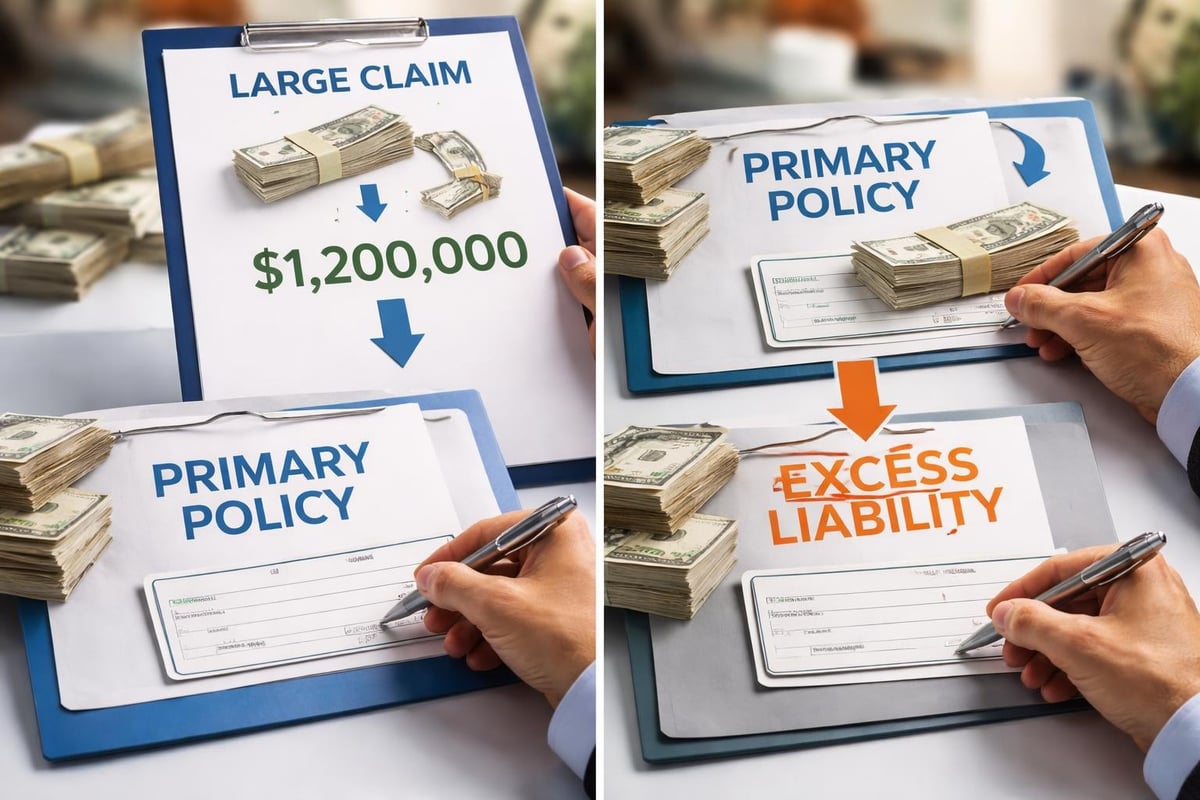
Excess liability insurance provides additional coverage that activates when your underlying liability policies reach their maximum limits. Think of it as a safety net above your safety net. This coverage doesn't replace your existing policies but rather supplements them with higher limits.

Your primary policies, such as general liability insurance, commercial auto coverage, or workers compensation, form the foundation of your protection. These policies handle claims up to their stated limits, which might be $1 million, $2 million, or another amount. When a claim exhausts those limits, excess liability insurance steps in to cover additional costs.
How Policy Limits Stack Together
Understanding how coverage limits work together helps clarify the value of excess protection:
- Primary policy limit: $1,000,000 per occurrence
- Excess policy limit: $5,000,000 additional coverage
- Total available protection: $6,000,000 for a single claim
According to recent market research, businesses increasingly recognize the need for higher liability limits as jury awards and settlement amounts continue to rise. This trend is particularly evident in Minnesota, where agricultural operations, manufacturing businesses, and professional service providers face growing exposure to large claims.
Key Differences Between Excess and Umbrella Insurance
Many people confuse excess liability insurance with umbrella policies, but these products serve different purposes. Both provide additional coverage beyond primary policies, yet they operate in fundamentally different ways.
Excess liability insurance follows the exact terms and conditions of your underlying policies. If your primary general liability policy excludes certain risks, your excess policy maintains those same exclusions. This "follow form" structure means excess coverage simply adds vertical height to your existing protection.
Umbrella insurance, by contrast, offers broader coverage that may fill gaps your primary policies don't cover. An umbrella policy might include coverage for risks your underlying policies exclude, though you'll still need to satisfy a self-insured retention before the umbrella responds.
| Feature | Excess Liability | Umbrella Liability |
|---|---|---|
| Coverage scope | Follows underlying policy terms exactly | May broaden coverage beyond primary policies |
| Self-insured retention | Usually none | Often required ($10,000-$25,000) |
| Activation | After primary limits exhausted | May drop down for certain claims |
| Premium cost | Generally lower | Typically higher due to broader coverage |
| Flexibility | Limited to underlying policy terms | More flexible coverage options |
For Minnesota businesses, the choice between these options depends on your specific risk profile and existing coverage portfolio. Manufacturing operations in Mankato might benefit from straightforward excess coverage, while professional service firms in Minneapolis might need the broader protection an umbrella provides.
Industries That Benefit Most From Excess Coverage
Certain business types face elevated liability risks that make excess liability insurance particularly valuable. These industries regularly encounter situations where claims can quickly escalate beyond standard policy limits.
High-Risk Business Categories
Agricultural operations throughout Minnesota face unique exposures. A farm equipment accident, crop contamination claim, or agritourism injury can generate multi-million dollar lawsuits. Farm insurance policies provide essential primary coverage, but excess layers offer crucial additional protection for operations in areas like Willmar and Hutchinson.
Transportation and logistics companies operating fleets need substantial liability coverage. A serious accident involving multiple vehicles can easily exceed $1 million in damages, medical expenses, and legal costs. When your commercial auto insurance reaches its limit, excess coverage protects your business assets.
Construction and contracting businesses face constant exposure to property damage and bodily injury claims. A structural failure, scaffold collapse, or equipment malfunction can result in catastrophic injuries. Contractors working on large projects in Bloomington or St. Paul often purchase excess liability insurance to meet project requirements and protect their companies.
- Manufacturing facilities with dangerous equipment
- Healthcare providers and medical practices
- Professional services firms (consultants, engineers, architects)
- Property management companies
- Hospitality and event venues
- Retail businesses with high customer traffic
Determining Your Excess Liability Insurance Needs
Calculating appropriate coverage limits requires careful assessment of your exposure to potential claims. Your revenue, asset values, and industry risks all influence how much excess liability insurance you should carry.

Start by evaluating your current primary policy limits. If you carry $1 million in general liability coverage but own business property worth $3 million, you're underinsured. A successful lawsuit could force you to liquidate assets to satisfy a judgment.
Assessment Factors to Consider
- Total business and personal assets requiring protection
- Contract requirements from clients or project owners
- Industry-standard coverage levels for comparable businesses
- Historical claims experience in your sector
- Growth projections that might increase future exposure
Minnesota businesses should also consider state-specific factors. Court verdicts in the Twin Cities area tend to run higher than in rural regions, though significant claims can occur anywhere. A farming accident near Brainerd or a product liability claim in Rochester can generate enormous damages regardless of location.
Many business owners find that working with professional liability consultants helps them accurately assess their needs. These experts understand both the technical aspects of coverage and the practical realities of running a business in Minnesota.
Real-World Claim Scenarios
Understanding how excess liability insurance works in practice helps illustrate its importance. Consider these realistic scenarios affecting Minnesota businesses:
Scenario 1: Agricultural Equipment Accident
A farm equipment dealer in Fergus Falls sells a used tractor to a neighboring farm. Six months later, a brake failure causes a serious accident injuring three workers. The resulting lawsuit seeks $4.5 million in damages for medical expenses, lost wages, and pain and suffering. The dealer's primary commercial general liability insurance covers the first $1 million, while their excess liability insurance covers the remaining $3.5 million settlement.
Scenario 2: Multi-Vehicle Commercial Accident
A trucking company based in Owatonna experiences a tragic accident when a driver loses control on icy Highway 14, causing a chain-reaction collision involving seven vehicles. Total damages, medical costs, and wrongful death claims reach $3.2 million. The company's commercial auto policy pays its $2 million limit, and the excess liability insurance covers the additional $1.2 million.
Scenario 3: Property Damage at Construction Site
A contracting firm working on a commercial project in Eden Prairie accidentally damages underground utilities, causing extensive business interruption for multiple tenants. Claims total $2.8 million. The contractor's primary liability policy exhausts its $1 million limit, triggering the excess coverage for the remaining $1.8 million.
These examples demonstrate why understanding excess liability coverage has become essential for prudent business management. Without adequate excess coverage, business owners face personal liability that could destroy their companies and personal finances.
Cost Factors and Premium Considerations
The price of excess liability insurance varies significantly based on numerous factors. Most businesses find excess coverage surprisingly affordable compared to the protection it provides, particularly when considering the catastrophic losses it prevents.
Primary Premium Drivers
Your industry classification plays the largest role in determining costs. High-risk operations pay more than low-risk businesses. A manufacturing plant in Albert Lea faces different exposures than a consulting firm in Edina, and premiums reflect these differences.
| Risk Factor | Low Impact | Moderate Impact | High Impact |
|---|---|---|---|
| Industry hazard level | Office/Professional | Retail/Hospitality | Construction/Manufacturing |
| Annual revenue | Under $500K | $500K-$5M | Over $5M |
| Claims history | No claims 5+ years | 1-2 claims | Multiple recent claims |
| Underlying limits | $2M+ primary | $1M primary | Less than $1M |
| Coverage amount | $1M excess | $3-5M excess | $10M+ excess |
The limits you select for your underlying policies also affect excess insurance pricing. Higher primary limits typically result in lower excess premiums because the excess coverage has less exposure to frequent claims. Conversely, low primary limits with high excess coverage can cost more due to increased likelihood the excess policy will respond.
Claims history significantly impacts your rates. A clean record demonstrates effective risk management and earns better pricing. If you've had multiple claims, insurers view your business as higher risk and charge accordingly. This is one reason why investing in safety programs and loss prevention makes financial sense.
Geographic location within Minnesota influences pricing too. Urban areas like Minneapolis and St. Paul typically see higher premiums due to increased claim frequency and severity. Rural regions often benefit from lower rates, though farming operations face their own unique rating considerations.
Policy Structure and Coverage Mechanics
Excess liability insurance policies follow specific structures that determine when and how coverage applies. Understanding these mechanisms helps you select appropriate coverage and avoid surprises during claims.
Follow-Form Coverage Structure
Most excess policies use a "follow form" design, meaning they mirror your underlying policy terms. This includes covered perils, exclusions, conditions, and definitions. If your primary general liability policy excludes pollution liability, your excess coverage maintains that exclusion unless specifically endorsed.
Some businesses purchase "stand-alone" excess policies that don't strictly follow underlying forms. These policies include their own terms and conditions, potentially providing different coverage scopes. While offering more flexibility, stand-alone policies require careful review to ensure they align with your protection goals.
Drop-Down Provisions
Certain excess policies include drop-down provisions that activate coverage even when underlying insurance hasn't exhausted its limits. These provisions typically apply in specific circumstances:
- Underlying insurer becomes insolvent or bankrupt
- Underlying policy contains coverage gaps for specific exposures
- Aggregate limits on primary policies have been exhausted
Drop-down features add value but may increase premiums. For Minnesota businesses concerned about insurer stability or complex coverage needs, these provisions offer additional security.
Legal Precedents and Court Interpretations
Court decisions shape how excess liability insurance operates in practice. Legal precedents establish important principles regarding when excess coverage activates and what obligations excess insurers have to policyholders.
The case of Pacific Indemnity v. Federated American Insurance Company established key principles about excess insurer responsibilities when underlying coverage is inadequate. Similarly, Rosner v. Metropolitan Property & Liability Insurance Company clarified how courts interpret policy language and determine coverage obligations.
These legal frameworks matter for Minnesota business owners because they define your rights when disputes arise. Working with experienced insurance professionals who understand these precedents helps ensure your coverage performs as expected when you need it most.
Integration With Existing Business Insurance
Excess liability insurance doesn't exist in isolation. It functions as part of your comprehensive risk management strategy, working alongside your other commercial policies to create complete protection.
Your primary liability policies form the foundation. These typically include general liability, commercial auto, employers liability through workers compensation insurance, and potentially professional liability. Each policy covers specific exposures up to its stated limits.
Underlying policy requirements specify minimum limits your primary coverage must carry before excess insurance activates. Common requirements include:
- $1 million per occurrence general liability
- $1 million per accident auto liability
- Statutory workers compensation limits
- $1 million employers liability
Ensuring your primary coverage meets these thresholds maintains the integrity of your excess protection. Gaps in underlying coverage can leave you unexpectedly exposed to losses you thought were covered.
Minnesota businesses with diverse operations benefit from coordinating all their policies. A farming operation might need to integrate farm insurance, commercial auto, general liability, and property coverage under a unified excess liability umbrella. This coordination ensures seamless coverage across all business activities.
Special Considerations for Minnesota Businesses
Operating in Minnesota creates unique considerations for liability insurance planning. The state's economic diversity, from agriculture and manufacturing to healthcare and professional services, means businesses face varied risk profiles requiring tailored solutions.
Agricultural businesses dominate much of greater Minnesota, particularly in regions around Willmar, Marshall, and Alexandria. These operations face exposures from farm equipment, livestock, agritourism, and environmental risks. Excess liability insurance protects against catastrophic claims that could wipe out generations of family farming heritage.
Seasonal weather hazards increase certain liability risks. Harsh winters create slip-and-fall exposures for businesses with customer traffic. Ice and snow contribute to vehicle accidents affecting companies with commercial auto insurance needs. Spring flooding can lead to property damage claims and business interruption issues.
Contract requirements from larger corporations and government entities often mandate specific excess liability limits. If your Mankato manufacturing company supplies parts to major Twin Cities businesses, you'll likely need substantial excess coverage to secure those contracts. The same applies to contractors bidding on public projects in Rochester or Duluth.
Minnesota's strong economy attracts growing businesses that need scalable insurance solutions. As your company expands, your liability exposure grows proportionally. Starting with appropriate excess coverage creates a foundation you can build upon as revenues increase and operations diversify.
Purchasing Process and Selection Criteria
Acquiring excess liability insurance requires strategic planning and careful carrier selection. The right approach ensures you secure appropriate coverage at competitive rates while working with financially stable insurers.
Steps to Secure Coverage
1. Assess your total exposure. Calculate your assets, evaluate contract requirements, and analyze potential claim scenarios. This assessment determines how much excess coverage you need.
2. Review your underlying policies. Ensure primary coverage meets minimum requirements for excess attachment. Identify any gaps that need addressing before adding excess layers.
3. Compare carrier options. Financial strength ratings matter tremendously for excess insurers because they must perform potentially decades after policy purchase. Look for carriers with A.M. Best ratings of A- or higher.
4. Evaluate policy terms carefully. While most excess policies follow form, subtle differences exist. Review exclusions, conditions, and any endorsements that modify coverage.
5. Consider package discounts. Purchasing excess coverage from the same insurer providing your primary policies often results in premium savings and simplified claims handling.
Working with an independent insurance broker provides access to multiple carriers and expert guidance throughout the selection process. Brokers compare options from numerous insurers, finding the best combination of coverage, price, and service for your specific situation.
Risk Management and Loss Prevention
While excess liability insurance provides crucial financial protection, preventing losses altogether remains the best strategy. Implementing effective risk management programs reduces claim frequency and severity, leading to lower insurance costs and better business outcomes.
Safety programs tailored to your industry create the foundation for loss prevention. Manufacturing facilities need machine guarding protocols and lockout-tagout procedures. Farms require equipment maintenance schedules and employee training. Professional service firms benefit from quality control systems and contract review processes.
Regular safety training keeps employees aware of hazards and proper procedures. Monthly toolbox talks, annual refresher courses, and new-hire orientation all contribute to a safety-conscious culture. Minnesota businesses in St. Cloud, Moorhead, or Winona that prioritize safety consistently achieve better insurance rates and fewer disruptions from incidents.
Documentation practices prove crucial when claims occur. Maintain detailed records of:
- Safety training sessions and attendance
- Equipment maintenance and inspections
- Incident reports and corrective actions
- Customer interactions and service delivery
- Contract terms and scope of work
These records demonstrate your commitment to professional operations and provide valuable evidence if claims arise. They also help insurers understand your risk profile, potentially resulting in more favorable underwriting decisions.
Protecting your Minnesota business from catastrophic liability claims requires more than standard insurance policies. Excess liability insurance provides the additional coverage layer that safeguards your assets when major incidents exceed primary policy limits. Whether you operate in Albany, Freeport, or anywhere across Minnesota, understanding your exposure and securing appropriate excess coverage creates financial stability and peace of mind. Guardian Insurance Services MN works with over 35 top-rated insurance carriers to design comprehensive protection strategies tailored to your unique business needs, combining competitive pricing with the personalized service that comes from being locally owned and operated.