
As a small business owner in Minnesota, providing comprehensive insurance benefits to your employees isn't just a nice perk anymore-it's a competitive necessity. Your ability to attract and retain talented workers depends heavily on the insurance packages you offer. Whether you're running a family farm near Albany, a manufacturing operation in Freeport, or a retail business in the Twin Cities, understanding insurance for small business employees can transform your workforce stability and business success. The right coverage protects both your team members and your bottom line while positioning your company as an employer of choice in Minnesota's competitive labor market.
Essential Health Insurance Coverage Options
Health insurance remains the most requested and valued employee benefit across Minnesota. Small businesses have multiple pathways to provide this critical coverage, and understanding these options helps you make strategic decisions for your team.
The Small Business Health Options Program (SHOP) allows Minnesota employers with 1-50 employees to purchase group health insurance plans. This program offers tax credits for qualifying small businesses and provides employees with choice among different plan tiers.
Navigating the SHOP Marketplace
Minnesota small businesses can leverage the SHOP marketplace to offer comprehensive health coverage. Employers choose which plan or plans to make available, set the employer contribution amount, and allow employees to select the coverage level that fits their needs.
Key SHOP benefits include:
- Access to multiple insurance carriers and plan designs
- Potential tax credits worth up to 50% of premium costs
- Single enrollment platform streamlining administration
- Coverage that meets Affordable Care Act standards
How the ACA affects businesses depends largely on your company size and employee count. While businesses with fewer than 50 full-time equivalent employees aren't required to offer health insurance, providing this benefit significantly increases your competitive positioning in the marketplace.
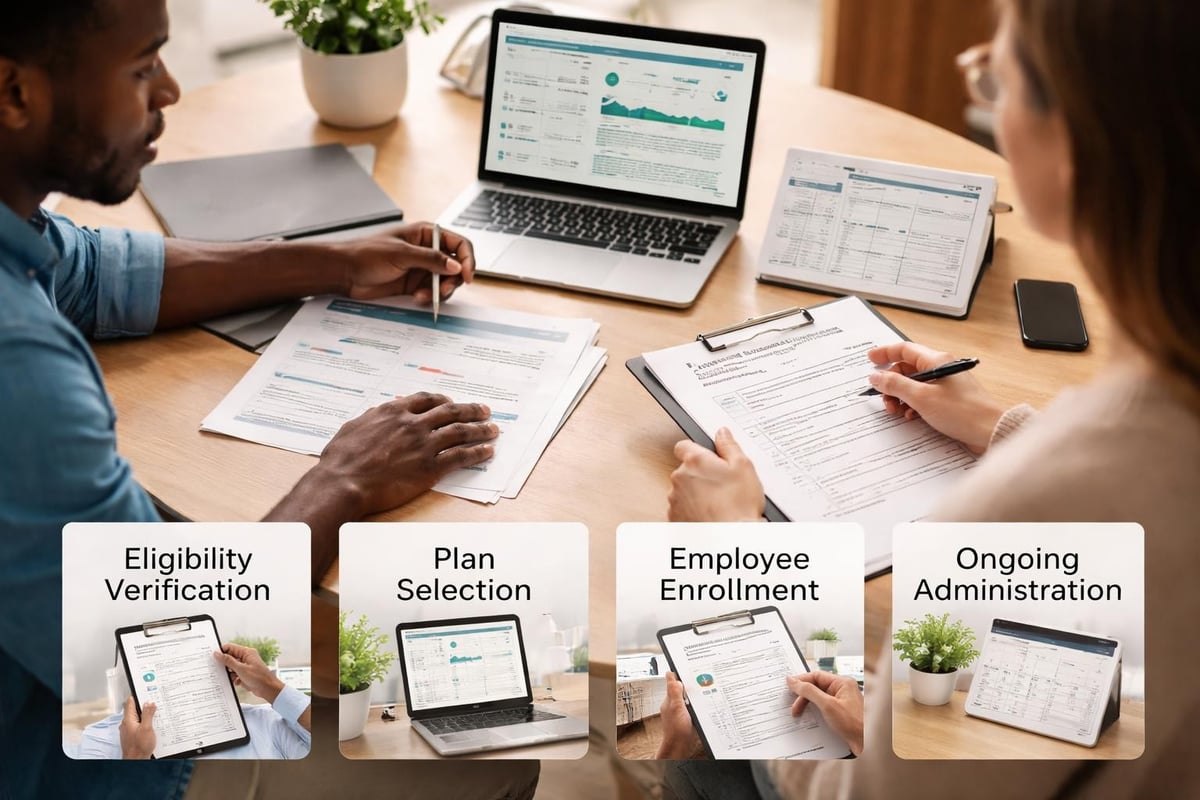
Alternative Health Coverage Strategies
Not every small business needs to use the SHOP marketplace. Working with Guardian Insurance Services MN gives you access to over 35 insurance companies, allowing you to compare private group health plans that might better fit your specific workforce needs.
Health Reimbursement Arrangements (HRAs) provide another innovative approach. These employer-funded accounts reimburse employees for qualified medical expenses and individual health insurance premiums, offering flexibility while controlling costs.
| Coverage Type | Best For | Key Advantage | Cost Control |
|---|---|---|---|
| SHOP Plans | 1-50 employees | Tax credits available | Fixed employer contribution |
| Private Group Plans | Any size business | Broader carrier options | Negotiated rates |
| HRAs | Cost-conscious employers | Maximum flexibility | Employer sets limits |
| Individual Coverage HRA (ICHRA) | Variable workforce | No employee limits | Reimbursement caps |
Workers' Compensation Requirements in Minnesota
Minnesota law mandates workers' compensation coverage for nearly all employers, making this a non-negotiable component of insurance for small business employees. This coverage protects your employees when workplace injuries or illnesses occur while shielding your business from potentially devastating lawsuits.
Workers’ compensation insurance covers medical expenses, rehabilitation costs, and lost wages for employees injured on the job. In Minnesota, you need coverage once you hire your first employee, with limited exceptions for sole proprietors and some agricultural workers.
Minnesota-Specific Workers' Comp Considerations
The Minnesota workers' compensation system operates differently than many other states. Employers can purchase coverage through private insurance carriers or through assigned risk plans if traditional markets decline coverage.
Critical coverage elements include:
- Medical treatment for work-related injuries or illnesses
- Temporary disability benefits replacing lost wages
- Permanent disability compensation for lasting impairments
- Vocational rehabilitation services when needed
- Death benefits for surviving family members
Premium costs vary based on your industry classification, payroll size, and claims history. A manufacturing facility in Freeport faces different risk factors than an accounting firm in St. Cloud, directly impacting insurance costs. Implementing strong safety programs and maintaining excellent claims management reduces your workers' compensation expenses over time.
Minnesota businesses operating across state lines need careful attention to jurisdiction questions. Each state has specific workers' compensation requirements, and proper coverage across all operating locations protects both employees and your business. Workers’ compensation insurance specialists help navigate these complex multi-state situations.
Life and Disability Insurance Benefits
Beyond health coverage and workers' compensation, thoughtful insurance for small business employees includes life and disability protection. These benefits demonstrate your commitment to employee wellbeing while addressing critical financial security needs.
Group Life Insurance Advantages
Group life insurance provides death benefits to employees' beneficiaries at costs significantly lower than individual policies. Most small businesses offer basic life insurance as an employer-paid benefit, typically equal to one or two times annual salary.
Employees appreciate this coverage because it addresses fundamental financial protection needs without requiring medical underwriting for guaranteed issue amounts. You can enhance this benefit by offering voluntary supplemental life insurance, allowing employees to purchase additional coverage at group rates.
Employee life insurance creates meaningful value in your total compensation package. In competitive Minnesota job markets from Duluth to Rochester, this benefit helps you stand out against larger employers while protecting your team members' families.
Disability Insurance Protection
Short-term and long-term disability insurance replaces a portion of income when employees cannot work due to illness or injury. This coverage fills the gap between workers' compensation (covering only work-related conditions) and complete income loss from non-occupational disabilities.
Disability coverage typically includes:
- Short-term disability covering 60-70% of wages for 3-6 months
- Long-term disability providing 50-60% of income after waiting periods
- Elimination periods ranging from 30 to 90 days
- Benefit periods extending to age 65 or recovery
Small businesses in Minnesota can offer group disability insurance at fraction of individual policy costs. These benefits particularly appeal to employees with families and significant financial obligations, directly impacting retention rates and employee satisfaction scores.

Cost Management Strategies for Small Business Owners
Managing insurance costs while providing competitive benefits challenges every small business owner. Strategic approaches help you maximize coverage value without breaking your budget.
Employee Cost-Sharing Models
Most Minnesota small businesses share insurance premiums with employees. Common arrangements include employers paying 50-80% of health insurance premiums for employee-only coverage, with employees contributing more for dependent coverage.
| Contribution Strategy | Employer Share | Employee Share | Impact on Recruitment |
|---|---|---|---|
| Full employer-paid | 100% | 0% | Strongest attraction |
| High contribution | 75-90% | 10-25% | Strong benefit |
| Standard contribution | 50-75% | 25-50% | Competitive baseline |
| Lower contribution | 25-50% | 50-75% | Minimal advantage |
Wellness programs reduce long-term costs by improving employee health and decreasing claims. Even simple initiatives like fitness challenges, smoking cessation support, and preventive care incentives generate measurable returns through lower premiums and reduced absenteeism.
Bundling and Broker Relationships
Working with independent brokers like Guardian Insurance Services MN provides access to multiple carriers and bundling opportunities. Combining health, life, disability, and general liability insurance often yields package discounts unavailable when purchasing policies separately.
Annual benefit reviews ensure your insurance for small business employees remains competitive and cost-effective. Market conditions change, new carriers enter Minnesota, and your business evolves-regular analysis identifies better options and potential savings.
Tax Benefits and Incentives
Insurance for small business employees delivers significant tax advantages that offset premium costs. Understanding these benefits improves your financial planning and reduces the true cost of coverage.
Small Business Health Care Tax Credit
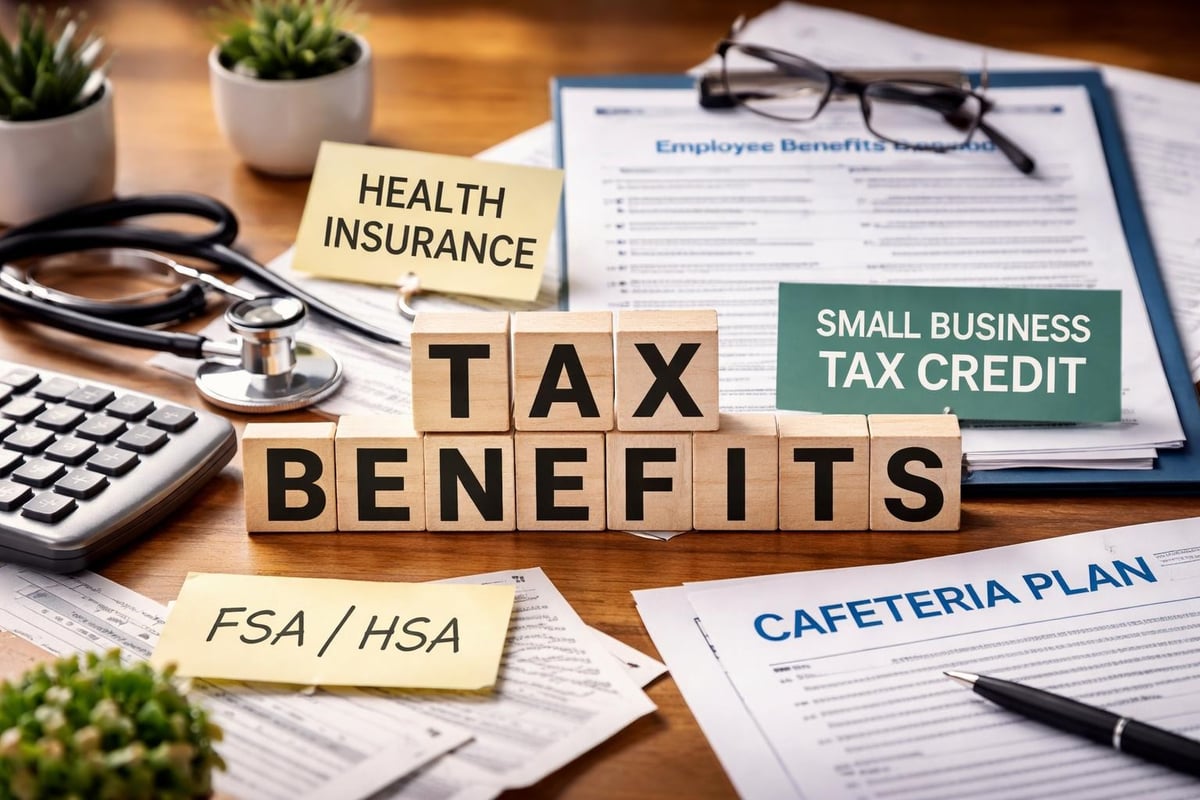
Qualifying Minnesota small businesses receive tax credits worth up to 50% of premium contributions through the SHOP marketplace. To qualify, you must have fewer than 25 full-time equivalent employees with average wages below $56,000 (2026 threshold), and cover at least 50% of employee premium costs.
Premium deductions include:
- Employer health insurance contributions are fully tax-deductible
- Life insurance premiums (up to $50,000 coverage per employee) are deductible
- Disability insurance premiums paid by employers are business expenses
- Workers' compensation premiums qualify as ordinary business deductions
These tax advantages substantially reduce the net cost of providing insurance for small business employees. A Minnesota business paying $500 monthly per employee for health insurance might see effective costs drop to $350-400 after tax benefits, making comprehensive coverage more affordable than initially apparent.
Section 125 Cafeteria Plans
Cafeteria plans allow employees to pay their portion of insurance premiums with pre-tax dollars, reducing their taxable income while lowering your payroll taxes. This win-win arrangement costs little to implement but delivers value to both parties.
Flexible Spending Accounts (FSAs) and Health Savings Accounts (HSAs) complement insurance coverage by helping employees pay out-of-pocket medical expenses with tax-advantaged dollars. HSAs pair with high-deductible health plans, offering triple tax advantages: tax-deductible contributions, tax-free growth, and tax-free withdrawals for qualified expenses.
Specialized Coverage for Different Industries
Minnesota's diverse economy means insurance for small business employees varies significantly across industries. Tailoring coverage to your specific sector ensures comprehensive protection and competitive positioning.
Agricultural and Farm Businesses
Minnesota's strong agricultural sector requires specialized insurance approaches. Farm operations around Albany and Stearns County need farm insurance that coordinates with employee benefits, covering seasonal workers, family members, and full-time employees differently.
Agricultural employers often combine traditional employee benefits with farm-specific coverage addressing unique exposures. Seasonal employment patterns affect benefit eligibility and cost structures, requiring careful plan design.
Manufacturing and Industrial Operations
Manufacturing facilities across Minnesota face higher workers' compensation costs due to elevated injury risks. These businesses benefit from robust disability insurance and supplemental accident coverage complementing statutory workers' compensation benefits.
Safety training programs and comprehensive commercial insurance packages reduce claims and premium costs while protecting employees in high-risk environments. Minnesota manufacturers competing for skilled labor increasingly offer enhanced benefit packages including dental and vision coverage.
Service and Professional Businesses
Professional service firms in Minnesota cities prioritize health insurance and professional liability coverage over workers' compensation due to lower physical injury risks. These businesses often offer richer benefits packages with higher employer contributions to attract educated, specialized talent.
Remote work arrangements complicate coverage considerations for service businesses. Ensuring proper coverage across employee locations, addressing telemedicine options, and coordinating benefits for distributed teams requires expertise from experienced brokers familiar with evolving workplace models.
Retention and Recruitment Impact
Strategic insurance for small business employees directly influences your ability to build and maintain a strong workforce. Minnesota's low unemployment rate intensifies competition for quality employees, making benefits packages increasingly important recruitment and retention tools.
Competitive Benchmarking
Research what comparable businesses in your Minnesota region offer employees. A retail business in St. Cloud competes for workers against similar operations offering specific benefit levels-falling significantly below market standards severely handicaps recruitment efforts.
Benchmarking considerations:
- Industry-standard coverage levels and premium contributions
- Regional variations across Minnesota metro and rural areas
- Benefits offered by major employers in your talent pool
- Employee feedback on coverage gaps and needs
Small businesses can't always match corporate benefit budgets, but thoughtful, well-communicated benefits packages often outperform richer but poorly presented corporate programs. Employees value personalized service and flexibility sometimes unavailable at larger organizations.
Communication and Enrollment Support
The best insurance for small business employees delivers little value if workers don't understand or appreciate it. Clear communication about coverage options, costs, and value converts benefits spending into employee satisfaction and loyalty.
Annual open enrollment periods provide opportunities to educate employees about their options. Consider these communication strategies:
- Individual benefits consultations explaining plan choices
- Clear comparison materials highlighting coverage differences
- Total compensation statements showing full benefit value
- Digital enrollment tools simplifying the selection process
| Communication Method | Effectiveness | Best Use Case |
|---|---|---|
| One-on-one meetings | Highest | Complex plans, diverse workforce |
| Group presentations | Good | General education, plan changes |
| Written materials | Moderate | Reference information, details |
| Online portals | High | Tech-savvy employees, self-service |
| Video explanations | Good | Visual learners, plan overviews |
Minnesota small businesses often partner with brokers who provide enrollment support and employee education, adding value beyond policy procurement. This service particularly benefits businesses without dedicated HR staff.
Compliance and Legal Requirements
Navigating federal and state regulations governing insurance for small business employees requires attention to evolving requirements. Non-compliance risks penalties, lawsuits, and coverage gaps endangering both employees and your business.
Federal Requirements
The Affordable Care Act established various employer responsibilities based on business size. While companies with fewer than 50 full-time equivalent employees aren't required to offer health insurance, larger small businesses face the employer mandate requiring coverage or potential penalties.
COBRA continuation coverage applies to businesses with 20 or more employees, requiring you to offer departing employees the option to continue group health insurance at their expense. Understanding how the ACA affects businesses helps ensure compliance with these complex regulations.
Minnesota-Specific Regulations
Minnesota law adds state-level requirements affecting employee insurance:
- Workers' compensation coverage mandatory with first employee
- State continuation coverage (mini-COBRA) for businesses with 2-19 employees
- Mental health parity requirements in health insurance plans
- Specific dependent coverage requirements through age 26
ERISA (Employee Retirement Income Security Act) governs most employee benefit plans, imposing reporting, disclosure, and fiduciary requirements. Small businesses must provide Summary Plan Descriptions, file annual Form 5500 reports for larger plans, and maintain proper plan documents.
Compliance checklist includes:
- Proper plan documents and Summary Plan Descriptions
- Required notices (COBRA, HIPAA, Medicare Part D)
- Non-discrimination testing for certain benefits
- Form 5500 filing when required
- Record retention for plan documents and communications
Working with experienced general insurance agencies helps small businesses navigate these requirements without dedicated compliance staff. Brokers with expertise in employee benefits ensure your programs meet legal standards while serving employee needs.
Emerging Trends and Future Considerations
The landscape of insurance for small business employees continues evolving rapidly. Staying informed about emerging trends positions your Minnesota business to adapt and compete effectively.
Telemedicine and Virtual Care
Telemedicine exploded during recent years and continues expanding. Health insurance plans increasingly include virtual doctor visits, mental health counseling, and remote specialist consultations. These services particularly benefit rural Minnesota employees in areas with limited local healthcare access.
Small businesses can reduce costs while improving access by emphasizing telemedicine options during benefit enrollment. Employees appreciate convenient care that doesn't require time off work or long drives to medical facilities.
Mental Health and Wellness Focus
Mental health coverage evolved from an afterthought to a core benefit component. Minnesota employees increasingly prioritize mental health services, and comprehensive coverage including therapy, counseling, and psychiatric care represents a significant competitive advantage.
Wellness program elements gaining traction:
- Employee Assistance Programs (EAPs) offering confidential counseling
- Stress management and resilience training
- Mental health days and flexible time-off policies
- Financial wellness education and resources
Proactive mental health support reduces absenteeism, improves productivity, and decreases overall healthcare costs by addressing issues before they escalate.
Technology Integration
Modern benefit administration platforms streamline enrollment, communication, and ongoing management. Even small Minnesota businesses can leverage technology previously available only to large corporations, improving efficiency and employee experience.
Digital tools enable:
- Mobile-friendly enrollment and plan management
- Integrated health and wellness apps
- Automated compliance tracking and reporting
- Real-time benefit utilization data and analytics
These technologies reduce administrative burden on small business owners while providing employees with 24/7 access to benefit information and support.
Flexible and Voluntary Benefits
Employees value choice in their benefits packages. Voluntary benefits-employee-paid options offered at group rates-allow you to expand your offerings without increasing costs. Options include supplemental life insurance, accident coverage, critical illness policies, and legal services plans.
Flexible benefits approaches let employees customize coverage to their specific needs. A young, healthy employee might prefer minimal health coverage with high deductibles, while an employee with a family prioritizes comprehensive medical benefits. Offering choices increases satisfaction across diverse workforces.
Providing comprehensive insurance for small business employees strengthens your competitive position while protecting your most valuable asset-your people. The right coverage strategy balances employee needs, business objectives, and budget realities while ensuring compliance with complex regulations. As an independent broker with access to over 35 insurance companies and deep Minnesota market expertise, Guardian Insurance Services MN helps small businesses in Albany, Freeport, and throughout Minnesota design and implement employee benefit programs that attract talent, retain skilled workers, and support long-term business success.