
Every business owner in Minnesota faces the reality that workplace accidents can happen at any moment, regardless of how many safety protocols you implement. When an employee gets injured on the job, workers compensation insurance becomes the critical safety net that protects both your business and your workforce. This coverage isn't just a legal requirement in most situations-it's a fundamental business tool that ensures financial stability while supporting employees through recovery. Understanding how this system works, what it covers, and how to secure the right protection can mean the difference between a manageable setback and a catastrophic financial crisis for your business.
Understanding Workers Compensation Fundamentals
Workers compensation represents a no-fault insurance system designed to provide benefits to employees who suffer work-related injuries or illnesses. Unlike traditional liability insurance, this coverage operates on a straightforward principle: employees receive medical care and wage replacement without needing to prove employer negligence, while employers gain protection from most employee lawsuits related to workplace injuries.
The origins of this system trace back to the early 20th century when industrial accidents created massive legal battles between workers and employers. Today, according to comprehensive data on workers’ compensation systems, this framework has evolved into a sophisticated insurance mechanism that serves millions of American workers annually.
Key Components of Coverage
Medical benefits form the cornerstone of workers compensation policies. When an employee sustains an injury at your Minneapolis manufacturing facility or your Duluth retail location, the insurance covers:
- Emergency room visits and hospitalization
- Surgical procedures and specialist consultations
- Prescription medications and medical equipment
- Physical therapy and rehabilitation services
- Ongoing treatment for chronic conditions resulting from workplace incidents
Wage replacement ensures injured workers maintain financial stability during recovery. Typically, benefits pay approximately two-thirds of the employee's average weekly wage, though specific percentages vary based on state regulations and injury severity.
Disability benefits address both temporary and permanent disabilities. An employee who cannot work for three months receives temporary total disability benefits, while someone who sustains a permanent injury-like losing a finger in a manufacturing accident-receives compensation based on scheduled injury values.

Minnesota-Specific Requirements and Regulations
Minnesota law mandates workers compensation coverage for most employers, creating specific obligations that businesses in St. Paul, Rochester, and throughout the state must understand. The Minnesota Department of Labor and Industry oversees compliance and ensures both employers and employees understand their rights and responsibilities under state law.
Your business needs coverage if you employ one or more people, though certain exceptions exist for specific industries and employment arrangements. Independent contractors typically fall outside coverage requirements, but misclassifying employees as contractors can trigger severe penalties and retroactive premium assessments.
Required Coverage Scenarios
| Business Type | Coverage Requirement | Key Considerations |
|---|---|---|
| Construction companies | Mandatory for all employees | Includes subcontractors in certain situations |
| Retail businesses | Required with 1+ employees | Part-time workers count toward threshold |
| Farm operations | Required for agricultural workers | Specific exemptions for family members |
| Professional services | Mandatory coverage | Partners may exempt themselves |
Minnesota businesses face significant penalties for non-compliance. Operating without required coverage can result in fines exceeding $25,000, potential criminal charges, and personal liability for workplace injury costs that would otherwise be covered by insurance.
The state also maintains a Special Compensation Fund that addresses unique situations, such as when prior injuries combine with current workplace incidents to create enhanced disability. This fund demonstrates Minnesota's commitment to comprehensive worker protection while preventing unfair burden on individual employers.
Coverage Benefits for Employees
When your employee suffers a workplace injury, understanding available benefits helps you guide them through the claims process while maintaining productivity and morale. Workers compensation provides comprehensive support that extends far beyond basic medical care.
Medical treatment begins immediately after injury, with no deductibles or copayments for covered services. Your injured employee in Bloomington receives care from approved healthcare providers who understand workers compensation protocols and documentation requirements. The National Academy of Social Insurance provides detailed analysis of benefit structures across different states.
Disability Classification and Benefits
- Temporary Total Disability: Employee cannot work at all during recovery
- Temporary Partial Disability: Employee can perform light-duty work but not regular job functions
- Permanent Total Disability: Injury prevents any future employment
- Permanent Partial Disability: Lasting impairment affects but doesn't eliminate work capacity
Vocational rehabilitation services help employees who cannot return to their previous positions. If an injury prevents a carpenter in Mankato from continuing construction work, rehabilitation specialists assist with retraining for suitable alternative careers while the insurance covers program costs.
Death benefits support families when workplace accidents prove fatal. Surviving spouses and dependents receive ongoing payments that replace lost income, while burial expenses receive coverage up to specified limits. This protection ensures families maintain financial stability during devastating circumstances.
Cost Factors and Premium Determination
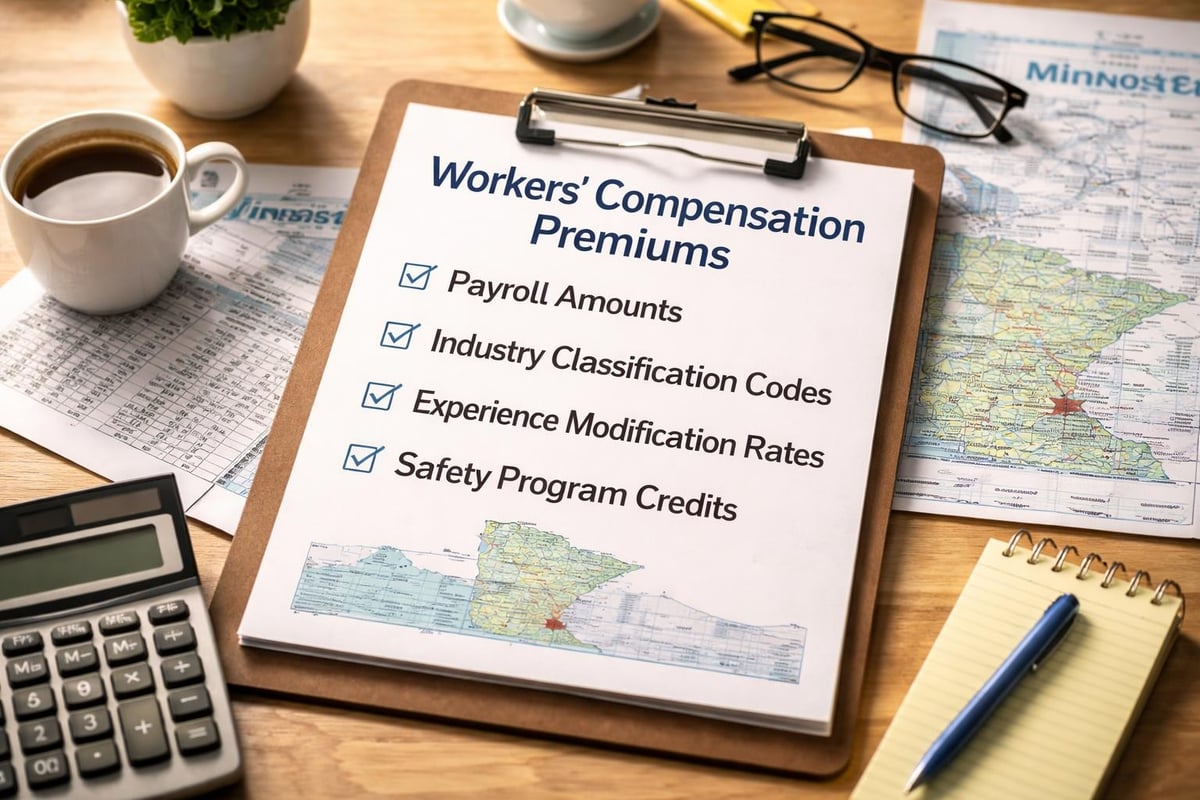
Understanding what drives your workers compensation costs empowers you to make strategic decisions that reduce premiums without compromising coverage quality. Insurance companies calculate rates using sophisticated formulas that assess risk across multiple dimensions.
Industry classification represents the primary cost driver. A roofing contractor in Duluth pays substantially higher rates than an accounting firm in Minneapolis because construction work inherently carries greater injury risk. Insurance carriers use classification codes that group businesses by operational characteristics and historical loss patterns.
Your payroll directly impacts premium calculations. Insurers multiply your total payroll by the rate assigned to each job classification, meaning businesses with larger workforces or higher wage structures naturally face increased premium costs.
The experience modification rate (EMR) adjusts your premium based on your specific claims history compared to similar businesses. An EMR of 1.0 represents average performance, while scores below 1.0 indicate better-than-average safety records that earn premium discounts. Scores above 1.0 signal problematic safety performance that increases costs.
Strategies for Premium Reduction
- Implement comprehensive safety training programs
- Conduct regular workplace hazard assessments
- Develop effective return-to-work programs for injured employees
- Maintain accurate job classification records
- Review and audit payroll reporting procedures
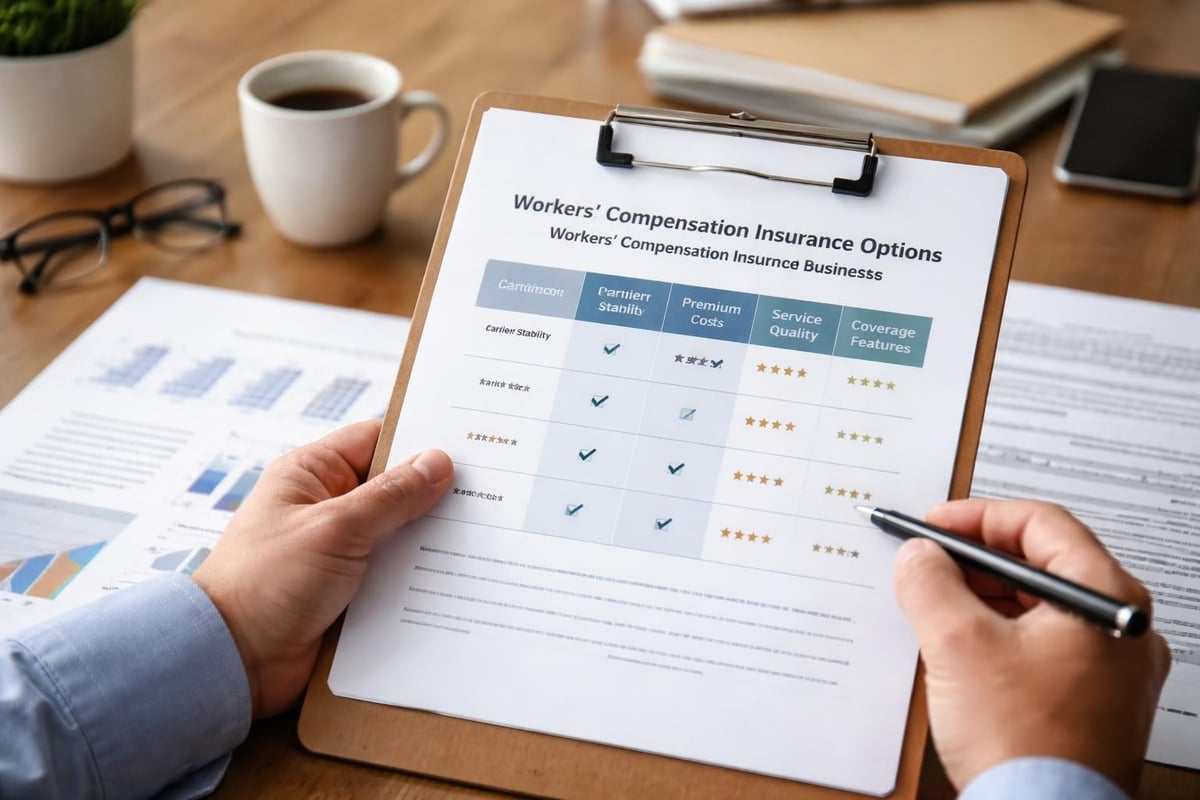
Your choice of insurance provider significantly affects both cost and service quality. Working with independent insurance brokers who offer commercial insurance options provides access to multiple carriers, ensuring competitive pricing and optimal coverage terms.
Claims Management and Best Practices
Effective claims management protects your business finances while ensuring employees receive appropriate care. The process begins the moment an injury occurs and continues through recovery and return to work.
Immediate response sets the tone for successful claims resolution. When an employee reports an injury at your St. Cloud facility, document the incident thoroughly, provide necessary first aid, and arrange appropriate medical evaluation. Quick action demonstrates care for employee welfare while establishing clear injury documentation.
Accurate reporting prevents disputes and delays. Minnesota law requires employers to report injuries to their insurance carrier within specific timeframes. Missing these deadlines can jeopardize coverage or create liability issues that expose your business to additional costs.
The Claims Process Timeline
- Employee reports injury to supervisor immediately
- Employer provides necessary medical care and completes incident report
- Employer notifies insurance carrier within 24 hours
- Insurance adjuster investigates claim and determines compensability
- Approved medical treatment and wage replacement benefits begin
- Employee completes treatment and receives clearance to return to work
Fraud prevention protects premium costs and system integrity. While most workers compensation claims reflect legitimate injuries, fraudulent claims do occur. Maintaining detailed documentation, conducting thorough incident investigations, and working with experienced adjusters helps identify questionable claims early.
Modified duty programs accelerate employee recovery while controlling costs. Rather than keeping an injured worker completely off the job, these programs provide temporary assignments that accommodate medical restrictions. A warehouse worker in Rochester who cannot lift heavy objects might perform inventory data entry while healing.
Selecting the Right Coverage Partner
Choosing your workers compensation insurance provider represents one of your most important business decisions. The right partner delivers more than policy documents-they provide expertise, advocacy, and support that protects your business interests.
Carrier financial strength ensures claims get paid regardless of circumstances. Researching carrier ratings from agencies like AM Best helps you avoid insurers who might struggle to meet obligations during difficult economic periods. Strong carriers maintain reserves and reinsurance relationships that guarantee claim payment capacity.
Service quality distinguishes exceptional insurers from mediocre ones. Consider factors like:
- Claims adjuster responsiveness and expertise
- Safety consultation and loss control services
- Online account management tools and resources
- Medical provider network quality and accessibility
| Evaluation Criteria | Why It Matters | Questions to Ask |
|---|---|---|
| Claims handling | Affects employee satisfaction and costs | What's your average claim resolution time? |
| Safety resources | Prevents injuries and reduces premiums | What loss control services do you provide? |
| Coverage flexibility | Ensures policy matches business needs | Can coverage be customized for our operations? |
| Premium competitiveness | Impacts profitability | How do your rates compare to market averages? |
Independent brokers offer distinct advantages over captive agents who represent single carriers. Brokers access multiple insurance companies, comparing coverage options and pricing to secure optimal solutions. Their industry knowledge helps businesses in Moorhead, Winona, and throughout Minnesota navigate complex coverage decisions.
Understanding how general insurance agencies operate provides insight into the broker relationship and how these professionals advocate for client interests rather than insurance company profits.
Integration with Broader Risk Management
Workers compensation functions as one component within comprehensive business risk management strategies. Smart business owners recognize how this coverage intersects with other protection mechanisms to create layered security.
General liability insurance addresses third-party injuries that workers compensation excludes. When a customer slips on ice outside your St. Paul office, general liability insurance coverage responds rather than workers compensation. Understanding these boundaries prevents coverage gaps.
Employee benefits programs complement workers compensation by supporting overall workforce health. Offering quality health insurance benefits reduces minor injury severity by ensuring employees receive preventive care and early treatment for health conditions.
Commercial property protection becomes relevant when workplace injuries result from property-related incidents. A falling ceiling tile that injures an employee might trigger both workers compensation claims and commercial property insurance claims for building repairs.
Creating Synergy Across Coverage Types
Safety programs that reduce workers compensation claims simultaneously lower other insurance costs. Comprehensive driver training for employees operating company vehicles decreases both workers compensation claims from vehicle accidents and commercial auto insurance claims from property damage and third-party injuries.
Documentation systems established for workers compensation claims provide valuable data for defending general liability lawsuits. Detailed incident reports, witness statements, and safety protocol records demonstrate your commitment to risk management across all operational areas.
Emerging Trends and Future Considerations
The workers compensation landscape continues evolving as workplace dynamics shift, medical treatments advance, and regulatory frameworks adapt to new realities. Minnesota business owners who understand these trends position themselves for continued success.
Remote work arrangements create unique coverage questions. When an employee working from their Eden Prairie home sustains an injury during work hours, determining compensability requires analyzing whether the activity was work-related and occurred during employment. Insurance carriers and courts continue developing precedents that clarify these situations.
Mental health claims represent growing portions of workers compensation costs. Workplace stress, trauma from violent incidents, and psychological impacts of physical injuries now receive coverage consideration in many jurisdictions. Understanding coverage boundaries for these claims helps employers respond appropriately when employees report mental health issues.
Telemedicine transforms injury treatment and claims management. Virtual doctor consultations reduce time away from work while providing appropriate care for minor injuries. Insurance carriers increasingly embrace these technologies as cost-effective alternatives to traditional medical visits.
Opioid epidemic responses have reshaped pain management protocols within workers compensation systems. Insurance carriers now implement strict guidelines for narcotic prescriptions, emphasize alternative pain treatments, and monitor prescribing patterns to prevent addiction issues that can dramatically escalate claim costs.
Legislative changes continue addressing system challenges and adapting to economic realities. Staying informed about statutory modifications affecting benefit levels, coverage requirements, and employer obligations helps you maintain compliance while budgeting accurately for insurance costs.
Protecting your workforce through proper workers compensation coverage represents both a legal obligation and a sound business strategy that safeguards your financial future while demonstrating commitment to employee welfare. The complexities of coverage selection, claims management, and regulatory compliance can feel overwhelming, but you don't have to navigate these challenges alone. Guardian Insurance Services MN brings decades of experience helping Minnesota businesses in Albany, Freeport, and throughout the state secure comprehensive protection from over 35 top insurance carriers. Our independent broker approach ensures you receive personalized service, competitive pricing, and expert guidance tailored to your specific industry and operational needs.