
Protecting your employees while safeguarding your business from financial catastrophe isn't just good practice-it's legally required in Minnesota. Workers insurance compensation represents one of the most critical investments any business owner can make, yet many entrepreneurs in places like Albany and Freeport still misunderstand its full scope and importance. This comprehensive coverage protects both your workforce and your bottom line when workplace injuries or illnesses occur, creating a safety net that benefits everyone involved. Whether you operate a small farm, manage a construction crew, or run a retail operation across Minnesota, understanding this essential protection determines whether an injury becomes a manageable incident or a business-ending crisis.
Understanding Workers Insurance Compensation Requirements in Minnesota
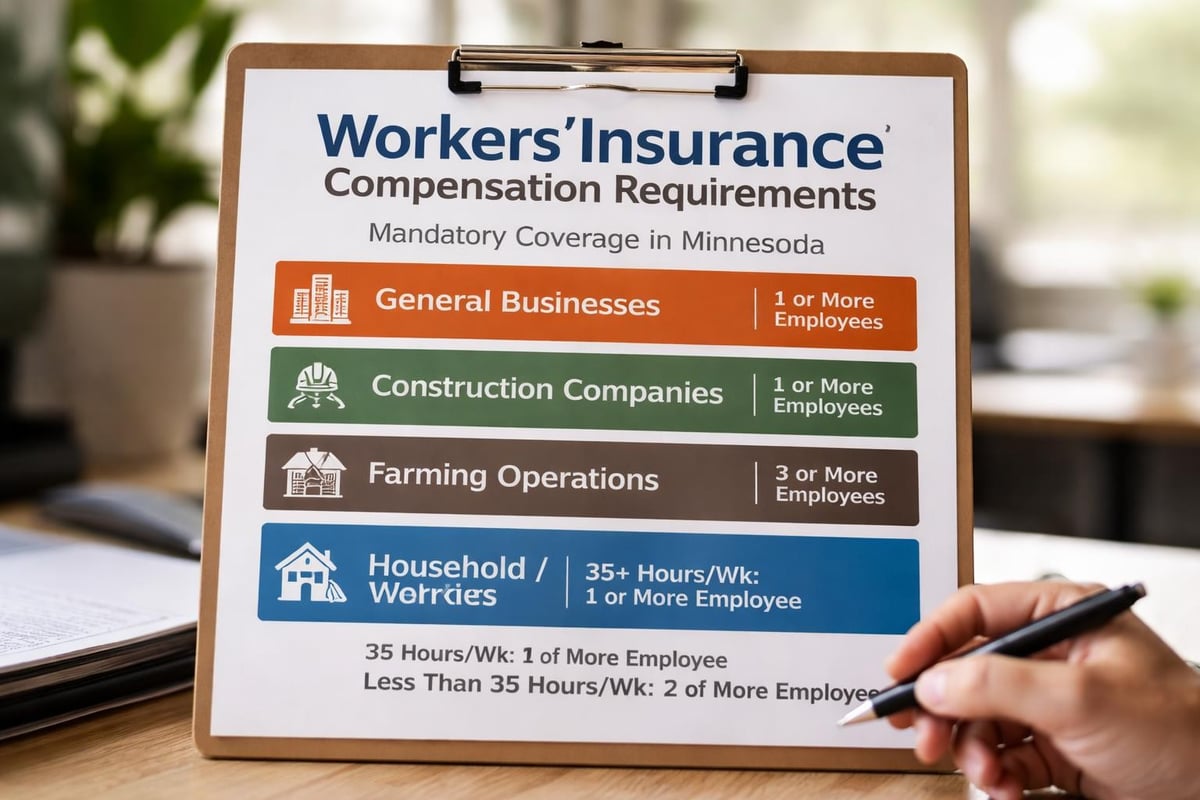
Minnesota law mandates that most employers carry workers insurance compensation coverage, with specific requirements depending on your business structure and workforce size. If you employ one or more workers, you're generally required to maintain this protection, though certain exceptions exist for specific industries and business types.
The Minnesota Department of Labor and Industry enforces these requirements rigorously, with substantial penalties for non-compliance. Businesses operating without required coverage face fines up to $25,000, potential criminal charges, and personal liability for all injured worker expenses. These consequences make compliance not just legally necessary but financially prudent.
Who Needs Coverage in Minnesota
Understanding which businesses require workers insurance compensation helps you determine your obligations:
- Corporations and LLCs: Must carry coverage from the first employee hired
- Partnerships and sole proprietors: Required when employing one or more workers
- Construction contractors: Mandatory regardless of employee count in most situations
- Agricultural operations: Required when employing three or more full-time workers
- Household employers: Generally exempt unless employing 20+ hours weekly
The CDC’s National Institute for Occupational Safety and Health provides valuable research on how workers' compensation systems function nationwide, offering insights into best practices and safety protocols that can reduce workplace injuries.
Coverage Components That Protect Your Business
Workers insurance compensation provides four primary coverage categories that work together to protect injured employees and shield your business from devastating lawsuits. Understanding these components helps you evaluate policies effectively and ensure adequate protection.
Medical Benefits cover all reasonable and necessary medical treatment resulting from work-related injuries or illnesses. This includes emergency room visits, surgery, physical therapy, prescription medications, and ongoing care required for recovery. Minnesota requires insurers to pay these costs without deductibles or copayments from injured workers.
Wage Replacement Benefits compensate employees for lost earnings during recovery periods. Minnesota typically pays two-thirds of the worker's average weekly wage, subject to state-mandated maximums that adjust annually. These benefits continue until the employee returns to work or reaches maximum medical improvement.
| Coverage Type | What It Provides | Duration | Payment Calculation |
|---|---|---|---|
| Temporary Total Disability | Full wage replacement during recovery | Until return to work | 66.67% of average weekly wage |
| Permanent Partial Disability | Compensation for lasting impairments | Varies by injury severity | Based on impairment rating |
| Permanent Total Disability | Long-term support for severe injuries | Potentially lifetime | 66.67% of average weekly wage |
| Vocational Rehabilitation | Job retraining and placement services | Until employable | Program costs plus support |
Death Benefits provide financial support to dependents when workplace incidents result in fatalities. These benefits include funeral expenses up to $15,000 and ongoing financial support for spouses and dependent children, ensuring families maintain financial stability during devastating circumstances.
The National Association of Insurance Commissioners offers detailed information about the regulatory framework governing workers' compensation, helping business owners understand the system's structure and their obligations.
Cost Factors That Impact Your Premiums
Workers insurance compensation costs vary dramatically based on multiple factors specific to your Minnesota business. Understanding these variables empowers you to control expenses while maintaining comprehensive protection for your workforce.
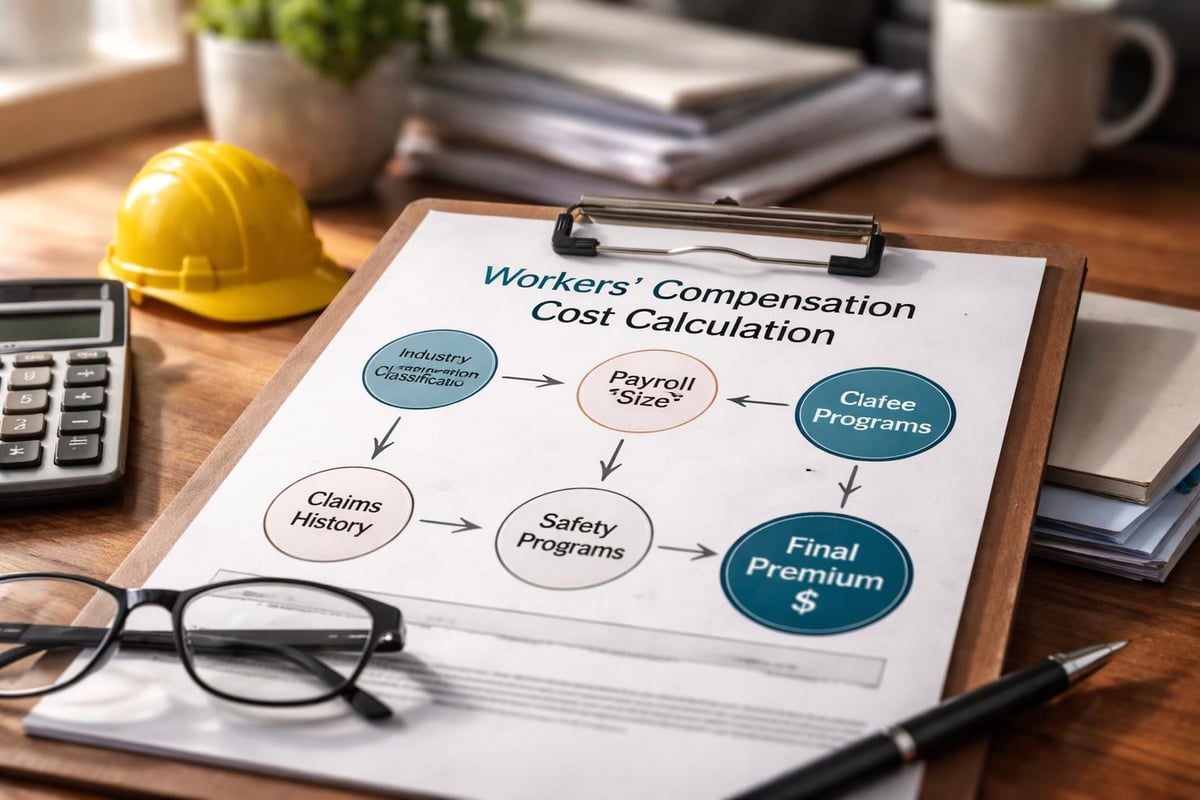
Your industry classification code determines your base rate, with higher-risk operations like roofing or manufacturing paying significantly more than office-based businesses. These codes, established by the National Council on Compensation Insurance, reflect historical injury data and expected claim frequencies for specific business types.
Key Premium Determinants
Several controllable and uncontrollable factors influence your workers insurance compensation costs:
- Payroll size: Premiums calculate per $100 of payroll, making workforce costs directly proportional
- Claims history: Your experience modification rate rewards safe workplaces with lower premiums
- Industry classification: Different business activities carry vastly different risk profiles
- Safety programs: Documented safety initiatives and training reduce perceived risk
- Business location: Even within Minnesota, rates vary between Minneapolis, Albany, and rural areas
Implementing robust safety protocols dramatically reduces your long-term workers insurance compensation costs. Businesses in Freeport and throughout Stearns County that prioritize employee safety consistently achieve lower experience modification rates, translating to premium savings of 20-40% compared to industry peers with poor safety records.
Many Minnesota employers discover significant savings by working with independent insurance brokers who specialize in commercial insurance, accessing multiple carrier quotes and identifying the best value for their specific risk profile.
Claim Management Strategies That Reduce Costs
Effective claim management represents the most powerful tool for controlling workers insurance compensation expenses over time. Minnesota businesses that implement proactive strategies consistently outperform competitors in both safety outcomes and insurance costs.
When injuries occur, immediate response determines claim severity and duration. Establishing clear injury reporting procedures ensures workers receive prompt medical attention while documenting incidents accurately. Minnesota law requires employers to report injuries within specific timeframes, with penalties for delayed notifications.
Return-to-work programs accelerate recovery and minimize wage replacement costs by creating modified duty opportunities for injured employees. These programs benefit workers through continued employment and help businesses maintain productivity while reducing claim expenses. Studies show employees who remain connected to their workplace recover faster and return to full duty sooner than those separated from their work environment.
Building an Effective Safety Culture
Creating a workplace culture that prioritizes safety requires commitment from leadership and engagement from every employee:
- Conduct regular safety training sessions relevant to your industry
- Perform routine workplace inspections to identify and correct hazards
- Encourage employee reporting of unsafe conditions without fear of reprisal
- Investigate all incidents thoroughly to prevent recurrence
- Recognize and reward departments or individuals with excellent safety records
- Maintain equipment properly and replace worn or dangerous tools promptly
The National Academy of Social Insurance provides extensive research on workers' compensation benefits and costs, offering data-driven insights that help businesses understand system dynamics and optimize their risk management strategies.
Minnesota businesses that partner with experienced insurance professionals gain access to loss control resources, including on-site safety consultations and industry-specific training materials. These services, often included with workers compensation insurance policies, deliver value far beyond premium costs.
Industry-Specific Considerations for Minnesota Businesses
Different industries face unique workers insurance compensation challenges requiring tailored approaches to coverage and risk management. Understanding your sector's specific risks helps you implement targeted protective measures.
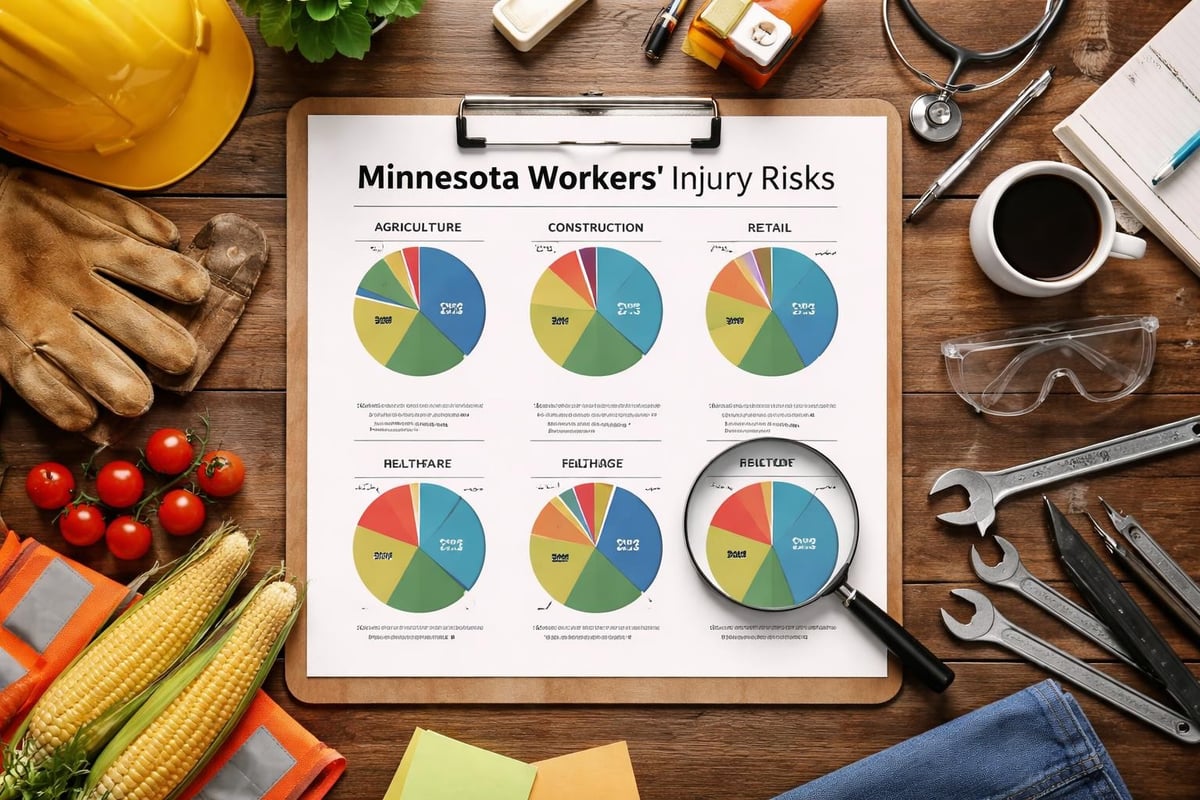
Agricultural operations throughout Minnesota's rural communities encounter distinctive hazards from heavy machinery, livestock handling, and seasonal work patterns. Farm operations near Albany and surrounding areas must address coverage for family members working on the property, seasonal employees during harvest, and the unique risks associated with farming equipment. Many farmers benefit from specialized farm insurance packages that integrate workers insurance compensation with property and liability protection.
Construction and trades businesses face elevated injury risks from heights, power tools, and physical labor demands. These operations require higher coverage limits and particularly benefit from safety training programs. Implementing comprehensive safety protocols, including the measures outlined in resources like the Texas Department of Insurance scaffold safety checklist, reduces incidents and demonstrates commitment to worker protection.
| Industry Sector | Common Injuries | Premium Impact | Risk Reduction Strategies |
|---|---|---|---|
| Agriculture | Machinery accidents, repetitive strain | Moderate to High | Equipment training, maintenance schedules |
| Construction | Falls, struck-by incidents | High | Fall protection, site safety protocols |
| Healthcare | Back injuries, needlestick exposures | Moderate | Proper lifting techniques, safety devices |
| Retail/Office | Slip and falls, ergonomic injuries | Low to Moderate | Housekeeping standards, ergonomic workstations |
| Manufacturing | Equipment injuries, repetitive motion | Moderate to High | Machine guarding, job rotation |
Retail and hospitality businesses in places like Freeport deal primarily with customer-related incidents and ergonomic challenges. While generally facing lower workers insurance compensation costs than construction or manufacturing, these businesses still benefit from proactive safety measures addressing slip-and-fall hazards, proper lifting techniques, and customer interaction protocols.
Choosing the Right Coverage and Provider
Selecting appropriate workers insurance compensation coverage requires balancing adequate protection with cost management. Minnesota businesses have numerous carrier options, each offering different policy features, pricing structures, and service levels.
Coverage limits should reflect your actual risk exposure rather than minimum legal requirements. While Minnesota mandates specific minimum benefits, businesses with significant assets or high-risk operations often purchase additional coverage protecting against catastrophic claims. Umbrella policies provide excess liability protection beyond standard workers insurance compensation limits.
Working with an independent insurance broker provides access to multiple carriers simultaneously, enabling true comparison shopping. Unlike captive agents representing single companies, independent brokers compare offerings from over 35 insurance companies, identifying the optimal combination of coverage, cost, and service for your specific situation.
Evaluating Insurance Carriers
When comparing workers insurance compensation providers, consider these critical factors:
- Financial strength ratings: Ensure carriers possess resources to pay claims during economic downturns
- Claims handling reputation: Research how quickly and fairly insurers process and pay claims
- Loss control services: Evaluate available safety resources, training materials, and consultation services
- Premium payment options: Compare payment flexibility and potential financing arrangements
- Local service presence: Consider accessibility of claims adjusters and representatives in Minnesota
The Insurance Journal’s Workers’ Compensation Directory and Claims Journal’s comprehensive report provide valuable resources for identifying reputable carriers and understanding industry trends affecting coverage availability and pricing.
Minnesota businesses benefit from establishing relationships with brokers who understand local market conditions and maintain strong carrier relationships. These professionals negotiate favorable terms, advocate during claims disputes, and provide ongoing policy reviews ensuring coverage evolves with your changing business needs.
Compliance and Legal Obligations
Minnesota employers must navigate complex regulatory requirements governing workers insurance compensation, with strict penalties for non-compliance. Understanding these obligations protects your business from legal consequences and ensures proper protection for your workforce.
Certificate of coverage posting requirements mandate that employers display proof of workers insurance compensation in prominent workplace locations. This notification informs employees of their rights and provides claim filing information. Minnesota law specifies exact posting requirements, including size, location, and content specifications.
Injury reporting protocols require employers to report serious workplace injuries to the Minnesota Department of Labor and Industry within 48 hours. Additional reporting obligations exist for specific injury types, including amputations, fatalities, and hospitalizations. Maintaining accurate injury logs helps businesses track trends, identify hazards, and demonstrate regulatory compliance.
Essential Compliance Checklist
Ensure your Minnesota business meets all workers insurance compensation requirements:
- Maintain active coverage meeting or exceeding state minimums
- Display current certificate of coverage in accessible workplace locations
- Report qualifying injuries within mandated timeframes
- Preserve injury records for the legally required retention period
- Provide injured workers with required claim forms and information
- Cooperate fully with insurance carrier investigations
- Avoid retaliation against employees filing legitimate claims
- Review coverage annually and update for business changes
Businesses should also understand that independent contractors don't automatically qualify as exempt from coverage calculations. Minnesota applies strict tests determining worker classification, with significant penalties for misclassifying employees as contractors to avoid workers insurance compensation requirements. Consulting with legal and insurance professionals ensures proper classification and compliance.
Employers operating in multiple states face additional complexity, as each jurisdiction maintains unique workers insurance compensation requirements. Minnesota businesses expanding operations across state lines must secure appropriate coverage in each location, potentially requiring separate policies or endorsements to existing coverage.
Risk Prevention Strategies That Work
Preventing workplace injuries delivers benefits far beyond workers insurance compensation cost savings. Minnesota businesses that prioritize safety create more productive workplaces, improve employee morale, reduce turnover, and build reputations as employers of choice in their communities.
Pre-employment screening helps match workers to appropriate job demands, reducing injury risk from physical mismatches. While Minnesota law restricts certain screening practices, employers can implement job-specific physical demands testing, ensuring candidates can safely perform essential functions. These programs work particularly well in physically demanding industries like construction, manufacturing, and agriculture.
Ongoing safety training reinforces proper procedures and keeps safety awareness high among your workforce. Effective training goes beyond initial orientation, providing regular refreshers, addressing new equipment or procedures, and responding to incident investigations. Minnesota businesses in Albany, Freeport, and throughout the state access numerous training resources through industry associations, insurance carriers, and state agencies.
Technology Tools for Safety Management
Modern safety management leverages technology to identify risks and prevent injuries:
- Wearable devices monitor worker fatigue, environmental conditions, and dangerous movements
- Telematics systems track vehicle operation, identifying unsafe driving behaviors in real-time
- Mobile apps streamline safety inspections, incident reporting, and training documentation
- Video analytics identify hazardous conditions and near-miss incidents before injuries occur
- Ergonomic assessment tools evaluate workstation design and recommend improvements
Implementing even basic safety technology demonstrates commitment to worker protection while generating data that informs continuous improvement efforts. These investments typically pay for themselves through reduced workers insurance compensation claims and improved operational efficiency.
Businesses should also establish clear emergency response procedures addressing various scenarios from minor injuries to mass casualty events. Regular drills ensure employees understand their roles during emergencies, reducing panic and confusion when actual incidents occur. Documented emergency plans also demonstrate regulatory compliance and risk management sophistication to insurance carriers.
The Independent Broker Advantage
Navigating workers insurance compensation complexity proves challenging for most Minnesota business owners focused on core operations rather than insurance technicalities. Independent insurance brokers provide expertise, market access, and advocacy that deliver significant value throughout the policy lifecycle.
Market access represents the most obvious broker advantage, with independent agents comparing offerings from dozens of carriers simultaneously. This competition drives better pricing and coverage terms than most businesses could negotiate directly. Brokers with strong carrier relationships also access specialty markets for difficult-to-place risks that captive agents cannot serve.
Expert guidance helps businesses understand coverage nuances, identify gaps, and structure programs appropriately. Workers insurance compensation policies contain numerous endorsements, exclusions, and optional coverages that significantly impact protection levels. Brokers translate insurance jargon into plain language, ensuring you understand exactly what you're purchasing and what situations your policy addresses.
Ongoing advocacy proves invaluable when claims arise. Brokers intercede between clients and carriers, expediting claim processing, resolving disputes, and ensuring fair treatment. This support proves particularly valuable during large or complex claims when businesses need expert guidance navigating the system.
Risk management consulting extends beyond insurance placement into operational advice that prevents losses. Experienced brokers conduct workplace safety assessments, recommend improvements, and connect clients with specialized loss control resources. These services transform the broker relationship from transactional to consultative, creating partnerships that strengthen businesses over time.
Minnesota businesses working with locally based independent brokers benefit from professionals who understand regional market conditions, maintain relationships with local carriers, and remain accessible for in-person consultations. This local connection proves especially valuable in communities like Albany and Freeport, where personal relationships and community involvement matter.
Workers insurance compensation represents a critical investment that protects both your Minnesota workforce and your business's financial future. From understanding coverage requirements to implementing safety programs that prevent injuries, every decision impacts your long-term success and ability to weather workplace incidents. At Guardian Insurance Services MN, our experienced team helps Albany and Freeport businesses navigate workers insurance compensation complexity, comparing offerings from over 35 top carriers to identify optimal protection at competitive prices. Contact Guardian Insurance Services MN today to review your current coverage, explore cost-saving strategies, and ensure your business maintains the protection your employees deserve and your operation requires.