
Traders in Minnesota are facing unprecedented risks and challenges in 2026, from complex regulations to evolving market threats. Now more than ever, having a traders insurance policy is essential to guard against unexpected financial loss, legal claims, and operational hiccups.
The right coverage does more than just protect your assets, it safeguards your reputation and keeps your business running smoothly. Ready to secure your future? Dive into this guide to learn about policy basics, coverage choices, Minnesota compliance, choosing providers, understanding costs, and navigating claims.
Understanding Traders Insurance Policies in 2026
Navigating the complex world of business in Minnesota calls for a solid understanding of the traders insurance policy. This specialized insurance is designed to protect businesses that buy, sell, or repair goods, offering a safety net against risks unique to trading operations. Unlike standard business insurance, a traders insurance policy is tailored for those handling frequent transactions or large inventories, such as auto traders, wholesalers, and retailers in Minneapolis or Rochester. For example, a local auto dealer in Duluth benefits from coverage that shields vehicles and business assets from theft, fire, or customer claims.
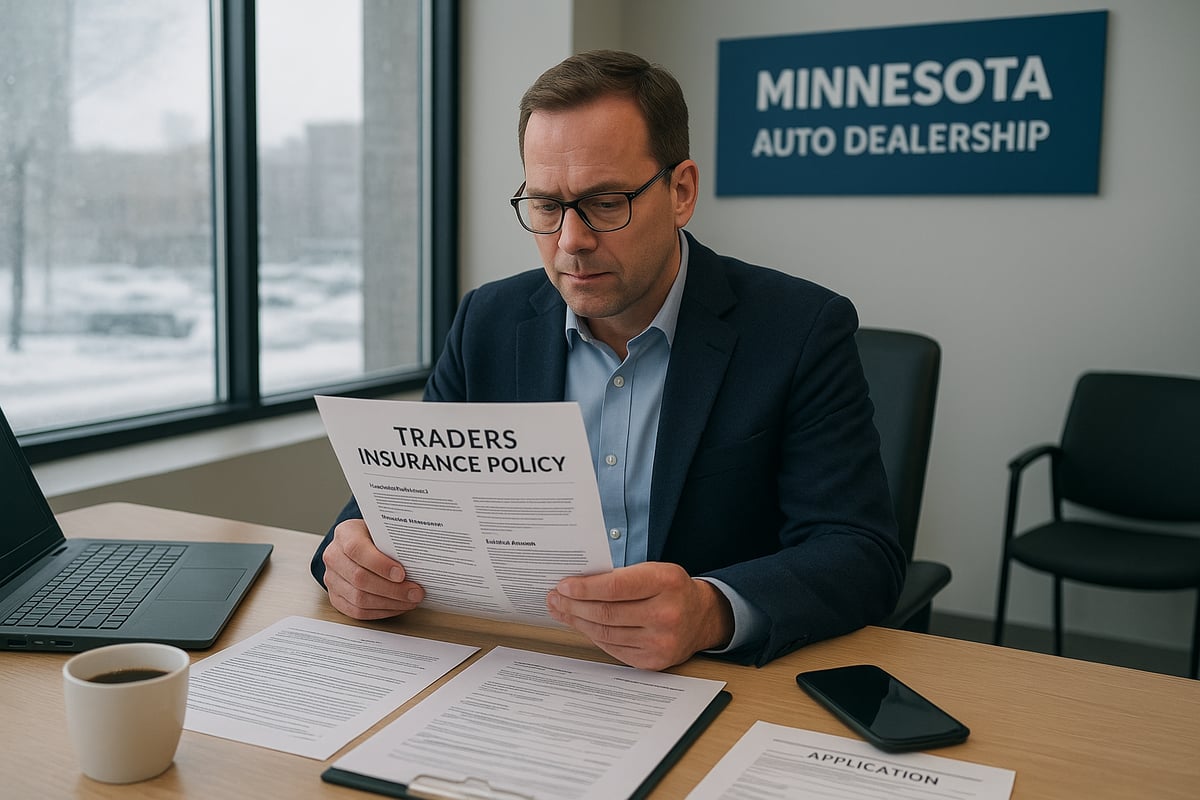
Definition and Core Purpose of Traders Insurance
A traders insurance policy is a package designed specifically for businesses engaged in trading goods or offering related services. It provides coverage for risks such as property damage, legal claims, and loss of stock. What makes a traders insurance policy unique is its focus on the needs of businesses that regularly handle inventory, interact with customers, or move goods across Minnesota.
Unlike general business insurance, a traders insurance policy covers specific risks faced by auto traders in St. Paul, wholesalers in Bloomington, or retail shops in Mankato. For instance, a Minnesota-based car dealer relies on this policy to safeguard vehicles on the lot and protect against customer liability claims. By addressing these specialized exposures, a traders insurance policy ensures business continuity and financial security.
Key Components of a Traders Insurance Policy
Every traders insurance policy consists of several primary coverages that work together to shield businesses from common risks. Essential components include public liability insurance, employers’ liability, commercial property protection, and coverage for tools and stock. Many Minnesota traders also add business interruption, goods in transit, and cyber liability for broader protection.
Public liability covers injuries to customers or third parties, while employers’ liability is crucial for businesses with staff. Property insurance protects premises and inventory from fire, theft, or vandalism. Add-ons like cyber liability address emerging threats as more Minnesota traders sell online. For a deeper dive into the core elements, review this General liability insurance overview to see how these protections fit within a traders insurance policy.
Types of Traders Insurance Policies
Minnesota businesses can choose from several types of traders insurance policy to suit their specific needs. Single policies are ideal for small retailers in Duluth who need basic protection, while combined policies offer broader coverage for larger wholesalers in St. Cloud. Motor trade policies are designed for those dealing in vehicles, such as used car dealerships in Minneapolis.
Consider these real-world scenarios:
- A boutique retailer in Rochester may only need stock and property coverage.
- An auto trader in Bloomington benefits from a motor trade policy, which includes road risks and liability for test drives.
This flexibility allows businesses of all sizes to find the right traders insurance policy, ensuring they pay for only what they need.
Who Needs Traders Insurance in Minnesota?
A traders insurance policy is essential for a wide range of Minnesota businesses. Eligible enterprises include car dealerships in Minneapolis, wholesale distributors in St. Cloud, market vendors in Duluth, and repair shops in Rochester. Each faces unique risks, from customer slip-and-fall incidents to property loss or legal claims.
Minnesota has state-specific regulations that influence traders insurance policy requirements. For example, used car dealers must meet certain liability coverage minimums and maintain proof of insurance for licensing. Local legislation can impact what coverages are necessary, so staying informed is vital for compliance and risk management.
Common Misconceptions and Mistakes
Many Minnesota business owners mistakenly believe that general liability alone provides enough protection, when in fact, a comprehensive traders insurance policy covers far more. Common errors include underestimating the value of stock, overlooking cyber risks, or choosing policies that do not meet local regulatory requirements.
According to recent data, over 20 percent of uninsured traders in Minnesota have faced costly claims or legal disputes. Avoiding these pitfalls starts with understanding the full scope of a traders insurance policy and consulting with experienced local providers. By addressing these misconceptions, businesses can ensure they are fully protected and positioned for long-term success.
Essential Coverage Options for Traders in 2026
Navigating the right coverage is crucial for any Minnesota business owner. The right traders insurance policy is your shield against unexpected setbacks, legal claims, and lost profits. Let’s explore the essential coverage options every trader should consider in 2026.

Public and Employers’ Liability Insurance
Public and employers’ liability insurance are foundational elements of any traders insurance policy. Public liability protects your business if a customer or visitor is injured on your premises, such as a slip-and-fall at a Minneapolis retail shop. Employers’ liability is legally required if you have staff, covering injuries or illnesses employees may suffer at work.
Minnesota mandates specific liability limits, often higher in urban areas like St. Paul. Without adequate coverage, a single claim could jeopardize your business. Choosing a traders insurance policy with robust liability protection ensures compliance and peace of mind for every trader.
Property and Stock Protection
Your business premises, inventory, and equipment are vital to daily operations. Property and stock coverage within a traders insurance policy safeguards against risks like theft, fire, and vandalism. For example, a St. Cloud wholesaler can recover quickly after a break-in or fire if properly insured.
Minnesota traders have seen average property loss claims rise, making this coverage more important than ever. To learn more about protecting your physical assets, visit Commercial property insurance details. Ensuring your traders insurance policy includes property and stock protection is a smart step toward business continuity.
Business Interruption and Income Protection
Disasters like fires or flooding in Duluth can halt trading operations overnight. Business interruption and income protection coverage within your traders insurance policy help maintain cash flow when you cannot operate. This means your bills, wages, and rent are still covered while you recover.
For many Minnesota small businesses, average downtime after a major incident exceeds two weeks, with costs quickly mounting. Having a traders insurance policy with business interruption coverage can be the difference between bouncing back and closing your doors for good.
Goods in Transit and Vehicle Coverage
If you transport goods across Minnesota, goods in transit insurance is essential. This coverage protects your stock from damage or loss during movement, whether you’re shipping from Rochester to St. Paul or delivering locally. Vehicle coverage is equally crucial for auto traders, ensuring all vehicles in your care are protected.
A traders insurance policy tailored to your needs might include both, reducing risk during every stage of your supply chain. Imagine a delivery gone wrong between Duluth and Minneapolis—this coverage keeps your finances intact.
Cyber Liability and Digital Risks
Minnesota traders are increasingly exposed to cyber threats, from data breaches to ransomware. Cyber liability coverage within a traders insurance policy protects your business if customer data is stolen, your website is hacked, or online sales are disrupted.
In recent years, cyber incidents among Minnesota small businesses have surged, making digital risk coverage non-negotiable. By including cyber liability in your traders insurance policy, you safeguard sensitive data, your reputation, and the future of your business in a digital-first world.
Navigating Legal and Regulatory Requirements in Minnesota
Navigating Minnesota’s legal and regulatory landscape is crucial for businesses looking to secure a comprehensive traders insurance policy. Compliance not only safeguards your business from penalties but also ensures smooth operations across cities like Minneapolis, St. Paul, and Rochester. Let’s break down what you need to know to stay ahead in 2026.

State and Federal Insurance Mandates
Minnesota requires all businesses, including those seeking a traders insurance policy, to meet specific insurance mandates. At the state level, minimum liability coverage is non-negotiable, with additional requirements for workers’ compensation and, in some cases, surplus lines insurance. Federal regulations, such as OSHA standards and workers’ comp, further shape compliance.
For a detailed overview, refer to Commercial insurance for Minnesota businesses, which outlines essential requirements and helps clarify how your traders insurance policy can align with local and national laws. For example, a St. Cloud retailer must verify that their liability limits meet Minnesota’s state minimums to avoid costly fines.
Licensing, Documentation, and Compliance Steps
Securing a traders insurance policy in Minnesota means preparing the right documentation and staying proactive with compliance. Required paperwork typically includes:
- Business licenses valid for your city or county
- Proof of insurance coverage, such as certificates of liability
- Regulatory filings for your specific industry
Follow these steps:
- Gather and update all relevant documents.
- Submit filings to the Minnesota Department of Commerce.
- Schedule annual reviews to keep licenses and insurance up to date.
Missing even a single step can result in penalties or lapses in coverage. For instance, a Duluth wholesaler who fails to renew their insurance documentation risks suspension of business operations.
Industry-Specific Regulations
Certain industries, such as auto dealerships, food vendors, and wholesalers, must meet additional regulations when securing a traders insurance policy. For example, used car dealers in Minnesota are required to hold a dealer license, maintain higher liability coverage, and undergo regular inspections.
Consider this table summarizing key regulations:
| Industry | Special Requirement | Example Location |
|---|---|---|
| Auto Dealers | Dealer license, higher liability | Minneapolis |
| Food Vendors | Health permits, product liability | Rochester |
| Wholesalers | Sales tax registration | St. Paul |
Regulatory fines for non-compliance can reach thousands of dollars, making it vital to stay current with industry rules.
Trends and Upcoming Changes for 2026
Looking ahead, Minnesota is introducing new digital compliance options, such as e-signatures and online filings, making it easier to manage your traders insurance policy. Pending legislation could also increase liability minimums, directly impacting coverage needs.
For example, businesses in Bloomington may soon need to adjust their policies to comply with updated liability requirements. Staying informed about these changes enables you to adapt quickly and maintain full compliance as regulations evolve.
Step-by-Step Guide to Securing the Right Traders Insurance Policy
Choosing the right traders insurance policy is one of the most important decisions you’ll make to protect your Minnesota business in 2026. With so many options and regulations, it’s easy to feel overwhelmed. This step-by-step guide will help you navigate the process, avoid costly mistakes, and secure coverage that fits your unique needs.

Step 1: Assess Your Business Risks and Needs
Start by identifying your business’s specific risks. Every Minnesota trader faces different exposures based on their industry, location, and operations. For example, a St. Paul auto dealership will have different needs than a Duluth wholesaler or a seasonal market vendor in Rochester.
Use risk assessment tools or consult a local insurance expert to evaluate hazards like theft, property damage, employee injuries, and cyber threats. This first step ensures your traders insurance policy addresses real-world challenges unique to your business.
Consider these questions:
- What assets need protection?
- Do you operate outdoors or in high-traffic areas?
- Are there seasonal risks, like winter storms in Bloomington?
Understanding your risk profile sets the stage for building a comprehensive traders insurance policy that truly shields your business.
Step 2: Compare Insurance Providers and Policies
Next, research multiple insurance companies that offer traders insurance policy options tailored for Minnesota businesses. Look for providers with strong reputations, local expertise, and positive client testimonials.
Compare coverage details, policy exclusions, claim processes, and customer service ratings. Don’t just focus on price—make sure the policy covers all your critical risks. For instance, a Minneapolis retailer might prioritize property coverage, while a Mankato auto trader needs robust vehicle protection.
A helpful tip: Check whether providers offer required coverages, such as workers’ compensation insurance requirements, which are mandatory for businesses with employees in Minnesota. This ensures legal compliance and peace of mind.
Step 3: Gather Necessary Documentation
Prepare essential documents before applying for a traders insurance policy. Insurers typically request business licenses, financial statements, past claims history, and details about your operations.
Organize both digital and paper records for easy access. This not only speeds up the quoting process but also demonstrates professionalism to insurers. For example, a St. Cloud repair shop should keep maintenance logs, employee records, and proof of safety measures handy.
If your insurer schedules a risk assessment visit, be ready to present documentation and answer questions about your business practices. Thorough preparation can help you secure better terms on your traders insurance policy.
Step 4: Obtain and Review Quotes
Request detailed quotes from at least three insurers to compare traders insurance policy costs and coverage options. Factors influencing your premium include claims history, location, business type, and chosen coverage limits.
Review each quote for:
- Included coverages and exclusions
- Deductible amounts
- Optional add-ons, like cyber liability or business interruption
For example, a Duluth wholesaler with a clean claims record may receive lower rates than a Minneapolis retailer with recent property losses. Carefully evaluate how each traders insurance policy aligns with your risk profile and budget.
Step 5: Finalize and Purchase Your Policy
Once you’ve selected the best traders insurance policy, review the terms, conditions, and endorsements thoroughly. Confirm that all required coverages are included, especially if your business is subject to Minnesota-specific regulations.
Double-check for essential add-ons, such as cyber liability or goods in transit coverage, based on your business activities. If you have employees, verify that workers’ compensation is active and compliant. Only sign the policy when you are confident it meets your legal and operational needs.
Step 6: Maintain and Update Your Coverage
Your traders insurance policy should evolve as your business grows. Schedule annual reviews to reassess your risks, update coverage limits, and add or remove endorsements as needed.
Stay proactive by informing your insurer about major changes, such as opening a new location in Eden Prairie or expanding your product line. Regular updates help prevent coverage gaps and ensure your policy remains effective.
The renewal process is also a chance to shop for better rates or improved coverage. By maintaining an up-to-date traders insurance policy, you safeguard your Minnesota business against new and emerging risks.
Factors Affecting the Cost of Traders Insurance in 2026
Minnesota businesses face a changing landscape in 2026, and understanding what drives the price of a traders insurance policy is key to controlling costs and securing the right coverage. Let’s break down the main factors impacting premiums for St. Cloud, Minneapolis, Duluth, and other Minnesota traders.
Business Size, Revenue, and Industry
The size and type of your business play a direct role in determining your traders insurance policy premium. Larger Minneapolis wholesalers, for example, pay significantly more than a small St. Cloud market vendor due to higher revenues and broader operations. Industry risk also matters: vehicle traders often see higher rates than general retailers. With anticipated statewide premium increases in 2026, as reported in Minnesota health insurance premiums to increase in 2026, staying informed about your industry’s trends is crucial.
Claims History and Risk Profile
Your claims history is a powerful indicator for insurers when pricing your traders insurance policy. Minnesota businesses with frequent or high-value claims often face increased premiums. Insurers evaluate your risk profile, considering past incidents and how well you manage workplace safety or theft prevention. According to recent Minnesota data, the average claim rate for local traders has steadily risen, making proactive risk management more important than ever. Demonstrating a clean claims record can lead to more favorable policy terms and lower annual costs.
Location and Security Measures
Where your business operates within Minnesota can influence your traders insurance policy costs. Urban centers like Minneapolis may have higher base premiums compared to rural areas due to increased risks of theft or property damage. Insurers also reward security upgrades, such as installing alarms or CCTV systems. For example, Duluth businesses in low-crime neighborhoods often benefit from reduced premiums. Investing in security not only protects your assets but can directly lower your insurance expenses, making it a strategic move for all Minnesota traders.
Policy Customization and Coverage Limits
Customizing your traders insurance policy with add-ons or higher coverage limits will affect your premium. Opting for business interruption coverage, cyber liability, or goods in transit protection can raise costs but ensure comprehensive protection. Adjusting deductibles is another lever: choosing a higher deductible usually results in a lower premium, but requires more out-of-pocket payment if you file a claim. Minnesota traders should balance their coverage needs with budget constraints, reviewing policy options annually to maintain the best value.
The Claims Process: What Minnesota Traders Need to Know
Navigating the claims process for your traders insurance policy in Minnesota is crucial to protect your business and ensure a swift recovery after unexpected events. Understanding each step and being well-prepared can make all the difference when disaster strikes, whether it is theft, property damage, or a liability incident.
Filing a Claim: Step-by-Step
When an incident occurs, acting quickly is essential. Begin by notifying your insurer as soon as possible to initiate your traders insurance policy claim. Provide details such as the time, location, and nature of the event. Gather evidence, including photos, receipts, and witness statements, to support your claim.
Organize all required documentation, such as your policy number and proof of loss. For unique or surplus lines policies, review state-specific requirements with your provider, or consult the Minnesota Department of Commerce: Surplus Lines Insurance guide for compliance. Timely and accurate reporting increases your chances of a smooth process.
Working with Adjusters and Insurers
After filing, your insurer will assign an adjuster to evaluate the claim. Adjusters are responsible for assessing the damage, verifying documentation, and determining compensation under your traders insurance policy. Be proactive in scheduling the on-site assessment and ensure your records are organized for their review.
Clear communication is key. Respond promptly to information requests and clarify any uncertainties about your coverage. If your policy falls under specialized categories, such as wrap-up policies for construction, check the Minnesota Department of Labor and Industry: Zero Estimated Exposure and Wrap-Up Policies for new 2026 requirements. This helps avoid delays and ensures compliance with Minnesota regulations.
Common Pitfalls and How to Avoid Them
Many Minnesota traders make avoidable mistakes during the claims process. Common pitfalls include delayed notifications, missing or incomplete evidence, and misunderstanding policy terms. These errors can lead to denied or reduced payouts from your traders insurance policy.
To minimize risk, double-check your documentation before submission. Review your policy annually to ensure you understand all conditions and exclusions. Recent data shows that a significant percentage of denied claims in Minnesota result from incomplete or late filings, underscoring the importance of diligence and preparedness.
Maximizing Claim Success and Business Recovery
To achieve the best outcome, follow up regularly with your insurer and maintain thorough records throughout the process. Leveraging business interruption coverage within your traders insurance policy can help cover lost income while your operations are restored, especially after events like fires or severe weather in Minnesota.
Utilize local support resources, such as small business associations and government programs, to expedite recovery. Acting quickly and staying organized will help you reach a fair settlement, minimize downtime, and get your business back on track with confidence.