
For Minnesota businesses and employees, navigating group health insurance plans in 2026 is more crucial than ever. Rising healthcare costs, shifting workforce needs, and evolving regulations are creating fresh challenges across the state. This comprehensive guide will demystify group health insurance plans, equipping Minnesota employers and HR professionals with the latest insights, trends, and actionable steps for success in 2026. You'll discover the essentials of plan types, compliance, cost-saving strategies, enrollment, and future innovations. Ready to optimize your group health insurance plans? Now is the perfect time to review your current coverage and secure a competitive edge.
Understanding Group Health Insurance Plans
Navigating group health insurance plans in Minnesota can seem overwhelming, but understanding the basics is the first step toward making confident choices for your business. Whether you run a Minneapolis tech startup or a Duluth manufacturing company, the right group coverage impacts recruitment, retention, and your bottom line.

What is Group Health Insurance?
Group health insurance plans are policies purchased by Minnesota employers to provide health coverage for their employees and, often, their families. Unlike individual policies, these plans pool risk across a group, which can lower premiums and expand coverage options.
In Minnesota, group health insurance plans are a strategic tool for businesses. They are not just a benefit, but a necessity for attracting and retaining talent in cities like Rochester and St. Cloud. Employers also enjoy tax advantages and can meet state and federal compliance requirements by offering group health insurance plans.
Eligible organizations include small businesses (even those with just five employees), nonprofits, and associations. For example, a Brainerd-based small business with six staff members can secure affordable coverage by joining a group plan.
Statistically, over 55% of Minnesotans get their health coverage through employer-sponsored group health insurance plans, according to Cigna. This widespread adoption underscores their importance for employee well-being and organizational competitiveness.
Types of Group Health Insurance Plans in 2026
Minnesota employers can choose from several types of group health insurance plans in 2026. The most common options are:
| Plan Type | Network Flexibility | Cost | Out-of-Network Coverage |
|---|---|---|---|
| PPO | High | Higher | Yes |
| HMO | Limited | Lower | No |
| EPO | Moderate | Moderate | No |
| POS | Moderate | Moderate | Yes (with referral) |
| HDHP | Varies | Low | Varies |
PPOs offer broad provider networks and out-of-network coverage, making them ideal for Minnesota tech startups that need flexibility for traveling employees. HMOs are cost-effective but require members to use a specific network, which may suit businesses concentrated in the Twin Cities.
EPO and POS plans blend network flexibility with cost savings, while High Deductible Health Plans (HDHPs) pair low premiums with higher out-of-pocket costs, often used alongside Health Savings Accounts.
Minnesota companies can save up to 18% by choosing limited network options like LocalPlus, according to Cigna. The key is balancing employee needs with the local provider landscape, whether your workforce is based in Mankato or spread across greater Minnesota.
Key Features and Benefits of Group Health Plans
Group health insurance plans in Minnesota typically cover medical, dental, vision, mental health, and prescription drugs. Both employers and employees share costs through premiums, deductibles, and copays, making coverage more affordable than individual plans.
Value-added services are a game changer. Telehealth and digital tools allow rural employees to consult with providers from anywhere in Minnesota. Wellness programs and virtual care have become standard, helping businesses like a St. Cloud manufacturer support remote staff.
Comprehensive group health insurance plans are proven to boost recruitment and retention. Integrated benefits can save employers up to $148 per employee per year, according to Cigna. For more details on how group coverage supports your workforce, visit Employee benefits for Minnesota businesses.
By offering robust coverage, Minnesota organizations position themselves as employers of choice and create a culture of health that drives long-term success.
Legal and Compliance Considerations for 2026
Navigating the legal landscape of group health insurance plans in Minnesota is more crucial than ever for 2026. Employers and HR leaders must stay ahead of evolving federal and state laws to avoid penalties and maintain trust with their teams. Compliance is not just about following rules, it is about building a strong foundation for your organization’s benefits program.

Federal and Minnesota State Regulations
Federal regulations, most notably the Affordable Care Act (ACA), continue to shape group health insurance plans for Minnesota employers. In 2026, the ACA’s employer mandate still requires businesses with 50 or more full-time employees to offer affordable, minimum essential coverage. Minnesota also enforces its own health insurance laws, including required benefits like mental health and maternity coverage, unique continuation options, and annual reporting rules.
Recent updates for 2026 include new IRS reporting standards and anticipated changes to state-level requirements. For example, a St. Cloud company must assess its group health insurance plans annually to confirm compliance with both federal mandates and Minnesota’s evolving rules. According to Paychex, 96% of Minnesota employers with 50 or more employees already meet ACA coverage mandates, reinforcing the importance of proactive compliance.
For organizations considering Association Health Plans, the Minnesota Department of Commerce on Association Health Plans provides essential regulatory insights and compliance checklists for 2026. Staying informed and up to date is critical for every Minnesota business offering group health insurance plans.
Navigating ACA, COBRA, and State Mandates
Meeting ACA requirements begins with understanding minimum essential coverage, affordability thresholds, and annual reporting. Employers must verify that their group health insurance plans meet these benchmarks to avoid costly penalties. Minnesota businesses also need to navigate continuation coverage rules, including both federal COBRA and the state’s unique continuation laws, which often apply to smaller employers.
Let’s look at how a Minneapolis business manages compliance. When an employee leaves, the HR team promptly issues COBRA notifications and tracks Minnesota’s additional continuation options. This step-by-step process ensures former employees retain access to group health insurance plans, while protecting the employer from compliance risks.
Leveraging expert support, such as licensed insurance brokers or compliance consultants, is highly recommended. Automated benefits administration platforms can further reduce errors by up to 30%, according to Paychex. These tools streamline eligibility tracking, notification delivery, and reporting, making it easier for Minnesota employers to keep their group health insurance plans compliant and efficient.
Documentation and Reporting Best Practices
Maintaining accurate documentation is a cornerstone of managing group health insurance plans in Minnesota. Employers must keep detailed records of plan documents, employee eligibility, and all IRS forms, such as 1095-C, along with any state-specific filings. The stakes are high, as missing or incomplete documentation can trigger audits or fines.
To minimize risk, many Minnesota organizations are turning to integrated HR and payroll systems. These platforms automatically generate required reports, securely store sensitive data, and provide real-time compliance updates. For example, a manufacturer in Rochester uses an all-in-one system to streamline its annual group health insurance plans reporting process, reducing administrative headaches and boosting accuracy.
By prioritizing secure, organized recordkeeping, employers can prevent costly errors and ensure their group health insurance plans remain in good standing. Consistent documentation is not just a legal requirement, it is a best practice that supports long-term organizational health.
Cost Management and Plan Optimization Strategies
Balancing cost and value in group health insurance plans is a top priority for Minnesota employers in 2026. With rising premiums and evolving workforce needs, understanding how to manage expenses while maximizing benefits is crucial for business success.

Factors Affecting Group Health Insurance Costs
Several factors influence the cost of group health insurance plans for Minnesota organizations. The most significant components include monthly premiums, deductibles, copays, coinsurance rates, and out-of-pocket maximums. Each of these elements shapes the total expense for both employers and employees.
Regional differences also impact costs. For example, a Duluth-based business may face different premiums compared to a similar firm in the Twin Cities due to variations in local provider networks and healthcare utilization. According to Minnesota health insurance rate increases for 2026, employers should anticipate moderate to significant changes in plan rates depending on their chosen coverage and provider network.
Here is a quick comparison of typical cost factors:
| Cost Factor | Impact on Employers | Impact on Employees |
|---|---|---|
| Premiums | Monthly expense | Payroll deduction |
| Deductibles | Lower premium with higher deductible | More out-of-pocket before coverage |
| Copays/Coinsurance | Predictable costs | Shared responsibility |
| Network Choice | Lower cost with local networks | May limit provider access |
Choosing the right group health insurance plans requires analyzing these variables in the context of your specific Minnesota location and workforce.
Strategies for Controlling Costs in 2026
Smart plan design can help Minnesota businesses control group health insurance plans expenses without sacrificing employee satisfaction. One effective approach is offering high deductible health plans (HDHPs) paired with Health Savings Accounts (HSAs), which shift some costs while empowering employees to manage their own care.
Tiered provider networks, such as local network options, can reduce costs by up to 15 percent for Minnesota employers. Introducing wellness incentives, like gym membership reimbursements or health risk assessments, can lower premiums and improve overall employee health. For example, a retailer in Rochester implemented a points-based wellness program, resulting in premium discounts and fewer sick days.
Employers should also review contribution strategies. Deciding how much of the premium to cover versus how much employees pay can help manage the budget. Defined contribution models provide predictability and flexibility for both parties. Monitoring regional trends and working with local advisors ensure your group health insurance plans remain competitive and sustainable.
Enhancing Value with Supplemental Benefits
Adding supplemental benefits to group health insurance plans increases employee satisfaction and retention. Dental, vision, life, and disability coverage meet a broader range of needs and are highly valued by Minnesota workers. For instance, a nonprofit in St. Paul bundled dental and vision benefits, making their job offers more attractive to candidates.
Voluntary benefits allow employees to customize their coverage, often at group rates. Integrated packages that include telehealth, wellness programs, and digital health tools provide additional support, especially for rural Minnesota employees who may have limited access to in-person care.
Research shows that businesses offering supplemental benefits report 20 percent higher retention. By enhancing your group health insurance plans with these options, you not only control costs but also foster a healthier, more engaged workforce. This strategic investment pays dividends in productivity and company culture.
Enrollment, Administration, and Employee Engagement
Choosing the right group health insurance plans is only the beginning. To maximize your investment and ensure employees in Minnesota get the most value, you need a streamlined enrollment process, efficient administration, and ongoing engagement strategies. Let’s break down how to make each piece work for your organization.
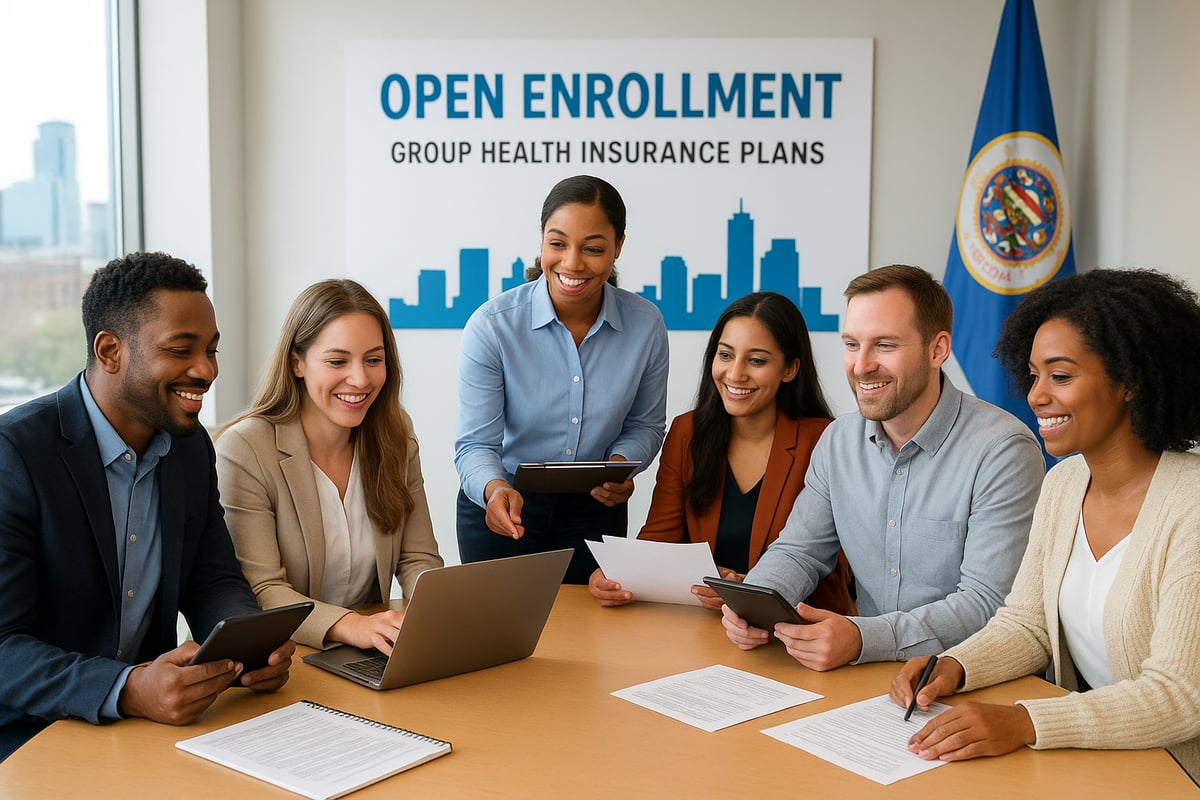
The Group Health Plan Enrollment Process
Enrollment is the first step in connecting your workforce with group health insurance plans. For Minnesota employers, open enrollment usually occurs once a year, with special enrollment periods triggered by life events like marriage or a new child.
To ensure a smooth experience, gather all required documentation in advance. This includes eligibility verification, dependent information, and prior coverage details. Digital platforms make this process easier and more accurate, with data showing that self-service enrollment can increase accuracy by 40%.
Effective communication is crucial. Use email reminders, webinars, and one-on-one meetings to answer questions. For example, a Minnesota school district recently launched a digital campaign to walk teachers through their plan options, boosting participation and satisfaction.
Remember, offering comprehensive health insurance options in Minnesota can help attract and retain top talent. When employees understand their group health insurance plans, they’re more likely to enroll and use their benefits wisely.
Best Practices for Plan Administration
Administering group health insurance plans requires careful coordination. Integrated HR and payroll systems can automate eligibility tracking, premium deductions, and compliance updates. This saves time and reduces the risk of costly errors.
Minnesota businesses often choose between in-house administration and outsourcing to a third-party administrator (TPA). Here’s a quick comparison:
| Approach | Pros | Cons |
|---|---|---|
| In-House | Direct control, flexibility | Higher workload, risk of errors |
| Outsourced (TPA) | Expertise, automation | Less direct oversight |
For small businesses, leveraging a TPA can be a smart move. It streamlines paperwork, ensures regulatory compliance, and allows your HR team to focus on employee needs. Automated reminders for key deadlines, like ACA reporting, help you stay ahead.
The result? Group health insurance plans run smoothly, supporting both compliance and employee satisfaction.
Boosting Employee Engagement and Education
Engagement is the secret to unlocking the full value of group health insurance plans. Digital tools, such as mobile apps and online benefit portals, empower employees to manage their coverage, submit claims, and track wellness incentives anytime.
Educational campaigns—think webinars, Q&A sessions, or benefit fairs—can demystify complex terms and encourage preventive care. For instance, a St. Paul company used on-site wellness programs and digital resources to double preventive care usage among their staff.
Studies show that engaged employees are twice as likely to use preventive services, leading to healthier teams and lower long-term costs. Encourage feedback through surveys and annual reviews to keep your group health insurance plans aligned with evolving workforce needs.
Trends and Innovations in Group Health Insurance for 2026
Minnesota businesses are witnessing rapid change in group health insurance plans. New technology, evolving care models, and regulatory updates are reshaping how employers approach benefits. Staying ahead of these trends is crucial if you want to keep your plan competitive, cost-effective, and attractive to employees across Rochester, Duluth, and beyond.
Digital Transformation and Virtual Care
Digital innovation is front and center for group health insurance plans in Minnesota. Telehealth and virtual primary care are now standard, giving rural communities and metro areas alike better access to care. Employers in places like Bemidji and Mankato are using digital tools, such as mobile apps and online portals, to simplify plan management and boost engagement.
Key digital trends include:
- 24/7 virtual urgent care visits
- Behavioral health services via video
- Real-time claims and benefit tracking
- AI-powered health risk assessments
Minnesota’s recent Health Access Survey shows more employees have coverage, but many still go without care due to cost or access issues. Leveraging digital solutions within group health insurance plans helps bridge these gaps and empowers employees to get the care they need.
Personalized and Integrated Benefits Solutions
Group health insurance plans are moving toward personalization and integration. Employers across St. Paul and Eagan are offering condition-specific care management, wellness coaching, and seamless integration between medical, pharmacy, and behavioral health benefits.
This integrated approach ensures employees receive coordinated care and support for chronic conditions. For example, a manufacturing company in Bloomington might use data analytics to identify at-risk employees, then provide tailored wellness programs and nurse coaching. These efforts boost engagement, reduce absenteeism, and improve health outcomes.
Integrated group health insurance plans allow employers to offer a holistic benefits experience. With personalized support, employees are more likely to participate in preventive care and wellness initiatives.
Cost Control and Value-Based Care Models
With rising premiums, Minnesota employers are rethinking how group health insurance plans manage costs. Many are shifting from traditional fee-for-service models to value-based care contracts with local providers. These models reward better health outcomes and help contain expenses.
Consider this comparison:
| Model | Focus | Cost Trend | Employee Impact |
|---|---|---|---|
| Traditional | Volume of services | Rising | Less coordination |
| Value-Based | Health outcomes | Stabilizing | More support |
As highlighted in recent reports on health insurance premium increases, controlling costs is a top concern for Minnesota businesses. By adopting value-based care within group health insurance plans, employers can negotiate better rates with local networks and incentivize employees to use preventive services.
Preparing for the Future: What Employers Should Watch
Looking ahead, Minnesota employers should keep an eye on several emerging trends in group health insurance plans. Regulatory shifts are expected in 2026, requiring close attention to compliance. Artificial intelligence and predictive analytics will play a bigger role in plan design and employee health forecasting.
Mental health and holistic well-being are gaining prominence, especially in Minneapolis and surrounding areas. Forward-thinking HR leaders are investing in benefit designs that address stress, burnout, and work-life balance.
To stay ahead, regularly review your group health insurance plans, leverage technology, and collaborate with experienced brokers. These steps will ensure your Minnesota organization remains competitive and prepared for future change.
How to Choose the Right Group Health Insurance Plan in Minnesota
Choosing the right group health insurance plans for your Minnesota business can feel overwhelming, especially with new options available for 2026. The right choice not only protects your team but also supports your bottom line and helps you stay competitive. This section will guide you through a simple, actionable process for selecting, implementing, and reviewing group health insurance plans that fit your unique needs.
Assessing Your Organization’s Needs
Start by evaluating your workforce demographics and specific health needs. Consider the age range, family status, and common health concerns among your employees. For example, a construction firm in Duluth may have a multigenerational workforce, while a tech startup in St. Paul might attract younger professionals.
Review your annual budget for premiums and out-of-pocket costs. Forecast how much you can contribute as an employer and estimate what employees can comfortably afford. Use employee surveys or feedback sessions to understand what benefits matter most. For a comprehensive approach, learn how group health insurance integrates with other types of commercial insurance for business owners.
By aligning group health insurance plans with your team’s needs and your financial goals, you create a strong foundation for success.
Comparing Plan Options and Providers
Once you know your needs, compare different group health insurance plans and providers available in Minnesota. Look at network size, covered benefits, flexibility, and customer service. Here’s a quick table to help you compare:
| Feature | Local Network Plan | National Network Plan | High Deductible Plan |
|---|---|---|---|
| Provider Choice | Limited | Broad | Varies |
| Premium Cost | Lower | Higher | Lowest |
| Out-of-Pocket Maximum | Moderate | Higher | Highest |
| Flexibility | Moderate | High | High |
Examine which hospitals, clinics, and specialists are included, especially if your workforce is spread across places like Rochester, Mankato, or the Twin Cities. Weigh the value of additional services such as telehealth or wellness programs. Comparing group health insurance plans side by side makes it easier to choose what works for your business.
Working with Licensed Agents and Brokers
Partnering with a licensed insurance broker or agent can simplify the process of selecting group health insurance plans. Brokers have in-depth knowledge of Minnesota’s insurance market and can negotiate on your behalf.
Look for an agent with experience serving businesses in your industry and size range. Ask for references and check their credentials. Independent brokers often provide unbiased advice and help you navigate plan features, compliance, and costs.
By leveraging local expertise, your business can access group health insurance plans tailored to your unique needs and avoid common pitfalls. A trusted broker also helps with renewals, employee education, and ongoing support.
Steps to Implement and Review Your Group Health Plan
After selecting your group health insurance plans, follow a clear implementation process:
- Research and compare plans with your broker.
- Select the best group health insurance plans for your team.
- Complete enrollment and verify employee eligibility.
- Educate employees on plan features and enrollment deadlines.
- Set up annual reviews and feedback loops.
Schedule regular plan reviews to ensure your coverage evolves with changing business needs. Gather employee feedback to identify gaps or opportunities for improvement. By consistently evaluating your group health insurance plans, you keep your benefits relevant and your team engaged.