
Using your personal vehicle for business purposes creates insurance gaps that many Minnesota entrepreneurs don't discover until they file a claim. Whether you're driving to meet clients in St. Paul, hauling equipment across Minneapolis, or making deliveries throughout the Twin Cities, your standard auto policy likely doesn't cover these activities. Understanding when you need car insurance for business use protects both your financial stability and your company's future. The right coverage ensures you're not left paying out-of-pocket for damages, legal fees, or medical expenses when an accident occurs during work-related driving.
When Personal Auto Insurance Isn't Enough
Personal auto policies are designed for commuting and personal errands, not for regular business activities. Most insurers explicitly exclude coverage when vehicles are used for business purposes beyond simple commuting. This means if you're delivering products to customers in Rochester or transporting tools to job sites in Duluth, your personal policy might deny your claim entirely.
The distinction matters more than most business owners realize. According to business use car insurance guidelines, even occasional business use can void your personal coverage. When you use a vehicle to generate income or conduct company operations, standard policies no longer apply.
Common Business Activities That Require Special Coverage
Not every work-related trip triggers the need for car insurance for business use, but many activities do:
- Making client visits or sales calls throughout Minnesota
- Transporting goods, equipment, or materials to job sites
- Running business errands beyond simple commuting
- Using your vehicle for food delivery or rideshare services
- Hauling supplies for your farming operation between Stearns County locations
- Carrying passengers for business purposes

Commuting from your Freeport home to your Albany office typically remains covered under personal policies. However, stopping to pick up supplies or meet a client along the way transforms that trip into business use. The line blurs quickly, which is why many Minnesota business owners choose commercial policies to eliminate any ambiguity.
Understanding Different Coverage Types
The insurance industry offers several solutions for business vehicle use, each designed for specific situations and company sizes. Choosing the right type depends on your business model, how frequently you use vehicles, and who drives them.
Business Use Endorsement vs. Commercial Auto Insurance
A business use endorsement modifies your existing personal auto policy to include limited business activities. This option works well for sole proprietors who occasionally use their personal vehicle for work. The coverage extends your personal policy rather than replacing it, making it a cost-effective choice for minimal business use.
Commercial auto insurance, by contrast, is a standalone policy designed specifically for business vehicles. Guardian Insurance Services MN’s commercial auto insurance provides comprehensive protection for companies with dedicated business vehicles, multiple drivers, or frequent business-related travel throughout Minnesota.
| Coverage Type | Best For | Typical Premium Impact | Coverage Limits |
|---|---|---|---|
| Business Use Endorsement | Occasional business use | 10-20% increase | Limited to personal policy caps |
| Commercial Auto Policy | Regular business driving | Separate premium, higher limits | Customizable, higher liability options |
| Hired/Non-Owned Auto | Employees using personal vehicles | Moderate cost add-on | Secondary coverage for liability |
| Fleet Coverage | 3+ business vehicles | Volume discount available | Comprehensive multi-vehicle protection |
What Car Insurance for Business Use Actually Covers
Commercial auto policies provide protection that extends far beyond what personal policies offer. Understanding these coverage components helps you make informed decisions about protecting your Minnesota business.
Liability Protection for Business Operations
Bodily injury and property damage liability remain the foundation of any auto policy, but commercial versions offer significantly higher limits. When you're conducting business in Minneapolis or transporting clients to properties in St. Cloud, you face greater liability exposure than during personal use.
Commercial policies typically start at $500,000 in combined liability coverage, with options extending to $1 million or more. This increased protection is crucial because business-related accidents often involve larger liability claims, particularly if you're carrying valuable cargo or transporting clients.
Physical Damage and Comprehensive Coverage
Collision and comprehensive coverage protect your vehicle itself, but commercial policies account for business equipment and modifications. If your truck carries $10,000 worth of tools or your van includes custom shelving for deliveries around Benton County, standard coverage may fall short.
Commercial physical damage coverage includes:
- Higher deductible options to reduce premiums
- Replacement cost coverage for newer vehicles
- Protection for permanently attached equipment
- Coverage for specialized business modifications
Additional Coverage Options That Matter
Medical payments coverage handles injuries to you and your passengers regardless of fault, crucial when transporting employees or clients. Uninsured/underinsured motorist protection becomes even more important for business use, protecting your company when others lack adequate coverage. For more context on this protection, explore information about uninsured and underinsured motorist coverage.
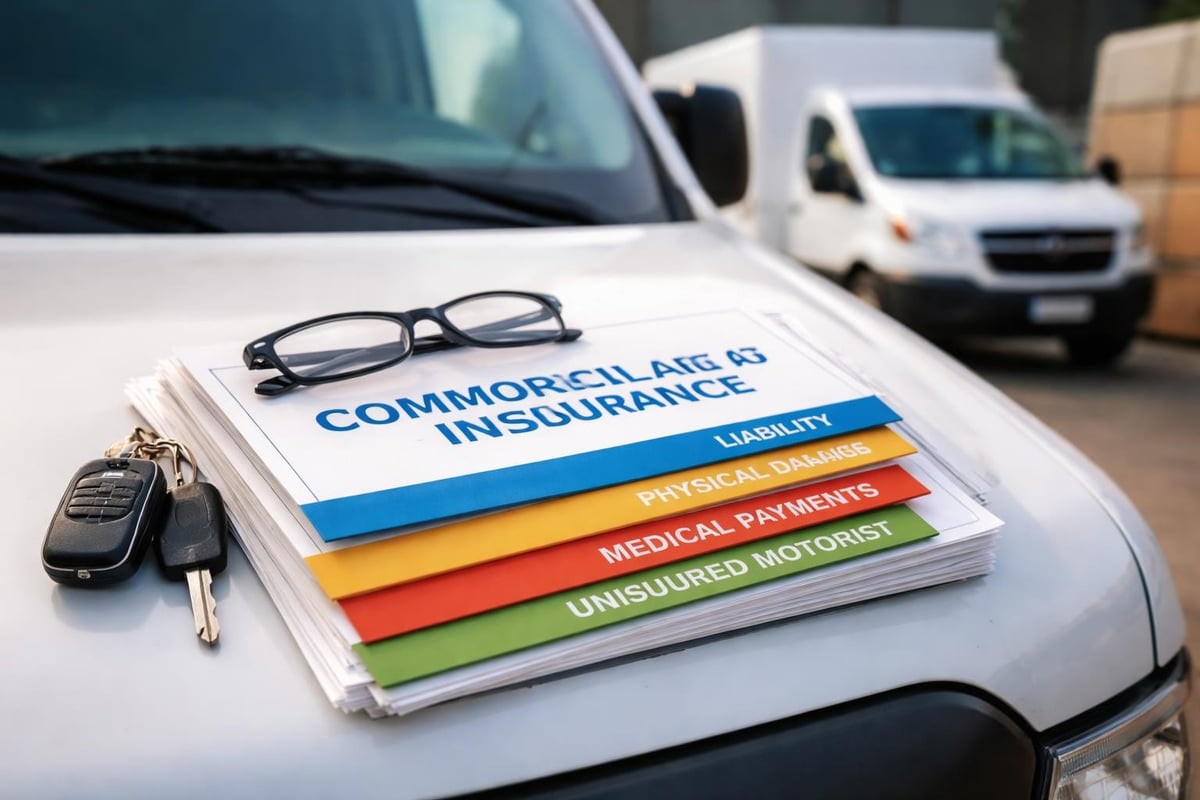
Rental reimbursement coverage pays for a replacement vehicle while yours undergoes repairs after an accident. For businesses dependent on vehicle access, this prevents operational disruptions that could cost thousands in lost revenue while your van sits in a Sartell body shop.
Cost Factors for Business Auto Coverage
Premiums for car insurance for business use vary dramatically based on multiple factors specific to your Minnesota operation. Understanding these variables helps you budget accurately and find opportunities to reduce costs.
Industry and Business Type Impact
Your business classification significantly affects rates. A commercial insurance for business consultant or real estate agent faces different risk profiles than a landscaping company or construction contractor. Insurers assess risk based on how you use vehicles:
- Low-risk categories include consultants, sales representatives, and office-based businesses making occasional client visits
- Moderate-risk categories encompass caterers, photographers, and service providers with regular but predictable travel patterns
- High-risk categories involve contractors, delivery services, and operations with heavy equipment transport
Farming operations, particularly prevalent around Albany and Freeport, may qualify for specialized farm insurance packages that bundle auto coverage with property and liability protection at competitive rates.
Driver Records and Experience
Every driver operating business vehicles affects your premium. Clean driving records with no accidents or violations in the past three to five years qualify for the best rates. Companies hiring new employees should verify driving histories before adding them to policies.
Minnesota's winter driving conditions also factor into rates. Insurers recognize that harsh weather in central Minnesota increases accident risks, particularly for businesses operating year-round. Demonstrating winter driving training or seasonal operation adjustments may help reduce premiums.
Vehicle Types and Usage Patterns
The vehicles themselves dramatically impact costs:
- Sedans and small SUVs used for client meetings carry the lowest premiums
- Cargo vans and pickup trucks cost more due to size and typical usage
- Heavy-duty trucks and specialized vehicles command premium pricing
- Luxury or high-value vehicles require higher coverage limits and cost more to insure
Annual mileage matters significantly. A business driving 5,000 miles yearly around the St. Cloud area pays considerably less than one logging 50,000 miles across Minnesota and neighboring states.
How to Determine If You Need Business Auto Coverage
Many Minnesota business owners operate in a gray area, unsure whether their current coverage suffices. Making the wrong choice can prove costly, either through denied claims or overpaying for unnecessary coverage.
Ask These Critical Questions
Does your vehicle generate revenue directly? If you deliver products, transport passengers for hire, or use your vehicle as an essential tool in your service business, you need commercial coverage. Food delivery drivers, rideshare operators, and mobile service providers all require car insurance for business use.
Are employees using company vehicles? Once you put an employee behind the wheel, personal auto policies no longer apply. Commercial policies cover multiple drivers and protect your business from vicarious liability when employees cause accidents.
Do you use personal vehicles for business with employee reimbursement? Even when employees drive their own cars for work, your company faces liability exposure. Hired and non-owned auto coverage bridges this gap, protecting your business when personal policies fall short.
The Maine Bureau of Insurance offers guidance about business use limitations that applies broadly across states, helping clarify when personal coverage ends and commercial needs begin.
The Cost of Guessing Wrong
Operating without proper car insurance for business use creates severe financial risks. Insurance companies routinely deny claims when they discover business use under personal policies. You could face:
- Full liability for accidents, including medical bills, property damage, and legal fees
- Out-of-pocket costs for vehicle repairs or replacement
- Loss of business income during vehicle downtime
- Personal financial exposure if claims exceed your assets
- Potential lawsuits from injured parties

Minnesota business owners should also consider how auto coverage integrates with other commercial policies. Just as professional liability insurance for consultants protects against errors and omissions, commercial auto insurance safeguards against vehicle-related risks that could otherwise bankrupt a small operation.
Getting the Right Coverage for Your Minnesota Business
Shopping for car insurance for business use requires a different approach than buying personal coverage. Working with an independent insurance broker gives you access to multiple carriers and customized solutions unavailable through direct-write insurers.
Comparing Carrier Options and Coverage
Independent brokers like those serving the Albany and Freeport communities can quote coverage from over 35 insurance companies simultaneously. This competitive marketplace ensures you find the best combination of coverage and price for your specific situation.
When comparing quotes, look beyond the premium:
- Coverage limits and deductibles should match your risk exposure and financial capacity
- Endorsement options let you customize policies for unique business needs
- Claims service reputation matters when you need fast response after an accident
- Financial stability ratings ensure your insurer can pay claims years into the future
Resources like Acuity Insurance’s commercial vehicle coverage help you understand what's available in the market, but local expertise ensures you select options appropriate for Minnesota operations.
Policy Features to Prioritize
Fleet discounts apply when you insure multiple vehicles under one policy. Even two vehicles may qualify for better rates than separate policies. Bundling commercial auto with general liability insurance or workers compensation insurance often generates additional savings.
Deductible flexibility lets you balance premium costs against out-of-pocket risk. Higher deductibles reduce monthly expenses but require sufficient cash reserves to handle claims. Many Minnesota businesses choose $500 to $1,000 deductibles for the optimal cost-benefit ratio.
Seasonal adjustment options benefit businesses with fluctuating vehicle use. Construction companies might reduce coverage during winter months, while landscapers scale down during Minnesota's long winters, then expand protection for busy spring and summer seasons.
Questions to Ask Your Insurance Provider
Before finalizing car insurance for business use, clarify these essential points:
- How does coverage extend to borrowed or rental vehicles?
- What happens if employees drive personal cars for company errands?
- Are there restrictions on vehicle age or condition?
- How quickly can you add or remove vehicles from the policy?
- What discounts apply for safety features, driver training, or claims-free history?
- Does coverage extend outside Minnesota when traveling for business?
Understanding policy exclusions proves equally important. Most commercial auto policies exclude intentional acts, racing, and using vehicles for purposes beyond the stated business description. Review these exclusions carefully to avoid surprises during claims.
Maintaining Cost-Effective Business Auto Coverage
Once you secure appropriate car insurance for business use, ongoing management keeps costs controlled while maintaining adequate protection. Minnesota businesses face unique challenges with weather-related claims and seasonal driving patterns that require strategic planning.
Driver Safety Programs Reduce Premiums
Implementing formal driver safety training demonstrates risk management to insurers, often qualifying you for discounts of 5-15%. Programs addressing Minnesota-specific challenges like winter driving, defensive driving on rural roads, and distracted driving prevention provide the most value.
Regular driver record checks catch violations early, allowing you to address issues before renewal. Many insurers reward companies that maintain clean fleets with loyalty discounts and preferred renewal terms.
Vehicle Maintenance and Telematics
Well-maintained vehicles cause fewer accidents and break down less frequently. Document regular maintenance, safety inspections, and repairs to demonstrate your commitment to loss prevention. Some insurers offer telematics programs that monitor driving behavior, rewarding safe practices with reduced premiums.
| Cost Reduction Strategy | Potential Savings | Implementation Difficulty | Best For |
|---|---|---|---|
| Driver safety training | 5-15% | Low | All businesses |
| Telematics programs | 10-25% | Moderate | Tech-comfortable fleets |
| Higher deductibles | 15-30% | Low | Businesses with cash reserves |
| Fleet bundling | 10-20% | Low | Multi-vehicle operations |
| Annual policy reviews | 5-20% | Low | All businesses |
Regular Policy Reviews Prevent Coverage Gaps
Business needs change constantly. Adding new vehicles, hiring employees, expanding service territories, or modifying operations all affect insurance requirements. Schedule annual reviews with your insurance advisor to ensure coverage keeps pace with business growth.
These reviews also present opportunities to shop the market. While loyalty sometimes brings benefits, comparing quotes every 2-3 years ensures you're not overpaying as your business matures and your claims history improves.
Special Considerations for Minnesota Businesses
Operating in Minnesota presents unique insurance considerations that businesses in milder climates don't face. Winter weather, rural driving conditions, and agricultural operations all influence car insurance for business use requirements and costs.
Weather-Related Risk Management
Minnesota's harsh winters increase accident frequency and severity. Snow, ice, and reduced visibility make driving more dangerous from November through March. Insurers recognize this elevated risk in their pricing, but you can mitigate impacts through:
- Winter driving training for all employees operating vehicles
- Seasonal tire requirements for better traction
- Policies allowing reduced coverage on vehicles stored during winter
- Emergency kits in all vehicles including blankets, flashlights, and communication devices
Businesses operating year-round should discuss seasonal adjustment options with their insurance provider. Just as farm insurance adapts to agricultural cycles, commercial auto policies can reflect reduced winter operations.
Rural vs. Urban Operating Environments
Businesses based in Albany, Freeport, or other rural Minnesota communities face different risks than those operating primarily in Minneapolis or St. Paul. Rural driving involves:
- Longer distances between service calls
- Less traffic but higher speeds
- Wildlife collision risks, particularly deer
- Reduced emergency services response times
- Unpaved roads and varied terrain
These factors may increase premiums but also create opportunities for customization. Vehicles rarely driven in urban areas might qualify for reduced rates, while those regularly traveling to the Twin Cities need coverage reflecting higher liability exposure in congested areas.
Agricultural Business Considerations
Minnesota's strong agricultural sector requires specialized attention to vehicle coverage. Farming operations use diverse vehicles including trucks, ATVs, and specialized equipment. Standard commercial auto policies may not adequately cover all agricultural vehicle uses.
Farm-focused insurance packages integrate auto coverage with property, liability, and equipment protection. This comprehensive approach often proves more cost-effective than purchasing separate policies while ensuring no coverage gaps exist between your vehicles, implements, and farm property.
Protecting Your Business Through Proper Coverage
Securing appropriate car insurance for business use represents one of the most critical risk management decisions Minnesota business owners make. The relatively small investment in proper coverage prevents catastrophic losses that could otherwise destroy years of hard work building your company.
Your choice between personal policy endorsements, commercial auto coverage, or specialized packages depends on your unique situation. Consulting with experienced insurance professionals ensures you navigate these decisions wisely, balancing protection needs against budget constraints while building coverage that grows with your business.
Protecting your business vehicles with the right insurance coverage ensures you can focus on growing your company rather than worrying about potential financial disasters from an accident. Whether you operate from Albany, Freeport, or anywhere else in Minnesota, working with an independent broker gives you access to the best coverage options from multiple carriers. Guardian Insurance Services MN brings over 35 insurance companies to your service, providing personalized guidance to find the perfect car insurance for business use that fits your specific needs and budget. Contact their team today to compare options and secure the protection your business deserves.