
Whether you're operating a small startup in Albany or managing a growing enterprise in Freeport, protecting your business vehicles isn't optional-it's essential. Business and auto insurance represents a critical investment that shields your company from devastating financial losses while ensuring legal compliance across Minnesota. The right coverage protects not just your vehicles, but your entire business operation, your employees, and your ability to serve customers without interruption. Understanding how business and auto insurance works together gives Minnesota entrepreneurs the confidence to focus on growth rather than worry about what-if scenarios.
Why Minnesota Businesses Cannot Afford to Skip Vehicle Coverage
Minnesota law requires all drivers to carry minimum auto insurance coverage, but business vehicle needs extend far beyond legal minimums. Commercial operations face unique risks that personal auto policies simply don't address. When your employee drives to meet a client in St. Cloud or delivers products throughout the Twin Cities metro area, standard personal coverage may deny claims entirely.
The stakes are considerably higher for business operations. According to research from the National Association of Insurance Commissioners, commercial vehicle claims often involve larger settlements due to business liability exposure. Your company's reputation, assets, and future operations all depend on adequate protection.
Key Differences Between Personal and Commercial Auto Policies
Understanding what makes business and auto insurance distinct helps you make informed coverage decisions:
- Usage patterns: Commercial policies cover vehicles used for business purposes, including deliveries, client visits, and employee transportation
- Driver scope: Multiple employees may operate business vehicles, requiring broader coverage than single-driver personal policies
- Liability limits: Business operations typically need higher liability limits to protect company assets
- Vehicle types: Commercial policies accommodate specialized vehicles that personal insurance excludes
- Claims history: Business insurance considers your company's entire fleet history, not just individual driver records
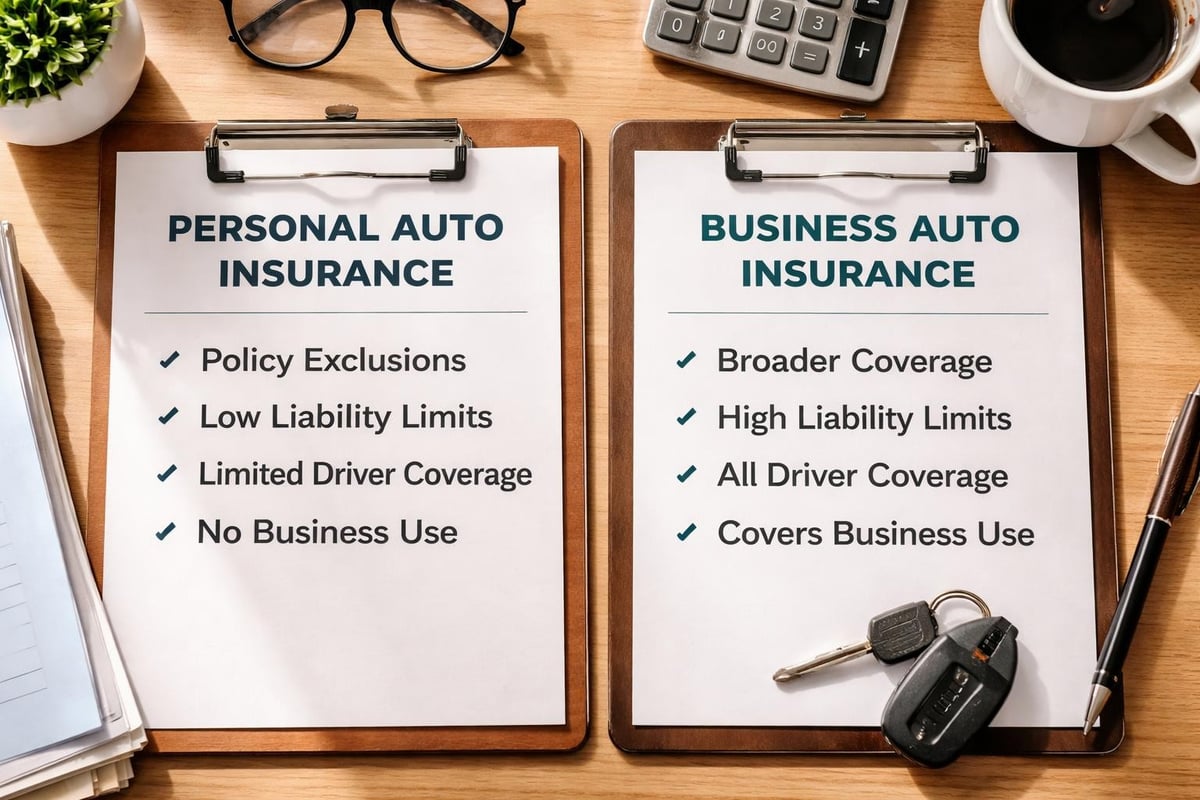
Minnesota businesses using personal auto policies for commercial purposes create dangerous coverage gaps. When claims arise, insurers investigate vehicle usage patterns. If they discover business use under a personal policy, they may deny coverage entirely, leaving your company exposed to catastrophic financial losses.
Comprehensive Coverage Components Every Minnesota Business Needs
Business and auto insurance policies contain multiple coverage layers that work together to protect your operation. Commercial auto insurance provides the foundation, but smart business owners build comprehensive protection strategies.
Essential Coverage Types for Business Vehicles
| Coverage Type | What It Protects | Why Businesses Need It |
|---|---|---|
| Liability | Injuries and property damage you cause | Required by law; protects business assets |
| Physical Damage | Your vehicle repairs/replacement | Safeguards capital investment in fleet |
| Medical Payments | Injury expenses regardless of fault | Covers employees and passengers |
| Uninsured Motorist | Damages from uninsured drivers | Common risk on Minnesota roads |
| Cargo Coverage | Goods being transported | Essential for delivery operations |
Liability coverage forms the cornerstone of any business and auto insurance policy. Minnesota requires minimum liability limits, but these statutory minimums rarely provide adequate protection for business operations. When your company vehicle causes an accident involving multiple parties or serious injuries, minimum limits evaporate quickly.
Physical damage coverage protects your investment in business vehicles. This includes both comprehensive coverage for non-collision incidents like theft, vandalism, or weather damage, and collision coverage for accident repairs. For businesses operating in Minnesota's harsh winter conditions, comprehensive coverage becomes particularly valuable.
Specialized Coverage for Specific Business Needs
Different industries require tailored business and auto insurance approaches:
- Contractors and tradespeople: Need coverage for tools and equipment stored in vehicles
- Delivery services: Require hired and non-owned auto coverage plus cargo protection
- Transportation companies: Must carry higher liability limits and passenger coverage
- Sales professionals: Need coverage that follows employees using personal vehicles for business
- Agriculture operations: Benefit from farm insurance that includes specialized vehicle coverage
Working with experienced general insurance agencies ensures you don't overlook critical coverage components specific to your industry. These professionals understand Minnesota business risks and can identify exposures you might miss.
How Fleet Size Impacts Your Business and Auto Insurance Strategy
Whether you operate one company vehicle or manage dozens, fleet size significantly influences your coverage approach and costs. Minnesota businesses must align their insurance strategy with operational scale.
Single Vehicle Operations
Companies with just one business vehicle still need robust protection. That single truck, van, or car often represents a critical business asset. If it's damaged or involved in an accident, your entire operation may grind to a halt. Business interruption considerations make coverage decisions particularly important for single-vehicle operations.
For sole proprietors and small businesses in communities like Albany or Freeport, commercial insurance for business needs doesn't stop at the vehicle itself. Consider how vehicle downtime affects revenue, customer relationships, and your ability to meet commitments.
Multi-Vehicle Fleet Management
As your fleet grows, business and auto insurance becomes more complex but also more strategic. Insurers offer various fleet coverage structures:
- Scheduled coverage: Each vehicle listed individually with specific coverage
- Blanket coverage: All vehicles covered under one policy with uniform limits
- Comprehensive fleet programs: Bundled coverage with volume discounts and simplified administration

Larger fleets benefit from economies of scale. Insurance companies for business insurance often provide significant discounts when covering multiple vehicles. These savings offset the higher total premiums, making comprehensive protection more affordable per vehicle.
Cost Factors That Determine Your Premium Investment
Understanding what drives business and auto insurance costs empowers you to make strategic decisions that balance protection and budget. Minnesota insurers evaluate numerous factors when calculating premiums.
Primary Premium Determinants
Your business and auto insurance rates reflect the specific risk profile you present:
- Vehicle types and values: Expensive vehicles cost more to insure due to higher replacement costs
- Driver qualifications: Employee driving records, experience, and training directly impact rates
- Usage patterns: Annual mileage, geographic territory, and typical cargo affect risk calculations
- Claims history: Previous losses signal future risk to insurers
- Coverage selections: Higher limits and lower deductibles increase premiums
- Industry classification: Some business types present higher inherent risks
According to Business Insurance research, commercial auto insurance costs have risen steadily, making cost management increasingly important for Minnesota businesses. However, cutting coverage to reduce premiums often proves penny-wise and pound-foolish.
Strategic Cost Management Approaches
Smart businesses reduce business and auto insurance expenses without compromising protection:
- Implement driver safety programs: Formal training reduces accidents and demonstrates risk management to insurers
- Install telematics devices: GPS tracking and driver behavior monitoring can earn substantial discounts
- Maintain vehicles properly: Well-maintained vehicles have fewer mechanical failures and accidents
- Bundle coverage: Combining auto insurance with general liability insurance often triggers multi-policy discounts
- Review coverage annually: Business changes may allow coverage adjustments without increasing risk
| Cost Reduction Strategy | Potential Savings | Implementation Difficulty |
|---|---|---|
| Driver safety training | 5-15% | Low |
| Telematics programs | 10-25% | Medium |
| Higher deductibles | 10-30% | Low |
| Multi-policy bundling | 10-20% | Low |
| Claims management | 15-35% | High |
Deductible selection significantly impacts premium costs. Raising deductibles from $500 to $1,000 or $2,500 can substantially reduce premiums. However, ensure your business maintains adequate cash reserves to cover the higher out-of-pocket costs if claims occur.
Navigating Claims and Coverage When Accidents Happen
Even the most careful businesses experience accidents. How you handle business and auto insurance claims affects both immediate outcomes and long-term costs. Minnesota businesses benefit from understanding the claims process before emergencies arise.
Immediate Post-Accident Responsibilities
When accidents involving business vehicles occur, prompt action protects both people and your insurance claim:
- Ensure safety: Check for injuries and call emergency services if needed
- Document everything: Photograph vehicle damage, road conditions, and accident scene
- Exchange information: Collect driver details, insurance information, and witness contacts
- Notify your insurer immediately: Most policies require prompt claim reporting
- Avoid admitting fault: Stick to facts when discussing the accident
Minnesota's no-fault insurance laws affect how car insurance claims proceed, but commercial policies often include different provisions. Understanding your specific policy terms prevents costly mistakes during stressful situations.

Working Effectively With Adjusters and Repair Facilities
Insurance adjusters evaluate damage and determine coverage. Professional claim handling accelerates resolution and ensures fair settlements:
- Provide complete documentation: Supply all requested information promptly
- Obtain multiple repair estimates: Comparison shopping identifies fair pricing
- Understand depreciation: Actual cash value settlements account for vehicle age and condition
- Track all expenses: Document rental vehicle costs, towing fees, and other incident-related expenses
- Follow up regularly: Maintain communication with your adjuster throughout the process
Your business and auto insurance policy may include rental reimbursement coverage, which pays for temporary replacement vehicles while yours undergoes repairs. This coverage proves invaluable for maintaining business operations during vehicle downtime.
Independent Brokers Versus Direct Insurance Company Relationships
Where you purchase business and auto insurance matters as much as what coverage you buy. Minnesota businesses choose between working with independent brokers or buying directly from insurance companies. Each approach offers distinct advantages.
The Independent Broker Advantage
Independent insurance brokers represent multiple carriers, providing significant benefits for business and auto insurance shoppers. Rather than selling products from a single company, brokers access over 35 top insurance companies to find optimal coverage and pricing for your specific needs.
Market access represents the primary broker advantage. When one insurer prices your business as high-risk, brokers can shop alternatives that view your operation more favorably. This competitive process often yields better rates and broader coverage than single-company quotes.
Independent brokers also provide personalized service throughout your policy lifecycle. Rather than navigating automated phone systems, you work with knowledgeable professionals who understand your business. When claims arise or coverage questions emerge, your broker advocates for your interests.
Direct Purchase Considerations
Some businesses prefer buying business and auto insurance directly from carriers. This approach works well when:
- Your operation presents straightforward risks that fit standard underwriting guidelines
- You have time and expertise to evaluate coverage options independently
- The carrier specializes in your specific industry or vehicle types
- You prioritize brand recognition over broker relationships
However, editorial guidelines emphasize the importance of comparing multiple options before purchasing coverage. Direct purchase limits your comparison shopping to one carrier's offerings, potentially leaving better options undiscovered.
Minnesota-Specific Regulations and Requirements
State laws significantly impact business and auto insurance requirements and coverage features. Minnesota businesses must understand local regulations to maintain compliance and optimize protection.
Mandatory Coverage Requirements
Minnesota law establishes minimum liability insurance requirements for all vehicles operated in the state:
- Bodily injury liability: $30,000 per person, $60,000 per accident
- Property damage liability: $10,000 per accident
- Uninsured motorist coverage: Required at the same levels as liability, unless rejected in writing
- Personal injury protection (PIP): $40,000 in medical expense coverage and $20,000 in economic loss coverage
These statutory minimums apply to commercial vehicles, but savvy businesses carry much higher limits. A single serious accident can generate claims far exceeding minimum coverage, exposing your business assets to lawsuits and judgments.
No-Fault Insurance Implications
Minnesota's no-fault insurance system affects how business and auto insurance claims proceed. Under no-fault rules, your own insurance pays for medical expenses and lost wages regardless of who caused the accident, up to PIP limits. This system reduces litigation but requires adequate PIP coverage.
For businesses, no-fault provisions interact with workers compensation insurance when employees suffer injuries in vehicle accidents. Understanding coordination of benefits prevents coverage gaps and ensures injured workers receive appropriate care.
Advanced Risk Management Strategies for Minnesota Businesses
Beyond purchasing adequate business and auto insurance, proactive risk management reduces claims frequency and severity. Minnesota companies that implement comprehensive safety programs enjoy lower premiums and fewer operational disruptions.
Driver Qualification and Training Programs
Your employees represent the most significant variable in auto insurance risk. Rigorous driver qualification processes reduce accidents and demonstrate insurer commitment to safety:
- Verify driving records through Minnesota Department of Public Safety before hiring
- Establish clear policies regarding acceptable driving violations and license point accumulation
- Require defensive driving training for all employees who operate company vehicles
- Implement ongoing education covering weather conditions, distracted driving, and fatigue management
- Create accountability through regular driving record reviews
According to insurance industry data, driver training programs significantly reduce accident frequency. Insurers recognize these efforts through premium discounts, creating a win-win situation for safety-focused businesses.
Vehicle Maintenance and Technology Integration
Well-maintained vehicles fail less often and encounter fewer accidents. Business and auto insurance costs decrease when you demonstrate systematic maintenance:
- Follow manufacturer service schedules: Regular oil changes, tire rotations, and inspections prevent breakdowns
- Address recalls promptly: Manufacturer defect corrections prevent accidents and ensure vehicle reliability
- Document all maintenance: Detailed records prove your commitment to vehicle safety
- Replace aging vehicles: Older vehicles with outdated safety features increase risk exposure
- Install modern safety technology: Backup cameras, lane departure warnings, and automatic emergency braking reduce accidents
Telematics systems provide real-time visibility into driver behavior and vehicle performance. These devices monitor speed, harsh braking, rapid acceleration, and other risk indicators. LexisNexis insurance solutions demonstrate how data analytics improve risk assessment and enable proactive intervention before accidents occur.
Making Informed Business and Auto Insurance Decisions
Selecting appropriate coverage requires balancing multiple considerations: adequate protection, budget constraints, regulatory compliance, and operational needs. Minnesota businesses benefit from systematic evaluation processes that ensure comprehensive coverage without unnecessary expenses.
Coverage Adequacy Assessment
Start by analyzing your actual exposure rather than accepting arbitrary coverage limits. Consider these scenarios:
- What happens if your vehicle causes a multi-car accident on I-94 during rush hour?
- Can your business survive if your fleet is totaled by a hailstorm?
- How would a six-month vehicle impoundment after a serious accident affect operations?
- What liability exists if an employee causes an accident while running business errands in their personal vehicle?
Honest exposure assessment often reveals coverage needs exceeding initial expectations. However, identifying gaps before claims occur costs far less than discovering inadequate coverage during a crisis.
Policy Review and Optimization
Business and auto insurance needs evolve as companies grow and change. Annual policy reviews ensure coverage keeps pace with business development:
| Review Focus Area | Key Questions | Action Items |
|---|---|---|
| Fleet composition | Have you added or retired vehicles? | Update scheduled coverage |
| Driver roster | Have employees changed? | Submit new driver information |
| Usage patterns | Has mileage or territory expanded? | Adjust usage classifications |
| Coverage limits | Do current limits still match exposure? | Increase protection if needed |
| Deductibles | Can you afford higher out-of-pocket costs? | Adjust for premium savings |
Working with experienced insurance professionals streamlines this review process. They understand coverage nuances and can identify optimization opportunities you might overlook when evaluating policies independently.
Protecting your Minnesota business with comprehensive vehicle coverage isn't just about checking boxes-it's about building resilience that allows you to operate confidently regardless of what happens on the road. Whether you're managing a single work truck or an entire fleet across the state, business and auto insurance forms the foundation of your risk management strategy. Guardian Insurance Services MN brings the expertise, carrier relationships, and personalized service Minnesota businesses need to navigate coverage decisions effectively. With access to over 35 top insurance companies and deep roots in Albany and Freeport, their team helps you build protection strategies that match your unique operational needs and budget requirements.