
Understanding commercial insurance health coverage has never been more critical for Minnesota businesses competing for top talent while managing rising healthcare costs. As an employer in Albany, Freeport, or anywhere across Minnesota, providing robust health benefits isn't just about compliance, it's a strategic investment in your workforce's wellbeing and your company's long-term success. The landscape of commercial insurance health plans continues evolving, with new regulations, coverage options, and cost-sharing models emerging each year. This comprehensive guide breaks down everything Minnesota business owners need to know about commercial health insurance, from fundamental coverage types to selecting the right broker partnership that delivers real value.
Why Commercial Insurance Health Matters for Minnesota Employers
The foundation of any competitive benefits package starts with quality health coverage. Commercial insurance health plans represent the primary method through which employers provide medical benefits to their workforce, covering everything from routine checkups to major medical procedures.
Minnesota businesses face unique considerations when structuring health benefits. The state's robust healthcare infrastructure, combined with specific regulatory requirements, creates both opportunities and challenges for employers. Companies operating in regions like Albany and Freeport must balance cost containment with comprehensive coverage that attracts and retains skilled employees.
The Business Case for Robust Health Coverage
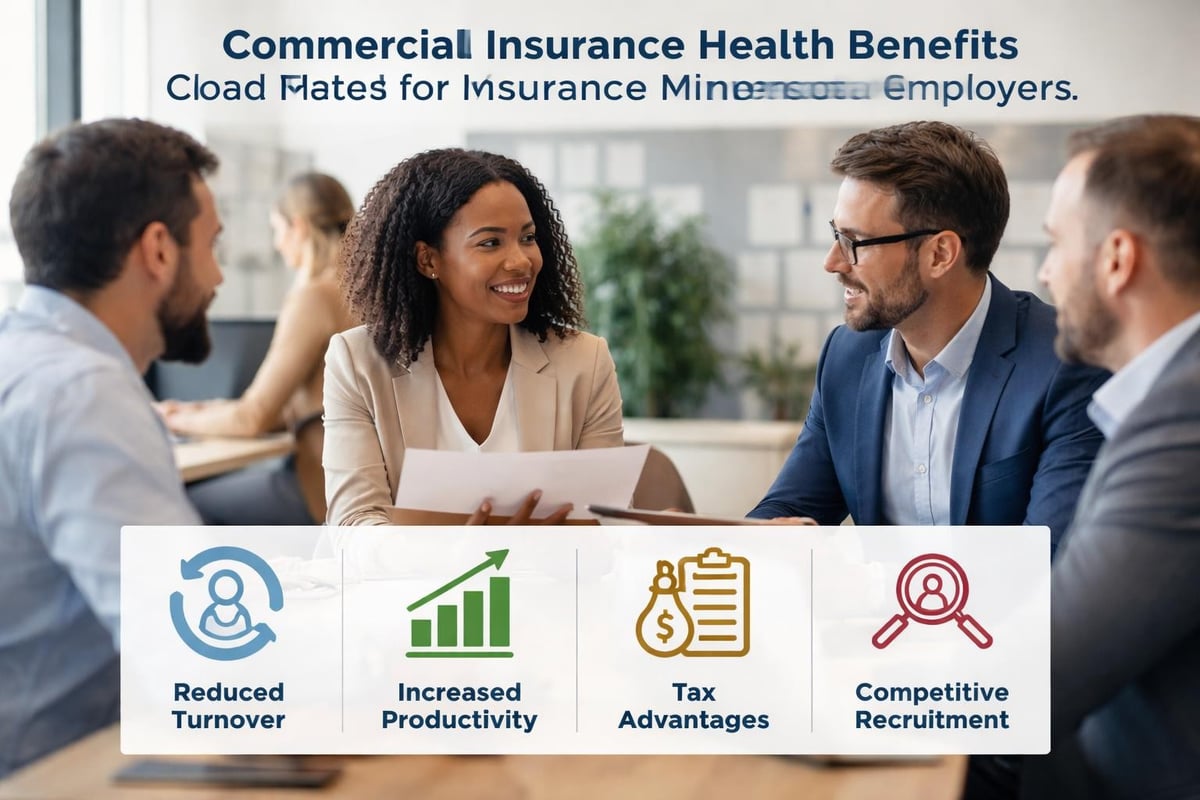
Investing in commercial insurance health benefits delivers measurable returns through:
- Reduced employee turnover and associated recruitment costs
- Increased productivity from healthier, less stressed workers
- Tax advantages through deductible premium contributions
- Enhanced employer brand in competitive labor markets
- Improved employee morale and loyalty
Research consistently shows that employees rank health insurance among their top three most valued benefits, often placing it above salary increases or other perks.
Types of Commercial Insurance Health Plans Available
Minnesota employers can choose from several commercial insurance health plan structures, each offering distinct advantages depending on company size, budget, and workforce needs.
Fully Insured vs. Self-Funded Options
The fundamental decision every employer faces involves choosing between fully insured and self-funded arrangements.
| Plan Type | How It Works | Best For | Risk Level |
|---|---|---|---|
| Fully Insured | Employer pays fixed premium; insurer assumes all risk | Small to mid-size businesses | Low employer risk |
| Self-Funded | Employer pays claims directly; assumes financial risk | Larger businesses with stable cash flow | Higher employer risk |
| Level-Funded | Hybrid approach with predictable monthly costs | Growing mid-market companies | Moderate risk |
Fully insured plans provide predictability and simplicity. Your business pays a set premium each month, and the insurance carrier handles all claims processing and assumes the financial risk if medical costs exceed projections.
Self-funded arrangements offer greater control and potential savings but require sufficient cash reserves to cover unexpected high-cost claims. Many Minnesota employers using self-funded plans purchase stop-loss insurance to cap maximum exposure.
Network-Based Plan Designs
Commercial insurance health plans typically organize provider access through specific network structures:
- Health Maintenance Organizations (HMOs) require members to select a primary care physician and obtain referrals for specialist care
- Preferred Provider Organizations (PPOs) offer broader provider choice with in-network and out-of-network coverage tiers
- Exclusive Provider Organizations (EPOs) combine elements of HMOs and PPOs with limited out-of-network benefits
- Point of Service (POS) plans blend HMO and PPO features with varying cost-sharing based on utilization patterns
Minnesota's competitive healthcare market includes robust networks from major carriers, giving employers in Albany, Freeport, and surrounding communities strong negotiating leverage when selecting coverage options. Understanding commercial health coverage fundamentals helps businesses make informed decisions aligned with their workforce needs.
Navigating Commercial Insurance Health Costs and Contributions
Healthcare expenses represent one of the largest and fastest-growing line items in most business budgets. Strategic cost management requires understanding both premium economics and cost-sharing mechanisms.
Premium Determination Factors
Insurance carriers calculate commercial insurance health premiums based on multiple variables:
- Group size and demographics including age distribution and gender mix
- Geographic location reflecting regional healthcare costs
- Industry classification based on perceived risk levels
- Claims history for renewing groups
- Plan design choices affecting utilization patterns
- Network selection and provider reimbursement rates
Minnesota's healthcare costs generally track near or slightly above national averages, with significant variation across urban and rural areas. Businesses in smaller communities like Albany and Freeport may experience different rating dynamics than Twin Cities metropolitan employers.
Employer Contribution Strategies
Most Minnesota employers contribute between 70% and 85% of employee-only premium costs, with lower percentages common for dependent coverage. The American Hospital Association’s commercial health insurance overview provides valuable context for understanding these cost-sharing dynamics.
Strategic contribution approaches include:
Defined Contribution Models: Employers allocate a fixed dollar amount per employee, providing budget predictability while shifting some cost variation to employees.
Reference-Based Pricing: Establishing maximum reimbursement levels tied to Medicare rates or other benchmarks rather than accepting carrier-negotiated rates.
High-Deductible Health Plans (HDHPs): Pairing lower-premium plans with Health Savings Accounts (HSAs) that offer triple tax advantages and long-term savings potential.

Regulatory Compliance Requirements for Minnesota Employers
Commercial insurance health offerings must navigate a complex web of federal and state regulations affecting plan design, administration, and reporting obligations.
Federal Compliance Framework
The primary federal laws governing employer-sponsored health coverage include:
| Regulation | Key Requirements | Penalties for Non-Compliance |
|---|---|---|
| ERISA | Fiduciary standards, reporting, disclosure | Civil penalties up to $2,259 per violation |
| ACA | Coverage mandates, reporting, affordability | $2,970 per full-time employee (2026) |
| HIPAA | Privacy protections, portability | Up to $68,928 per violation tier |
| COBRA | Continuation coverage rights | $110-$200 per day per participant |
The Affordable Care Act's employer mandate applies to Minnesota businesses with 50 or more full-time equivalent employees, requiring them to offer affordable, minimum-value coverage or potentially face penalties.
Minnesota-Specific Considerations
Minnesota maintains additional state-level requirements affecting commercial insurance health plans:
- MinnesotaCare provider taxes impacting certain plan types
- State continuation coverage extending beyond federal COBRA in some circumstances
- Mandated benefit laws requiring coverage for specific services
- Network adequacy standards ensuring reasonable provider access
Working with knowledgeable brokers who understand both federal and Minnesota regulatory landscapes helps ensure compliance while optimizing plan design. The challenges addressed in the American Hospital Association’s report on commercial health plan practices underscore the importance of selecting carriers with fair, transparent administrative practices.
Selecting the Right Commercial Insurance Health Broker
The complexity of commercial insurance health markets makes broker selection one of the most consequential decisions Minnesota employers face. The right partnership delivers ongoing value far beyond simple policy placement.
What Independent Brokers Bring to the Table
Independent insurance brokers like Guardian Insurance Services MN offer distinct advantages over captive agents representing single carriers:
- Market access spanning 35+ top insurance companies enabling true comparison shopping
- Objective recommendations aligned with client interests rather than carrier quotas
- Local expertise understanding Minnesota's unique healthcare and business environment
- Personalized service from professionals invested in long-term client relationships
- Claims advocacy helping navigate disputes and coverage questions
Evaluating Broker Capabilities
When assessing potential broker partners, Minnesota businesses should examine:
Industry Expertise: Does the broker understand your specific industry's risk profile and typical employee demographics? Specialized knowledge in sectors like agriculture, manufacturing, or professional services yields more relevant recommendations.
Service Model: Beyond annual renewals, what ongoing support does the broker provide? Look for partners offering employee education, compliance updates, claims assistance, and proactive plan optimization.
Carrier Relationships: Strong broker-carrier partnerships often translate to better pricing, faster issue resolution, and access to innovative programs not available through all distribution channels.
Technology Platforms: Modern brokers leverage digital tools for enrollment, benefits administration, and employee communication, reducing administrative burden on your HR team.
Businesses throughout Minnesota, from commercial insurance operations in Albany to enterprises in Freeport, benefit from brokers who combine local presence with sophisticated market access.
Emerging Trends Shaping Commercial Insurance Health
The commercial insurance health landscape continues evolving rapidly, driven by technological innovation, changing workforce expectations, and cost pressures demanding creative solutions.
Telehealth Integration and Virtual Care
The 2020 pandemic permanently altered healthcare delivery expectations. Commercial insurance health plans now routinely include comprehensive telehealth benefits covering:
- Primary care virtual visits
- Behavioral health counseling
- Specialty consultations
- Remote patient monitoring
- Digital therapeutics programs
Minnesota employers report high employee satisfaction with telehealth options, particularly among rural workers in communities like Albany and Freeport where specialty provider access may be limited.
Value-Based Care and Quality Incentives
Traditional fee-for-service payment models are giving way to value-based arrangements that reward outcomes over volume. Progressive commercial insurance health plans increasingly incorporate:
Accountable Care Organization (ACO) Networks: Provider groups accepting financial accountability for patient populations, sharing savings from efficiency improvements.
Centers of Excellence Programs: Steering employees to high-performing facilities for specific procedures, often with waived or reduced cost-sharing.
Wellness Program Integration: Biometric screenings, health coaching, and incentive structures encouraging preventive care and chronic disease management.
Mental Health Parity and Expanded Behavioral Benefits
Mental health and substance abuse treatment coverage has evolved from afterthought to centerpiece of competitive benefits packages. The ongoing challenges in commercial health plan administration highlight the importance of selecting carriers committed to true mental health parity.
Leading commercial insurance health offerings now feature:
- Expanded therapist networks with reasonable appointment availability
- Digital mental health platforms and apps
- Enhanced substance abuse treatment programs
- Employee Assistance Programs (EAPs) with generous session allowances
- Integrated care coordination connecting physical and behavioral health

Strategic Plan Design for Different Business Sizes
Commercial insurance health solutions aren't one-size-fits-all. Optimal plan design varies dramatically based on company size, industry, and workforce characteristics.
Small Business Strategies (2-50 Employees)
Small Minnesota employers face unique challenges in the commercial insurance health market, including limited negotiating leverage and higher administrative burden relative to company size.
Effective approaches include:
- SHOP Marketplace consideration for businesses with fewer than 50 employees
- Professional Employer Organization (PEO) partnerships pooling employees with other small businesses
- Association health plans leveraging industry group membership
- Simplified plan designs reducing administrative complexity
- Strategic contribution levels balancing competitiveness with affordability
Even small employers can offer compelling health benefits by working with brokers who specialize in their market segment and understand available options beyond traditional fully-insured plans.
Mid-Market Solutions (51-500 Employees)
Mid-market companies enjoy greater flexibility in plan design while maintaining manageable administrative requirements.
| Strategy | Benefits | Considerations |
|---|---|---|
| Level-Funded Plans | Cost transparency, potential refunds | Requires stable enrollment |
| Multiple Plan Options | Employee choice, satisfaction | Higher administrative lift |
| Voluntary Benefits | Enhanced value, minimal cost | Communication requirements |
| Wellness Programs | Engagement, potential savings | Participation challenges |
These businesses often benefit most from sophisticated broker partnerships that deliver both strategic guidance and hands-on administrative support, similar to services available through group health insurance plan specialists.
Large Employer Approaches (500+ Employees)
Large Minnesota employers typically pursue self-funded arrangements with extensive customization, advanced analytics, and integrated wellness strategies.
Key considerations include:
- Stop-loss insurance design balancing premium costs against risk tolerance
- Pharmacy carve-outs optimizing prescription drug management
- Data analytics identifying cost drivers and intervention opportunities
- Population health management addressing chronic conditions proactively
- Compliance infrastructure handling complex reporting and fiduciary requirements
Maximizing Employee Engagement and Utilization
Even the most comprehensive commercial insurance health plan delivers limited value if employees don't understand or effectively use their benefits. Strategic communication and education drive engagement and satisfaction.
Year-Round Communication Strategies
Effective benefits communication extends far beyond annual enrollment:
Onboarding Integration: New hire orientation should thoroughly cover health insurance basics, enrollment deadlines, and available resources.
Quarterly Touchpoints: Regular reminders about preventive care, available programs, and upcoming deadlines keep benefits top-of-mind.
Life Event Support: Proactive communication during qualifying events helps employees navigate coverage changes when they matter most.
Digital Resources: Employee portals, mobile apps, and online decision support tools enable 24/7 access to plan information.
Decision Support Tools
The complexity of modern commercial insurance health plans often overwhelms employees during open enrollment. Simplification strategies include:
- Plan comparison calculators estimating total costs under different scenarios
- Provider search tools confirming network participation before enrollment
- Benefits fairs offering face-to-face consultation and Q&A opportunities
- Video education explaining HSAs, FSAs, and other complex features
- Personalized recommendations based on employee demographics and utilization patterns
Minnesota employers report significantly higher satisfaction scores when implementing multi-channel communication strategies that meet employees where they are.
Making the Business Case to Leadership
CFOs and business owners evaluating commercial insurance health investments need clear financial analysis demonstrating return on investment beyond simple compliance.
Quantifying Benefits Program ROI
Calculate these key metrics:
Turnover Cost Avoidance: Research indicates replacing an employee costs 50-200% of annual salary. If competitive health benefits reduce turnover by even 5%, the savings often exceed premium costs.
Productivity Gains: Healthy employees miss fewer work days and perform more effectively when present. Studies link comprehensive health coverage to 15-20% reductions in absenteeism.
Tax Efficiency: Employer health insurance contributions are tax-deductible business expenses, while employees receive benefits tax-free. This creates significant value compared to equivalent cash compensation.
Recruitment Advantages: 78% of job seekers report health insurance as a critical factor in accepting positions. Strong benefits reduce time-to-fill and expand qualified candidate pools.
Benchmarking Against Competitors
Understanding how your commercial insurance health offerings compare to market standards helps calibrate investment levels. Key comparison points include:
- Employer contribution percentages for employee and dependent coverage
- Plan design features (deductibles, out-of-pocket maximums, copays)
- Network breadth and quality
- Supplemental offerings (dental, vision, life insurance)
- Wellness program sophistication
Industry associations and broker partners can provide regional benchmarking data specific to Minnesota markets and your business sector, helping justify appropriate investment levels to leadership.
The Role of Data Analytics in Plan Management
Modern commercial insurance health administration relies heavily on data analytics to identify trends, control costs, and improve outcomes.
Claims Data Insights
Anonymized, aggregated claims analysis reveals:
- High-cost claimants and opportunities for care management intervention
- Utilization patterns identifying over-use or under-use of specific services
- Chronic condition prevalence informing disease management program priorities
- Emergency room usage highlighting opportunities for urgent care redirection
- Preventive care gaps showing employees missing recommended screenings
These insights enable targeted interventions that simultaneously improve employee health and control costs. Resources like all-payer claims databases provide broader market context for individual employer analysis.
Predictive Modeling
Advanced analytics can forecast future costs and identify intervention opportunities before problems escalate:
Risk Stratification: Categorizing employees by health risk level enables proactive outreach to high-risk individuals who would benefit most from care coordination.
Cost Trend Forecasting: Multi-year projections help with budgeting and long-term strategy development, reducing surprises at renewal.
Program Effectiveness Measurement: Quantifying wellness program ROI and identifying which initiatives deliver actual value versus those requiring refinement.
Minnesota employers leveraging sophisticated analytics through broker partnerships or third-party administrators report 10-15% better cost trend management compared to those relying solely on carrier-provided reporting.
Coordinating Commercial Health with Other Benefits
Commercial insurance health coverage doesn't exist in isolation. Strategic benefits design considers how health insurance interacts with complementary offerings.
Supplemental Health Products
Additional coverage options enhance core medical plans while addressing specific employee needs:
- Dental insurance covering preventive, basic, and major services
- Vision coverage for exams, glasses, and contact lenses
- Critical illness policies paying lump sums upon diagnosis of covered conditions
- Accident insurance supplementing medical coverage for injury-related expenses
- Hospital indemnity providing daily cash benefits during inpatient stays
These products often cost employers little or nothing when offered on a voluntary basis, yet significantly enhance perceived benefits value.
Life and Disability Integration
Group life and disability insurance naturally complement health coverage, creating comprehensive financial protection:
Basic Life Insurance: Employer-paid coverage (typically 1-2x salary) demonstrates care for employees and their families while remaining highly affordable.
Voluntary Life: Additional coverage purchased by employees addresses individual needs beyond basic employer-paid amounts.
Short-Term Disability: Income protection during illness or injury recovery, often integrated with FMLA administration.
Long-Term Disability: Protection against extended disability, safeguarding employees' long-term financial security.
The broader commercial insurance landscape encompasses numerous coverage types working together to protect both businesses and their employees.
Health Savings Account Programs
When paired with high-deductible health plans, HSAs create powerful long-term savings vehicles offering triple tax advantages. Successful HSA programs include:
- Employer seed contributions demonstrating commitment and encouraging participation
- Payroll deduction making regular contributions automatic and effortless
- Investment options enabling growth for retirement healthcare expenses
- Education resources explaining HSA benefits and optimal utilization strategies
Minnesota employees increasingly appreciate HSA flexibility, particularly younger workers building long-term savings.
Regional Considerations for Minnesota Employers
While commercial insurance health principles apply nationally, Minnesota's specific market characteristics create unique opportunities and challenges for local employers.
Minnesota's Healthcare Landscape
The state boasts exceptional healthcare quality through systems like Mayo Clinic, Allina Health, HealthPartners, and Essentia Health. This robust infrastructure supports competitive insurance networks serving communities from Minneapolis to Albany and Freeport.
Key Minnesota advantages include:
- Consistently top-ranked healthcare quality metrics
- High primary care physician availability
- Strong preventive care utilization rates
- Innovative integrated delivery systems
- Competitive carrier marketplace
Rural vs. Urban Dynamics
Minnesota employers in smaller communities face different dynamics than urban counterparts:
Rural Challenges: Limited provider networks, longer travel distances for specialty care, and sometimes higher premiums due to smaller risk pools.
Rural Solutions: Telehealth programs, centers of excellence with travel benefits, and creative network designs maintaining local access while enabling broader specialty referrals when needed.
Urban Considerations: Dense provider networks, greater carrier competition, and easier access to specialty services.
Brokers with deep Minnesota experience understand these geographic nuances and structure plans accordingly. The difference between individually purchased health insurance and employer-sponsored group coverage is particularly significant in rural markets where individual options may be limited.
Working with Independent Insurance Brokers
The complexity and stakes involved in commercial insurance health decisions make professional guidance invaluable. Independent brokers serve as strategic partners throughout the entire benefits lifecycle.
The Independent Broker Advantage
Unlike captive agents representing single insurance companies, independent brokers access multiple carriers, ensuring recommendations align with client needs rather than carrier incentives.
Guardian Insurance Services MN exemplifies this approach, representing over 35 top insurance companies while maintaining local presence in Albany and Freeport. This combination delivers:
- Comprehensive market access comparing options across multiple carriers
- Objective advice free from single-carrier bias
- Local expertise understanding Minnesota's regulatory environment and healthcare landscape
- Personalized service from professionals who know your business and industry
- Ongoing support extending well beyond initial policy placement
Services Beyond Policy Placement
Top-tier brokers deliver value throughout the policy year:
Strategic Planning: Multi-year roadmaps balancing cost management with competitive positioning and compliance requirements.
Renewal Management: Comprehensive market analysis, carrier negotiations, and plan design optimization ensuring competitive pricing and appropriate coverage.
Compliance Support: Regulatory monitoring, required filings, and proactive communication about changing requirements affecting your plans.
Employee Education: Enrollment meetings, benefits guides, online resources, and ongoing communication supporting informed decision-making.
Claims Advocacy: Intervention when coverage disputes arise, leveraging broker-carrier relationships to resolve issues efficiently.
Vendor Coordination: Managing relationships with carriers, TPAs, wellness vendors, and other service providers creating a seamless experience.
The broker selection decision merits careful consideration. Evaluate credentials, experience, service model, and client references to identify the right partner for your organization's needs.
Cost Containment Strategies That Work
Controlling commercial insurance health expenses while maintaining quality coverage requires multi-faceted approaches addressing both plan design and utilization management.
Plan Design Innovations
Strategic cost-sharing arrangements shift appropriate responsibility to employees while preserving financial protection:
- Tiered copay structures incentivizing generic medications and preferred providers
- Reference-based pricing capping payments at reasonable multiples of Medicare rates
- Direct primary care partnerships bundling unlimited primary care access for flat fees
- Surgical bundled payments establishing fixed costs for common procedures
- Lifestyle drug exclusions removing coverage for non-essential medications
Utilization Management Programs
Controlling how and where employees access care significantly impacts costs:
Pre-Authorization Requirements: Review of high-cost services before delivery ensures medical necessity and appropriate setting.
Case Management: Intensive support for complex, high-cost cases optimizing care coordination and outcomes.
Utilization Review: Retrospective analysis identifying patterns suggesting over-utilization or quality concerns.
Preferred Facility Programs: Steering employees to high-quality, cost-effective providers through benefit design incentives.
Industry analysis from organizations like America’s Health Insurance Plans provides valuable benchmarking data on effective cost containment approaches.
Strategic commercial insurance health decisions require balancing cost management, regulatory compliance, employee satisfaction, and competitive positioning – no small task for busy Minnesota business owners. Whether you're a small employer in Albany offering health benefits for the first time or a growing Freeport company reevaluating your entire benefits strategy, partnering with an experienced independent broker makes all the difference. Guardian Insurance Services MN combines access to over 35 top insurance carriers with deep local expertise and personalized service, helping Minnesota businesses across all industries design, implement, and optimize commercial health insurance programs that work. Reach out today to discover how the right broker partnership transforms health insurance from administrative burden into strategic advantage.