
Workplace risks are rising for Minnesota businesses, making workers comp insurance coverage more crucial than ever in 2026. Navigating evolving regulations and policy choices can seem daunting, but understanding these changes is key for both business owners and employees. This guide will demystify workers comp insurance coverage, explaining what you need to know about new requirements, what is included in coverage, and how to stay compliant. We will break down the basics, legal obligations, policy options, the claims process, cost factors, and future trends. Stay informed and protect your Minnesota business by mastering these essentials.
Understanding Workers Comp Insurance Coverage
Navigating workers comp insurance coverage is essential for every Minnesota business owner and employee. This coverage stands as a critical safeguard, offering financial protection and legal compliance for workplace injuries and illnesses. In 2026, understanding what is included, who needs it, and how recent changes affect your business is more important than ever.

What is Workers Comp Insurance?
Workers comp insurance coverage is a legally required policy for most Minnesota employers. Its main purpose is to protect both employees and businesses if a worker is injured or becomes ill due to job-related activities. This coverage ensures that medical bills, lost wages, and rehabilitation costs are taken care of, reducing the risk of financial hardship for all parties involved.
Since its introduction in Minnesota over a century ago, workers comp insurance coverage has evolved to address new workplace risks and regulatory expectations. Today, it typically covers injuries like slips, trips, falls, repetitive strain, machinery accidents, and even certain occupational illnesses. For example, imagine a slip-and-fall accident in a St. Cloud warehouse. The injured worker's hospital bills, ongoing therapy, and partial wage replacement would all be covered by the employer's policy.
However, not every situation is eligible for workers comp insurance coverage. Common exclusions include self-inflicted injuries, accidents occurring while under the influence of drugs or alcohol, or injuries outside the scope of employment. Limitations may also apply to specific high-risk activities or pre-existing conditions.
Minnesota continues to update its laws to keep pace with changing workplaces. In 2026, regulatory changes will expand coverage for remote work injuries and clarify rules for mental health claims. For a comprehensive summary of employer obligations and coverage details, the Minnesota Workers’ Compensation Insurance Overview is a valuable resource. Staying informed about these updates is key to maintaining compliance and full protection.
Who Needs Workers Comp Insurance in Minnesota?
Minnesota law requires most employers, regardless of size or industry, to carry workers comp insurance coverage. This includes businesses in manufacturing, healthcare, retail, hospitality, and construction. There are a few exceptions, such as sole proprietors without employees and certain family-run businesses, but these are limited and should be verified annually.
Failing to secure adequate workers comp insurance coverage can result in serious penalties. In 2026, enforcement is stricter than ever. For example, a Twin Cities contractor was recently fined thousands of dollars for letting their policy lapse, putting both workers and the business at risk.
Remote and hybrid workers are now explicitly included under Minnesota's updated coverage rules. If your employees work from home or split time between locations, their job-related injuries are still covered. This change reflects the modern workforce and helps prevent gaps in protection.
According to 2025 data, over 94 percent of small businesses in Minnesota maintained compliance with workers comp insurance coverage requirements. This high rate demonstrates the state's commitment to worker safety and employer accountability. Ensuring your business is part of this statistic protects you from costly legal trouble and builds trust with your team.
Core Components of Workers Comp Coverage
Understanding the core components of workers comp insurance coverage is vital for business owners and employees in Minnesota. Each part of your policy works together to provide a safety net when workplace accidents or illnesses happen. Let’s break down what you can expect from your coverage and how it protects your team in 2026.
Medical Benefits
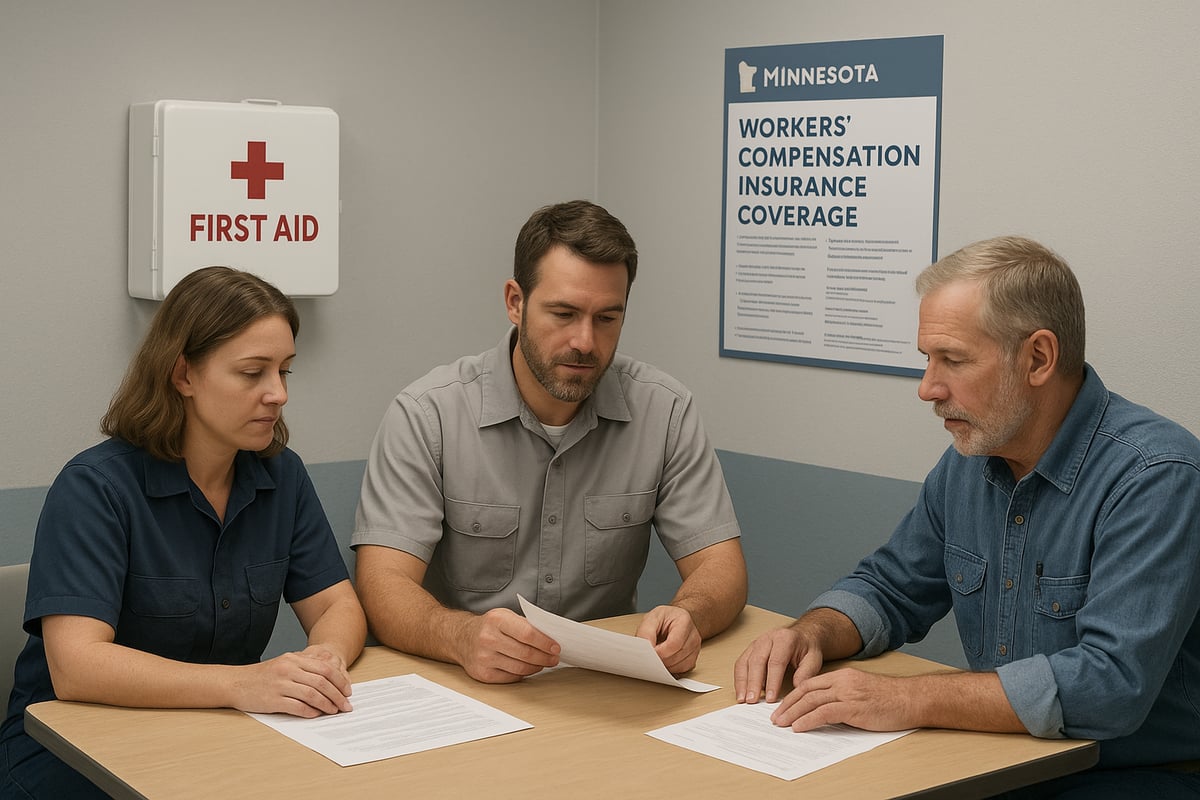
Medical benefits are the foundation of workers comp insurance coverage. If an employee is injured on the job, the policy pays for necessary medical treatment. Covered costs include doctor visits, hospital stays, surgeries, prescription medications, and physical therapy. Minnesota employers must use approved provider networks, which help control costs and ensure quality care.
There are limits and pre-authorization rules for certain treatments. For example, ongoing physical therapy may require approval before coverage kicks in. Imagine a warehouse worker in Duluth who suffers a back injury lifting boxes. Their workers comp insurance coverage would pay for diagnostic tests, treatment, and rehabilitation until they can safely return to work.
Employers and employees should always confirm that medical providers are in-network to avoid unexpected expenses. Staying up to date with Workers Compensation Insurance Minnesota guidelines ensures compliance and peace of mind.
Wage Replacement and Disability Benefits
Another crucial part of workers comp insurance coverage is wage replacement. When employees cannot work due to a job-related injury or illness, they may qualify for temporary total, temporary partial, or permanent disability benefits. Minnesota calculates these payments based on a percentage of the worker’s average weekly wage, using rates that are updated annually.
There is usually a waiting period before wage replacement begins, often three calendar days. Benefit duration depends on the injury’s severity and medical prognosis. For example, an office worker in St. Paul who develops a repetitive strain injury from typing may receive temporary partial disability payments while transitioning back to full duties.
To maximize workers comp insurance coverage, businesses should maintain accurate payroll records and report injuries promptly. This helps avoid delays and ensures employees receive the financial support they need during recovery.
Additional Coverage Elements
Workers comp insurance coverage in Minnesota extends beyond medical and wage benefits. Many policies include vocational rehabilitation, helping injured workers retrain for new jobs if they cannot return to their previous roles. Death and survivor benefits support families when a workplace tragedy occurs, covering funeral expenses and providing ongoing financial assistance.
Legal expenses and employer liability protection are also part of comprehensive coverage, shielding businesses from lawsuits related to workplace injuries. In 2026, emerging trends like mental health claims and COVID-19-related illnesses are being recognized, reflecting a broader understanding of workplace risks. Staying informed on these additions helps Minnesota businesses adapt their workers comp insurance coverage for the future.
Legal Requirements and Compliance in 2026
Staying compliant with Minnesota's evolving workers comp insurance coverage laws is crucial for every business owner in the state. As 2026 approaches, new regulations and heightened enforcement mean that keeping up with legal changes is not just smart, but necessary to avoid costly penalties and protect your team.

Minnesota Workers Comp Laws: 2026 Update
Minnesota's workers comp insurance coverage requirements are governed by MN Statutes Chapter 176, which has undergone important amendments for 2026. The state has introduced new rules regarding coverage minimums, stricter reporting deadlines, and expanded requirements for zero estimated exposure and wrap-up policies. These changes aim to close loopholes and ensure all employees—from warehouse staff in Duluth to retail associates in Minneapolis—are protected.
Employers must now file detailed documentation proving their workers comp insurance coverage, including annual payroll reports and updated risk classifications. Record-keeping must be precise, with records maintained for at least seven years in case of audit or inspection by the Minnesota Department of Labor and Industry. Inspections are becoming more frequent, with a focus on high-risk industries like construction and healthcare.
Non-compliance comes with significant penalties. In 2025, Minnesota saw over 1,000 cases of businesses fined for late or incorrect filings, with some Twin Cities contractors facing fines exceeding $10,000. The state provides a helpful Minnesota Workers’ Compensation Law Updates 2025 resource, offering clarity on new legislative changes and compliance requirements.
Here's a quick compliance checklist for a Duluth manufacturing firm:
- Verify all employees are covered under your workers comp insurance coverage policy
- Submit annual payroll and risk classification reports
- Maintain up-to-date certificates of insurance
- Prepare for audits with organized records
- Train HR staff on 2026 regulatory changes
Understanding these legal requirements is the first step toward safeguarding your business and employees.
Steps to Ensure Compliance
Securing workers comp insurance coverage in Minnesota starts with business registration and selecting the right insurance provider. You can choose between private insurers or the state's Assigned Risk Plan, which serves businesses unable to obtain coverage elsewhere. Each policy must meet or exceed state-mandated minimums.
Annual policy reviews are essential. As your business grows—whether you're expanding a St. Paul healthcare clinic or launching a new St. Cloud tech startup—review your payroll, job classifications, and claims history with your insurance agent. This helps ensure your workers comp insurance coverage remains adequate and cost-effective.
Minnesota law also requires businesses to notify employees about their workers comp insurance coverage. Post official notices in common areas and provide written information to new hires. Keep all documentation, including policy declarations, injury reports, and correspondence with your insurer, organized and accessible for at least seven years.
A step-by-step compliance timeline for a new St. Cloud business might look like this:
- Register your business and obtain an Employer Identification Number (EIN)
- Consult with an insurance professional to assess your workers comp insurance coverage needs
- Obtain quotes and select a compliant policy
- File required documentation with the Minnesota Department of Labor and Industry
- Post employee notifications in the workplace
- Schedule annual policy reviews before renewal deadlines
By following these steps, Minnesota business owners can avoid fines, foster a culture of safety, and build trust with employees. Staying ahead of regulatory changes isn't just about legal protection—it's an investment in your company's future.
How to Choose the Right Workers Comp Policy
Selecting the right workers comp insurance coverage is crucial for protecting your Minnesota business and employees. The right policy helps you stay compliant with state laws, control costs, and ensure peace of mind. With new regulations arriving in 2026, understanding your options is more vital than ever.

Assessing Your Business Needs
The first step to finding the best workers comp insurance coverage is evaluating your business’s unique risks and requirements. Minnesota industries differ greatly in their exposure to workplace injuries. For example, a Minneapolis restaurant faces risks like kitchen burns and slips, while a construction firm in St. Paul contends with falls and equipment accidents.
Consider these core factors:
- Industry risk profile: High-risk sectors like construction, manufacturing, or healthcare typically pay higher premiums for workers comp insurance coverage.
- Payroll size: Insurers calculate premiums based on total payroll, so accurate records are essential.
- Claims history: A clean claims record helps lower rates, while frequent claims may increase costs.
- Employee roles: Desk jobs in an Edina office carry different risks than warehouse work in Duluth.
Consulting with a Minnesota-based insurance professional can help you analyze these variables. They bring local expertise, understand regulatory nuances, and can pinpoint the right workers comp insurance coverage for your situation.
Let’s look at a real-world example. A Minneapolis restaurant with 15 employees and a modest claims history will need a different policy than a Twin Cities construction firm with 50 workers and multiple past injuries. A tailored approach ensures you get the right mix of protection and affordability.
Comparing Policy Options and Providers
Once you’ve assessed your needs, it’s time to compare available policy options and providers. Minnesota businesses can choose from private insurers or the state’s Assigned Risk Plan, which is designed for companies having trouble securing coverage elsewhere.
Key considerations when comparing workers comp insurance coverage:
- Policy types: Standard policies may suffice for low-risk businesses, while specialized coverage—such as wrap-up policies for large projects—can benefit construction or manufacturing companies.
- Provider reputation: Look for insurers with strong financial stability and positive reviews from other Minnesota business owners.
- Personalized service: Local agents offer on-the-ground support and faster response times when issues arise.
- Compliance with new rules: In 2026, Minnesota will require stricter documentation for zero estimated exposure and wrap-up policies. For guidance on these requirements, see Zero Estimated Exposure and Wrap-Up Policies Guidance.
Here’s a quick comparison of policy features:
| Feature | Standard Policy | Wrap-Up Policy | Assigned Risk Plan |
|---|---|---|---|
| Coverage customization | Moderate | High | Limited |
| For high-risk sectors | Sometimes | Yes | Yes |
| Premium flexibility | Standard | Project-based | State-set |
| Local agent support | Yes | Yes | Yes |
Gather quotes from at least three reputable Minnesota insurers. Compare not just price, but also claims service, support, and ability to meet your business’s needs. Remember, the right workers comp insurance coverage is more than a legal checkbox—it’s your safeguard against the unexpected.
The Workers Comp Claims Process: Step-by-Step Guide
Navigating the workers comp insurance coverage process in Minnesota can feel overwhelming, especially during a stressful workplace incident. Understanding each step is essential for both business owners and employees to ensure swift recovery, legal compliance, and proper compensation. By following a structured approach, you can minimize confusion and protect your rights. Let’s break down the claims process into clear, manageable steps.
Step 1: Reporting the Injury
The first step in any workers comp insurance coverage process is timely reporting. In Minnesota, employees must notify their employer as soon as a workplace injury occurs, ideally within 14 days. Prompt reporting not only speeds up the claims process but also ensures eligibility for benefits.
Employers in cities like Rochester or St. Cloud are required to document the incident immediately. Both employee and employer should record essential details, such as the time, location, and nature of the injury. For example, if a team member slips on a wet floor at a warehouse in Duluth, the supervisor should complete an incident report that day.
Failing to report an injury within the designated timeframe can jeopardize workers comp insurance coverage. It may also lead to delayed benefits or denial of the claim. Make sure everyone understands the importance of immediate communication and accurate documentation.
Step 2: Filing the Claim
Once the injury is reported, the next step is filing the official claim for workers comp insurance coverage. In Minnesota, employers are responsible for submitting the First Report of Injury (FROI) form to their insurance carrier within 10 days of learning about the injury. Employees should provide all medical records, witness statements, and supporting documents promptly.
Common mistakes include incomplete forms, missing deadlines, or omitting crucial details. To avoid these pitfalls, follow a checklist:
- Double-check all personal and incident information.
- Attach relevant medical documentation.
- Confirm submission with your insurance provider.
Processing times can vary, but on average, claims in Minnesota are reviewed within 14 to 21 days. For a detailed walkthrough, see the Filing a Service Claim Process page, which offers practical guidance for each step.
Step 3: Medical Evaluation and Treatment
After submitting a claim, the injured worker undergoes a medical evaluation from an approved provider within Minnesota’s network. This step is crucial in the workers comp insurance coverage process, as the treating physician’s findings determine the nature and extent of benefits.
Employers must ensure that employees receive care from authorized doctors or clinics. For example, if an employee in Minneapolis suffers a back injury, they may be referred to a specific occupational health clinic for assessment and treatment. The physician will document injuries, recommend treatment plans, and provide updates to the insurer.
Disputes sometimes arise over the necessity or length of treatment. When this happens, Minnesota law allows for a second opinion or an Independent Medical Examination (IME). The outcome of the medical evaluation directly impacts eligibility for ongoing benefits.
Step 4: Benefit Determination and Payment
Once medical information is reviewed, the insurer determines benefit eligibility and payment amounts as part of the workers comp insurance coverage process. Benefits may include wage replacement, medical care, or rehabilitation. Calculations follow Minnesota’s compensation rates, factoring in the employee’s average weekly wage.
If a claim is denied, both employer and employee have the right to appeal. The appeals process involves submitting additional documentation and, if needed, attending a hearing before a judge. For instance, an office worker in St. Paul may appeal a denied wage replacement claim if new evidence supports their case.
Throughout this stage, transparency and communication are vital. Both parties should track payments, maintain records, and seek legal advice if disputes persist. Understanding your rights ensures fair treatment and maximizes the protection offered by workers comp insurance coverage.
Workers Comp Insurance Costs and Cost-Saving Strategies
Understanding workers comp insurance coverage costs is crucial for every Minnesota business in 2026. As rates continue to rise and regulations evolve, knowing what drives your premiums and how to control them can be the difference between thriving and struggling.
Factors Influencing Workers Comp Premiums
Several core elements determine the cost of workers comp insurance coverage in Minnesota. First, payroll size is a primary driver. Higher payroll means more potential exposure, which increases premiums. Industry classification also matters, as jobs in construction or manufacturing carry more risk than office-based work.
Claims history is another critical factor. Businesses in Minneapolis or Mankato with frequent or severe claims will face higher costs. Minnesota’s experience modification factor (EMF) adjusts a company’s premium based on past loss experience compared to similar businesses. A lower EMF rewards safe operations, while a higher one signals risk.
Approved workplace safety programs and OSHA recordables directly impact rates. The more incidents reported, the higher the potential premium. For example, a Mankato retail business with a clean safety record and low claims history can expect more favorable rates.
Here’s a simplified table showing how costs might break down for a Mankato retailer in 2026:
| Factor | Example Value | Impact on Premium |
|---|---|---|
| Payroll | $500,000 | Increases base cost |
| Industry Code | Retail | Moderate risk |
| Claims (3 years) | 1 minor, 0 major | Low impact |
| EMF | 0.95 | 5% discount |
| Safety Program | Certified | Additional reduction |
Recent data suggests total costs per claim in Minnesota are climbing faster than the national average. According to the WCRI Report on Minnesota Workers’ Compensation Costs, this trend is tied to rising medical expenses and evolving workplace risks, making it essential to understand all premium drivers.
Ways to Reduce Workers Comp Costs
Minnesota businesses can take proactive steps to manage workers comp insurance coverage costs. Implementing robust safety and training programs not only protects employees, but can also earn premium credits from insurers. Regular safety audits and staff education are key.
Return-to-work initiatives help minimize lost time after an injury. By bringing injured workers back with modified duties, companies in Duluth or St. Cloud can reduce wage replacement claims and overall premiums. Annual policy reviews and competitive bidding ensure you are not overpaying for workers comp insurance coverage. Compare offerings from multiple carriers to find the best fit for your unique risk profile.
Utilizing managed care organizations can streamline medical treatment and control costs by guiding injured employees to approved providers. In 2025, Minnesota businesses that adopted safety programs reported average savings of 10% or more on workers comp insurance coverage.
To maximize savings, follow these strategies:
- Schedule regular safety meetings and training.
- Develop a formal return-to-work program.
- Review your policy annually and seek competitive quotes.
- Work with local insurance professionals who know Minnesota regulations.
- Use data analytics to track claims and identify cost drivers.
Staying proactive about workers comp insurance coverage costs not only protects your bottom line but also ensures compliance and a safer workplace for your entire team.
Future Trends in Workers Comp Insurance (2026 and Beyond)
Minnesota businesses are facing a rapidly shifting landscape when it comes to workers comp insurance coverage. As we look to 2026 and beyond, understanding these changes will be crucial for staying protected and compliant. The rise in remote and hybrid work is changing the types of risks employers must manage. Mental health claims are increasing, and new technologies are introducing both opportunities and challenges for workplace safety.
Regulatory changes are expected at both the state and federal levels. In Minnesota, lawmakers are considering updates to workers comp insurance coverage requirements to address the evolving workforce. This could mean expanded coverage for mental health and ergonomic injuries. Automation and AI are also impacting the frequency and type of workplace injuries reported in cities like Minneapolis and St. Paul. As more businesses deploy robotics and smart systems, the nature of claims will continue to evolve.
Forward-thinking Minnesota tech companies are already adapting by integrating comprehensive safety protocols and reviewing their workers comp insurance coverage annually. Many are pairing core policies with broader protection, such as Employee Benefits Coverage Details, to create a holistic safety net for their teams. This trend is expected to become more common across industries, from healthcare to logistics.
The outlook for 2026 suggests that premium rates may fluctuate as insurers respond to new risks and regulatory updates. According to recent projections, industries like healthcare and technology in Minnesota could see a 7% increase in claims related to mental health and remote work injuries. Reviewing your workers comp insurance coverage regularly will ensure you are prepared for these shifts. By staying informed and proactive, Minnesota business owners can protect their employees and bottom line in an ever-changing environment.